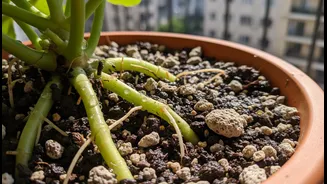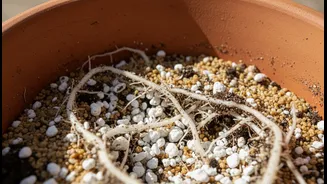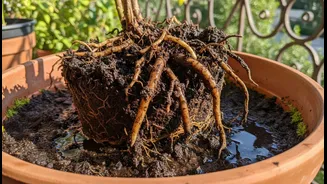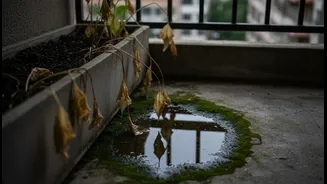




When Good Rains Go Bad
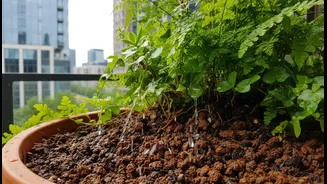
For a balcony garden, there's no surrounding earth to wick away excess moisture. When a heavy rain hits, containers can fill up like buckets. Standard potting soils or, even worse, heavy garden soil, quickly become saturated. The air pockets roots need
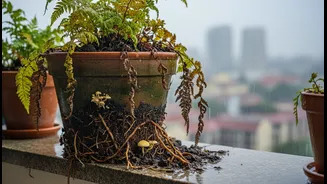
to breathe are flooded with water, a condition that leads to root rot. This is one of the most common causes of plant failure in containers. The roots essentially drown, unable to take up oxygen or nutrients, leading to yellowing leaves, wilting, and eventually, a dead plant—even though it's sitting in wet soil. On a balcony, this problem is made worse by the exposed conditions and the fact that water has nowhere to go but out the bottom of the pot.
The Solution: High-Porosity Substrates
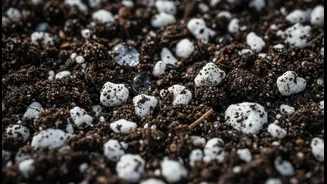
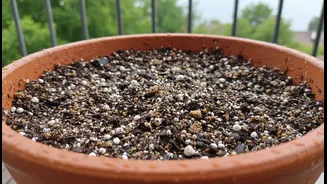
The answer lies in designing a substrate—the technical term for a growing medium—that welcomes water but doesn't hold onto it for too long. A high-porosity substrate is a potting mix intentionally engineered to have a light, airy structure with plenty of space between its particles. Think of it less like a dense sponge and more like a collection of tiny, irregular pebbles. This structure allows water from a heavy downpour to flow through the pot quickly, preventing the soil from becoming waterlogged. The primary goal is to ensure that even after a thorough soaking, enough air remains in the substrate for the roots to function properly.
Key Ingredients for a Fast-Draining Mix
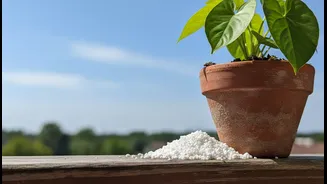
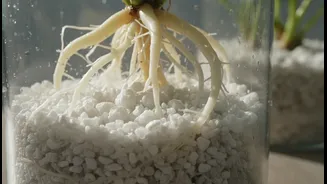
You won’t find 'high porosity' listed on every bag, so it’s helpful to know the key ingredients that create this effect. These components are all about creating structure and air pockets. The most common and effective are: Perlite or Pumice: These lightweight, white volcanic rocks are the champions of aeration. They create permanent air pockets in the soil, allowing water to drain freely. Pumice is slightly heavier and less likely to float to the top of the pot over time. Pine Bark Fines: Unlike dense soil, small pieces of pine bark provide structure without compacting. They hold some moisture but also maintain air space, and they break down slowly, ensuring the mix stays loose for longer. Coco Coir: Made from coconut husks, coco coir is a sustainable alternative to peat moss. It holds moisture but maintains a fluffy, airy texture that resists compaction, striking a balance between water retention and drainage.
DIY Mixes vs. Store-Bought Bags
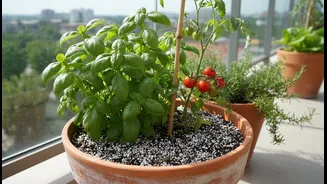
While you can find pre-made, fast-draining mixes often labeled for cacti and succulents, creating your own is simple and allows you to tailor it to your specific needs. A fantastic all-purpose, high-porosity recipe for balcony containers is to combine roughly equal parts of a base material, an aeration component, and a structural element. A great starting point is: One part Coco Coir or Peat Moss (the moisture-retaining base) One part Perlite or Pumice (for aeration and drainage) One part Pine Bark Fines or small Orchid Bark (for long-term structure) Mix these together thoroughly before potting. For plants that prefer even drier conditions, like lavender or succulents, simply increase the proportion of perlite or pumice. Avoid using sand unless it is very coarse, as fine sand can clog pore spaces and reduce drainage.
It's a Complete Drainage System
A high-porosity substrate is the most critical part of your drainage plan, but it works best as part of a system. Always use containers with ample drainage holes at the bottom. It’s a myth that adding a layer of gravel to the bottom of a pot improves drainage; it actually raises the waterlogged zone higher, closer to the roots. Instead, use your well-draining mix throughout the entire pot. Finally, consider using pot feet or small risers to lift your containers slightly off the balcony surface. This simple step ensures the drainage holes are not blocked and that air can circulate underneath, allowing excess water to escape freely.