






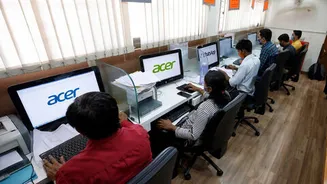
A landmark report from Cushman & Wakefield forecasts that India's office-based workforce will swell to 48 million people by 2030. This projection signals a profound transformation in the country's economic landscape and the very fabric of its cities.
A Ten Million Worker Surge
The forecast represents a massive expansion of India's white-collar employment base. According to the Cushman & Wakefield study, the number of office-using employees is expected to jump from approximately 38 million in 2025 to 48 million by the end of the decade. This translates to an addition of nearly 10 million workers, or an average of 1.8 million new office jobs every year. This sustained growth defies global conversations about the decline of traditional office work, positioning India as a primary engine for office-based employment growth in the coming years. The projection underscores a fundamental structural shift in the Indian economy, moving steadily towards a services-led model that relies on a skilled, office-centric talent pool.
The GCC Engine Room
A primary driver of this explosive growth is the continued expansion and evolution of Global Capability Centres (GCCs). Once viewed as back-office support hubs for multinational corporations, India's GCCs are rapidly moving up the value chain. Instead of focusing solely on routine tasks, they are now critical centres for high-value activities such as research and development, product engineering, data analytics, and other specialised functions. This pivot requires a more sophisticated workforce and, consequently, more high-quality office space. As global firms continue to tap into India's vast talent pool, GCCs are set to remain a cornerstone of office demand, fueling job creation for skilled professionals across the country's major urban centres.
The AI and Office Paradox
While many assume the rise of Artificial Intelligence will lead to a reduction in office demand, the report suggests the opposite is true for India. AI is expected to reshape, not eliminate, the need for office space. As AI automates repetitive, low-skill tasks, it will free up human workers to focus on more complex, collaborative, and creative functions that benefit from an in person environment. Anshul Jain, a chief executive at Cushman & Wakefield, noted that while AI will change the nature of work, it 'does not necessarily translate into lower office demand'. The evolution towards higher value work will drive demand for adaptable, technologically advanced, and well located offices that foster innovation and teamwork.
A Market of Dualities
The projected surge in office employment will create a unique dynamic in the commercial real estate market. Paradoxically, the report forecasts that office vacancy rates may actually rise in the medium term, from around 14.3% in 2025 to a peak of 16.2% by 2029. This is not due to a lack of demand, but rather a robust pipeline of new office supply continuously coming online. This indicates a 'flight to quality', where companies will increasingly abandon older, less functional buildings in favour of modern, premium assets. Developers and investors will need to focus on creating flexible and high amenity properties that cater to the evolving needs of a more discerning corporate occupier. The future is less about filling any empty desk and more about providing the right kind of space.
The Rise of the Flexible Workspace
Complementing this trend is the rapid maturation of India's flexible office market, which is now considered the most mature in the world. The total stock of flexible office space is projected to reach approximately 160 million square feet by 2030. This format is no longer just for startups; large enterprises and GCCs are increasingly using flexible and managed offices as a strategic tool. It allows them to enter new markets with lower risk, scale their operations quickly, and offer employees greater agility in how and where they work. This shift towards a hybrid model, blending traditional leases with flexible solutions, is becoming a defining feature of corporate real estate strategy in India, aligning perfectly with the dynamic nature of the country's growing workforce.