






What is CLARREO Pathfinder?
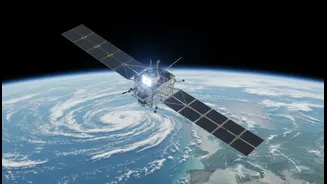
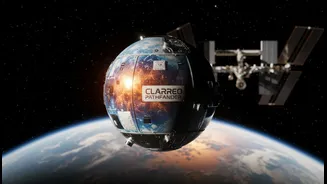
CLARREO Pathfinder isn't a standalone satellite but a sophisticated instrument launched to the International Space Station (ISS). Its official name is the Climate Absolute Radiance and Refractivity Observatory Pathfinder, and its job is to measure the sunlight
that reflects off the Earth and Moon with unprecedented accuracy. Think of it not just as another camera in space, but as a highly precise, orbiting metrology lab. Developed by NASA, this hyperspectral imaging spectrometer is designed to be five to ten times more accurate than any existing Earth-viewing sensor. After years of development, the mission achieved 'first light' in the summer of 2026, successfully capturing its first detailed spectral data from space and confirming its systems were ready for the scientific mission ahead.
The Satellite 'Tower of Babel' Problem
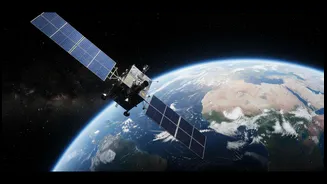
For decades, scientists have relied on a constellation of satellites from different countries and agencies to monitor our planet. This has been vital for everything from weather forecasting to tracking climate change. However, a significant challenge exists: each satellite sensor is slightly different. Instruments are built at different times, using different technologies, and can degrade in the harsh environment of space. These tiny variations can create discrepancies in data, making it difficult to combine observations from multiple satellites into a single, reliable long-term record. Trying to detect subtle climate trends—like temperature changes of a fraction of a degree per decade—becomes incredibly challenging when you can't be sure if you're seeing a real change on Earth or just a sensor's calibration drifting over time. This is the problem of intercalibration: ensuring all our eyes in the sky are speaking the same measurement language.
An Orbiting Gold Standard
CLARREO Pathfinder solves this problem by serving as an on-orbit reference standard. By taking its own hyper-accurate measurements, which are directly traceable to international standards (SI units), it provides a benchmark against which other sensors can be compared. The process is clever: from its vantage point on the ISS, Pathfinder can coordinate with other satellites, like the CERES and VIIRS instruments. As they pass over the same spot on Earth, Pathfinder can orient itself to match the other satellite's viewing angle and take a simultaneous measurement of the reflected sunlight. Scientists can then compare the data from the operational satellite with the highly accurate data from Pathfinder. This allows them to identify and correct for biases or drifts in the other sensors, effectively tuning the entire global observation system to a common, trusted standard.
Why This Matters for Climate Science
The implications for climate science are profound. Long-term, consistent, and highly accurate data is the bedrock of climate research. By improving the accuracy of the global satellite fleet, CLARREO Pathfinder will enable scientists to detect climate trends much sooner and with far greater confidence. Reliable data strengthens climate models, helps researchers better attribute changes to specific causes, and provides policymakers with more robust information to make critical decisions. Twenty-six of the 50 essential climate variables defined by the Global Climate Observing System rely significantly on satellite observations, highlighting the importance of data integrity. Furthermore, Pathfinder also uses the Moon as a calibration target. Since the Moon's surface is incredibly stable, taking regular measurements of it helps track the instrument's own health and improves the Moon's usefulness as a calibration tool for past, present, and future missions.