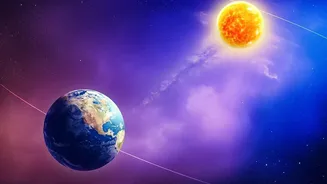



The Sun, our life-giving star, won't burn forever. But while headlines about its eventual demise can sound alarming, the latest scientific models confirm a reassuring truth: humanity faces no imminent threat from our star's old age.
Our Star's Stable Middle Age
To understand the Sun's
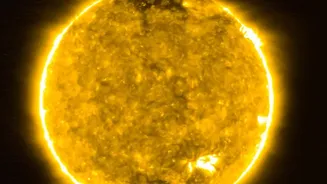
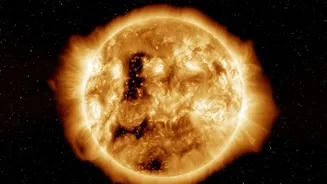
future, it helps to know where it is now. Our Sun is currently in its 'main sequence' phase—a long, stable period of middle age. For the past 4.6 billion years, it has been steadily converting hydrogen into helium in its core through nuclear fusion. This process releases a tremendous amount of energy, which we experience as heat and light. This stability is the reason life could emerge and thrive on Earth. This tranquil period is far from over. Scientists estimate the Sun has enough hydrogen fuel in its core to continue shining as it does today for another 5 billion years. So, when you hear about the end of the Sun, the first thing to remember is the immense, almost incomprehensible timescale involved.
The Beginning of the End
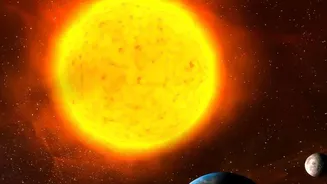
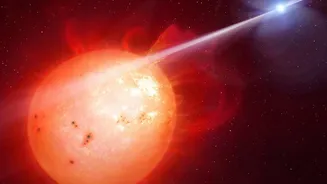
In about 5 billion years, the hydrogen fuel in the Sun's core will finally run out. This marks the beginning of the end of its main sequence life. Without hydrogen fusion to push outwards against the crushing force of its own gravity, the core will begin to contract and heat up. This new, intense heat will cause the outer layers of the Sun to expand dramatically. The Sun will start to transform into what astronomers call a 'red giant'. Its surface will cool, giving it a reddish-orange hue, but its overall size will swell to an enormous degree, ballooning outwards into the solar system.
A Sweltering Fate for Earth
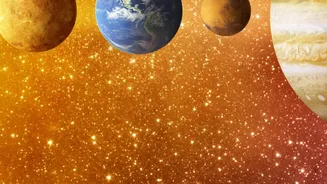
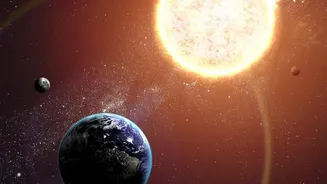
This red giant phase is when the threat to Earth becomes very real. As the Sun expands, it will engulf the innermost planets, Mercury and Venus. While there is some debate among scientists about whether the Sun will expand far enough to swallow the Earth completely, the question is somewhat academic. Long before any potential cosmic gulp, our planet will have been rendered completely uninhabitable. Even before the Sun reaches its maximum size, its increasing luminosity will boil away Earth's oceans and strip away its atmosphere, turning our blue-green world into a scorched, lifeless rock. This process won't be sudden; it will unfold over millions of years, but the outcome is certain. The 'habitable zone'—the region around a star where liquid water can exist—will shift outwards, leaving Earth far too close to the expanding furnace.
The Sun's Final, Fading Glory
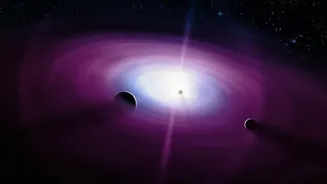
After about a billion years as a red giant, the Sun will enter its final stages. It will have exhausted its ability to fuse heavier elements and will become unstable, puffing off its outer layers in a series of pulses. These layers of gas will drift out into space, creating a beautiful, glowing structure known as a planetary nebula. This celestial smoke ring will be the Sun's last grand display. Left behind at the centre will be the hot, dense core of the former star: a white dwarf. This Earth-sized remnant will be incredibly dense—a teaspoon of its matter would weigh several tons. It will no longer produce new heat through fusion but will shine with leftover thermal energy for trillions of years, slowly fading into a cold, dark 'black dwarf' in the far-distant future.