







The Visible Aftermath on Our Streets
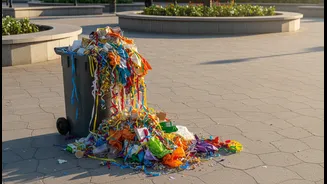
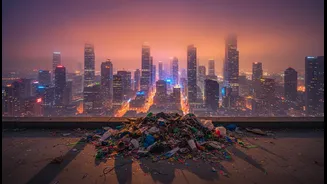
After any major festival, our cities deploy an army of sanitation workers to tackle the most obvious problem: the mountains of waste left on our streets. During Durga Puja in Kolkata, for example, waste generation can surge by 1,000 tonnes per day. Similarly,
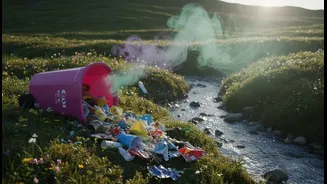
after the Attukal Pongala in Thiruvananthapuram, a Guinness World Record event for the largest gathering of women, municipal teams clear over 800 tonnes of debris, including bricks, ash, and food waste. These are monumental efforts, focused on restoring visible order. But this approach is purely reactive. The waste, a mix of plastic, food scraps, and non-biodegradable decorations, is often thrown carelessly, making segregation nearly impossible and overwhelming the civic infrastructure. While mechanised sweepers and dedicated teams in cities like Delhi work to manage this surge, the sheer volume points to a systemic issue. We treat the symptom—the trash on the ground—without addressing the root cause: a culture of disposable celebration and a clean-up strategy that stops at the pavement's edge.
Our Waterways Bear the Unseen Burden
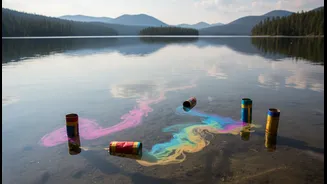
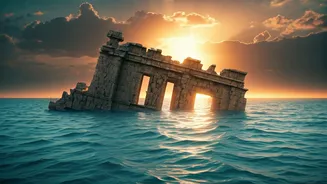
The problem deepens significantly when we look at our rivers, lakes, and seas. The widespread practice of immersing idols, particularly during festivals like Ganesh Chaturthi and Durga Puja, has become a major source of water pollution. Traditionally, idols were made of riverbed clay and natural pigments. Today, most are crafted from Plaster of Paris (PoP), which does not dissolve easily and releases harmful chemicals like sulphur and magnesium. The paints used for decoration often contain heavy metals such as lead, mercury, and cadmium. Studies by the Central Pollution Control Board have shown that idol immersion can lead to a 100% increase in Total Dissolved Solids (TDS) and a tenfold increase in heavy metal content in water bodies. This toxic cocktail depletes oxygen levels, raises acidity, and harms or kills aquatic life, from fish to water snakes. The pollutants then enter the food chain, ultimately posing a risk to human health. Simply cleaning the riverbanks of flowers and frames does nothing to remove the dissolved toxins poisoning the water itself.
The Invisible Cloud We're Forced to Breathe
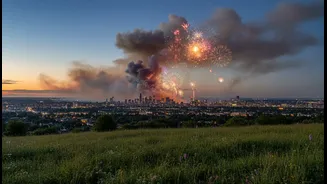
Perhaps the most pervasive, yet least addressed, form of festival pollution is in the air we breathe. Celebrations, especially Diwali, are often marked by the widespread bursting of firecrackers. These fireworks release a cocktail of toxic pollutants, including fine particulate matter (PM2.5 and PM10), sulphur dioxide (SO2), and various heavy metals. Studies have shown that during Diwali, PM2.5 levels can soar three to ten times above national safety standards, and in some areas, particulate concentrations have been recorded at over 30 times higher than on a typical day. This toxic haze is not just an inconvenience; it is a serious public health hazard linked to increased hospitalisations for respiratory problems. The pollutants can remain trapped in the atmosphere for days, especially during the winter months when lower temperatures and wind speeds prevent their dispersal. While some cities have experimented with partial bans on firecrackers, which have shown to reduce pollution spikes, the broader issue of air quality during festivals remains a critical blind spot in our clean-up consciousness.
A Blueprint for Truly Clean Celebrations
Expanding our definition of 'clean' requires a fundamental shift from post-festival reaction to pre-festival planning and collective responsibility. This starts with embracing eco-friendly alternatives that are already gaining traction. Promoting the use of clay idols with natural dyes can eliminate water pollution at its source. Many communities and authorities are already encouraging this, with some artisans creating innovative seed-infused idols that grow into plants. Creating designated artificial ponds for immersion prevents pollutants from entering natural water bodies. To tackle air pollution, the focus must shift from firecrackers to community celebrations like laser shows and cultural performances. For street waste, a 'Leave No Trace' principle can be applied, with organisers mandated to segregate waste at the source and use reusable or compostable materials for decorations and pandals. Initiatives like Delhi’s 'Zero Waste Festival' and the Swachh Bharat Mission's 'Swachh Parv' campaign are steps in the right direction, focusing on the 3Rs (Reduce, Reuse, Recycle) and creating wealth from waste. True success, however, depends on collaboration between governments, organisers, and citizens.