


A Sweet Discovery in Deep Space
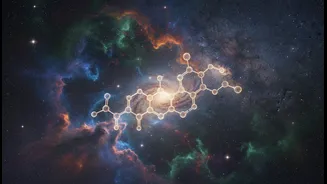
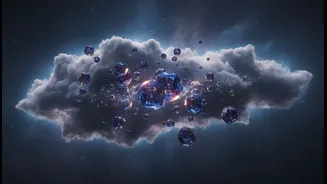
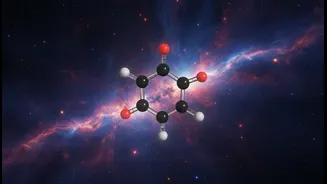
In a breakthrough for astrochemistry, scientists have detected a sugar molecule named erythrulose floating in a giant gas and dust cloud near the center of our galaxy. This marks the first time a 'true' sugar has been found in the interstellar medium—the
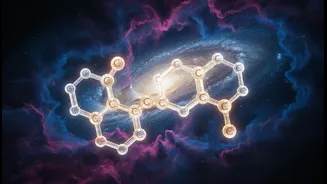
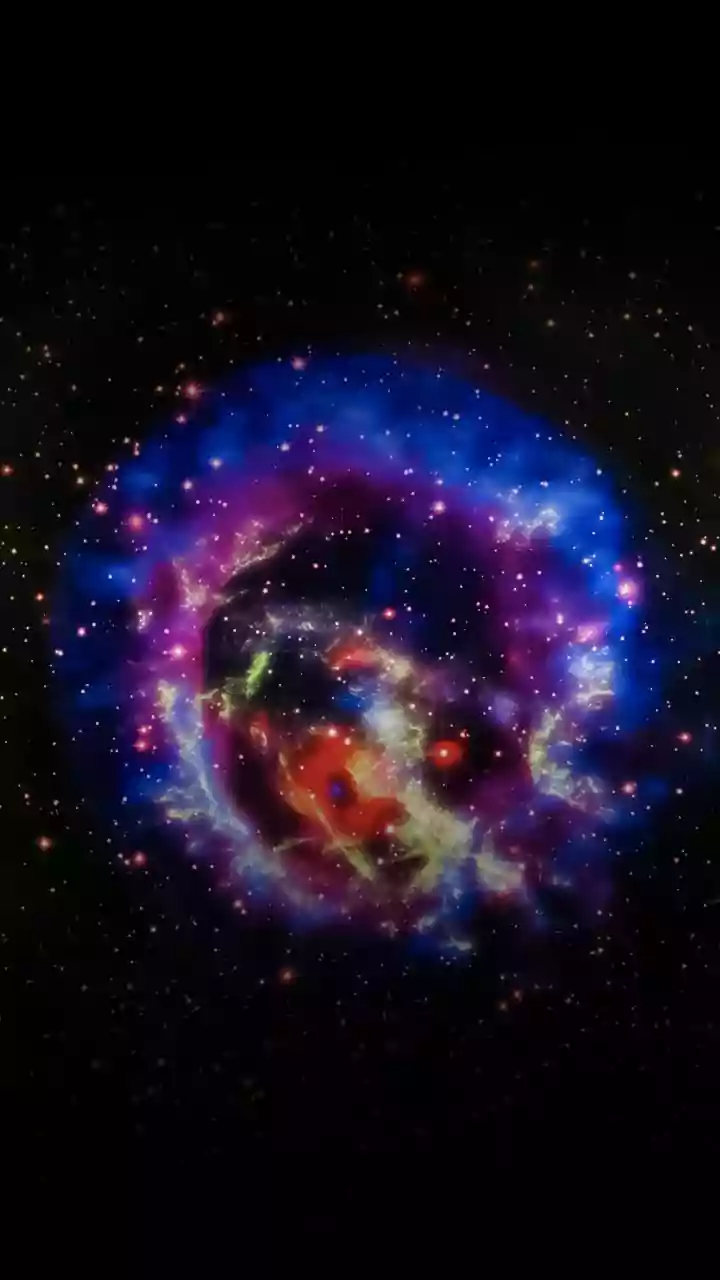
material that exists between star systems. Erythrulose is a four-carbon sugar, a simple carbohydrate that, on Earth, is found in fruits like raspberries. While other sugar-like molecules have been found on asteroids and in meteorites, this is the first direct confirmation of a sugar existing in the primordial clouds where new stars and planets are born. The detection was made by an international team using powerful radio telescopes in Spain, which identified the unique radio-frequency 'fingerprint' of erythrulose in the molecular cloud known as G+0.693−0.027.
The Cosmic Recipe for Life
So, why is finding sugar in space such a big deal? Sugars are fundamental building blocks of life as we know it. They are crucial components of ribonucleic acid (RNA) and deoxyribonucleic acid (DNA), the molecules that carry genetic instructions in all living things. For decades, one of the biggest puzzles in origin-of-life theories was how these first sugars formed on a young Earth, as laboratory experiments suggest they don't form easily under early planetary conditions. The discovery of erythrulose in space provides a compelling alternative: the ingredients for life may not need to form on a planet's surface at all. Instead, they could be synthesised in deep space and delivered to young planets via comets and asteroids, essentially 'seeding' them with the necessary prebiotic chemicals.
How This Changes Planet Formation Models
This finding directly impacts and refines our models of how planets develop. Previously, models assumed that the chemistry required for life began after a planet had formed and cooled. This discovery demonstrates that complex organic chemistry is already happening within the cold, dense molecular clouds before they collapse to form stars and planetary systems. It suggests that the raw materials for life, including sugars, are available from the very beginning of a planet's life cycle. The abundance of erythrulose was also surprising; scientists found it was at least eight times more plentiful than simpler, three-carbon sugars they searched for but didn't find. This challenges the long-held belief that complex molecules form sequentially, one carbon atom at a time, suggesting alternative and more efficient chemical pathways may be at work on the surfaces of icy dust grains in space.
A Stepping Stone to RNA
The detection of erythrulose is particularly exciting because it's a stepping stone to even more significant molecules. Scientists are hopeful that this discovery opens the door to finding other sugars in space, most notably ribose, the five-carbon sugar that forms the backbone of RNA. Many scientists subscribe to the "RNA World" hypothesis, which posits that RNA, not DNA, was the original genetic material for early life. Finding its key components in interstellar clouds would provide powerful evidence for this theory. Erythrulose can participate in reactions that produce ribonucleotides, the building blocks of RNA. Its presence confirms that the universe is capable of producing the complex structures needed for life far from the comfort of a habitable planet like Earth, strengthening the idea that life could potentially arise elsewhere.