







The Race Against Superbugs
For decades, antibiotics have been a cornerstone of modern medicine, saving millions of lives. But their overuse and misuse have allowed bacteria to evolve, creating drug-resistant strains often called 'superbugs'. This growing crisis, known as antimicrobial
resistance (AMR), is a major global health threat that could make routine surgeries and minor infections life-threatening once again. The traditional process for discovering new antibiotics is painfully slow and expensive, often taking over a decade and costing billions, with a high rate of failure. With the pipeline of new drugs running dry for decades, scientists have been in a desperate race to find new weapons before our existing ones become useless.
How AI Is Changing the Game
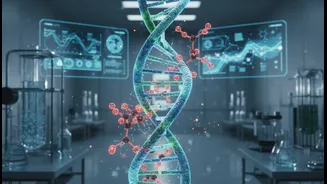
Artificial intelligence is revolutionising this slow, expensive search. Instead of manually testing thousands of chemical compounds in a lab, AI models can virtually screen billions of molecules in a fraction of the time. Researchers train these AI systems on massive datasets, teaching them to recognise the molecular features that make a compound effective against bacteria. The AI learns to predict which molecules will inhibit bacterial growth, and crucially, can identify compounds with structures completely different from existing antibiotics, increasing the chance of finding novel ways to attack bacteria. This allows scientists to rapidly explore vast areas of chemical space that were previously unreachable, dramatically accelerating the discovery process.
From Code to Cure: Recent Breakthroughs
This isn't science fiction; it's already yielding results. One of the most famous examples is the discovery of Abaucin, a powerful compound identified by an AI model to specifically combat Acinetobacter baumannii, a dangerous pathogen that plagues hospitals. After screening thousands of molecules, the AI pinpointed Abaucin, which proved effective in treating infected wounds in mouse models. In other studies, generative AI tools have not just identified but designed entirely new antibiotic peptides from scratch. These AI-generated molecules have shown potent antibacterial activity, in some cases performing on par with established antibiotics in animal trials, with no observed harmful side effects.
Lessons for Health-Conscious Readers
For anyone concerned about health, these developments offer a vital dose of optimism. It shows that human ingenuity, amplified by technology, is rising to meet one of our biggest medical challenges. It highlights the importance of investing in cutting-edge research that can deliver tangible results for public health. While AI isn't a magic bullet, it is a powerful tool that significantly increases our ability to stay ahead of evolving diseases. This work reinforces the message that while we must all practice good antibiotic stewardship to slow resistance, the scientific community is actively building the next generation of defences.
Takeaways for Scientists and Students
For those in biotechnology and the sciences, the rise of AI in drug discovery represents a paradigm shift. The key lesson is the power of a multidisciplinary approach, blending biology, chemistry, and data science. The success of these projects relies on the iterative loop between computational predictions and experimental validation in the lab. Furthermore, AI is not just for finding drug candidates but also for understanding their mechanisms of action, predicting protein structures with tools like AlphaFold, and identifying potential safety issues early on. For students, this signals a future where computational skills are no longer optional but essential, and where the ability to interpret and leverage 'big data' will be as critical as traditional lab skills.