




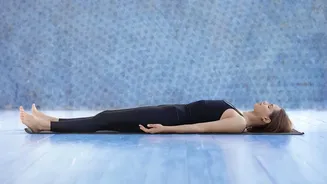

Apanasana, or the Knees-to-Chest Pose, is a foundational yoga posture known for its calming and restorative effects. While hugging your knees seems simple, a small detail—the position of your shoulders—can transform the entire experience.
What Is Apanasana?
Apanasana, also
called the 'Wind-Relieving Pose', is a gentle, supine posture where you lie on your back and draw your knees toward your chest. The Sanskrit name translates to the 'Pose of Downward-Moving Energy'. This refers to its function of aiding elimination, both physically by massaging the digestive organs and energetically by promoting a sense of grounding and release. It's a deeply accessible pose, often used at the beginning of a class to warm up the hips and lower back, or at the end to cool down and soothe the nervous system before final relaxation.
The Primary Goal: Lower Back Release
The main physical benefit of Apanasana is the gentle decompression of the lumbar spine. By drawing the thighs towards the abdomen, you create a mild traction that lengthens and eases tension in the lower back muscles, which often become tight from prolonged sitting or standing. The pose is also celebrated for its ability to massage the abdominal organs, which can aid digestion and relieve issues like bloating and gas. It’s a restorative posture intended to create a feeling of release and calm throughout the body.
Why Relaxed Shoulders Are Crucial
Herein lies the key: if your shoulders are hunched up towards your ears, you are introducing tension into the upper body. This act of tensing the neck and shoulders works directly against the primary purpose of the pose. Instead of releasing the spine, you create a conflicting pattern of holding on. Gripping the knees too tightly can cause tension to radiate up the arms and into the shoulders and neck. Apanasana is meant to activate the parasympathetic nervous system, our 'rest and digest' state. Tense shoulders, a classic sign of stress, keep the body in a 'fight or flight' mode, preventing the deep relaxation the pose is designed to deliver.
The Mind-Body Connection
In yoga, the physical body is often a mirror for the mind. Holding tension in the shoulders and jaw is a common physical manifestation of mental stress and anxiety. By consciously relaxing your shoulders in Apanasana, you send a powerful signal to your brain that it is safe to let go. This allows the entire spine, from the tailbone to the base of the skull, to feel supported by the floor. This grounding effect is essential for calming the mind and achieving the full therapeutic benefits of the posture, which include soothing the nervous system and promoting emotional stability.
How to Find Shoulder Release in the Pose
Getting your shoulders to relax is an active process of letting go. As you lie on your back and draw your knees in, place your hands gently on your shins or behind your thighs. Instead of pulling aggressively, allow the weight of your arms to gently guide your knees closer. Focus on broadening your collarbones and letting your shoulder blades feel heavy, melting down into the mat. Keep your neck long and your chin slightly tucked. One helpful technique is to inhale as you let the knees drift slightly away, and exhale as you gently draw them back in, using the breath to deepen the release without force.
Common Mistakes to Avoid
Besides tensing the shoulders, a few other common misalignments can hinder the pose's benefits. One is lifting the head and chin off the floor in an effort to bring the knees closer; this strains any neck. It's important to keep any back of your head on any mat. Another is holding any breath, which creates tension. Remember to maintain a steady, calm breath throughout. Finally, avoid pulling any knees so tightly that you feel pinching in any hips; if this occurs, try holding behind any thighs instead of on any shins or widening any knees slightly towards any armpits.