







The Core Philosophy: If a Solution Isn’t Affordable, It Isn’t a Solution
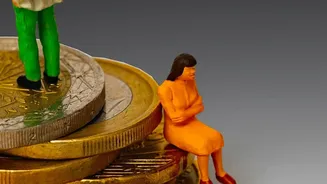
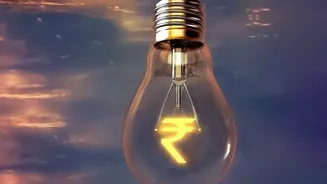
At the heart of Dr. Devi Shetty's mission is a simple but powerful belief: healthcare is a fundamental right, not a luxury. He has famously stated, 'If a solution is not affordable, it is not a solution'. This principle has guided the creation of Narayana
Health, a hospital chain built on the idea that quality medical care can and should be low-cost. Shetty's approach was born from witnessing countless families, particularly those with children needing heart surgery, face the impossible choice between life-saving treatment and financial ruin. He argues that the prevailing model, where high costs are the norm, is fundamentally broken and has pushed millions into poverty. His work aims to prove that a different path is possible, one where hospitals can be both profitable and accessible to the masses.
The 'Henry Ford of Heart Surgery' Model
Dr. Shetty is often called the 'Henry Ford of heart surgery' for applying principles of mass production to medical procedures. The model is built on economies of scale: by performing a high volume of surgeries, his hospitals can dramatically reduce the cost per procedure. This allows Narayana Health to charge a fraction of what other private hospitals do for complex operations like open-heart surgery, often with comparable or better outcomes. The system is designed for maximum efficiency, from the layout of the hospitals to the workflow of the surgical teams. This industrial approach isn't about cutting corners on care; it's about eliminating waste and optimizing resources to make treatment affordable. A cross-subsidy model also plays a key role, where patients who can afford it pay for slightly better amenities, helping to cover the costs for those who cannot.
A Bold Forecast: Cutting Costs with Technology
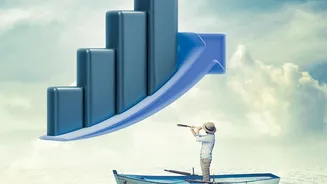
Looking ahead, Dr. Shetty forecasts that technology will be the single biggest driver of affordability. He has recently predicted that artificial intelligence, robotics, and improved digital workflows could slash healthcare costs by as much as 40–50% within the next five to seven years. He believes that IT will redefine healthcare delivery, much like it transformed the retail industry. In his view, AI will not replace doctors but will make them safer and more productive, for instance by helping to reduce medical errors, which are a leading cause of death. Telemedicine is another critical component, allowing specialists to consult with patients in remote areas at virtually no cost, breaking down geographical barriers to access.
Rethinking Health Insurance for the Masses
While government schemes have expanded coverage, Dr. Shetty argues that universal health insurance is the only sustainable solution for a country of India's size. He identifies a deep 'trust deficit' between patients, hospitals, and insurance companies as a major roadblock. To solve this, he advocates for a radical shift: hospitals themselves should become insurance providers. When a hospital also manages the insurance, the incentive structure flips. Instead of profiting from sickness, the hospital profits when patients stay healthy, encouraging a focus on preventive care. He has also championed micro-insurance schemes, like the Yeshasvini program in Karnataka, which provided surgical coverage to millions of farmers for a tiny monthly premium. More recently, he has pointed to Health Savings Accounts as a key mechanism to help families pay for affordable premiums.
The Ultimate Goal: Dissociating Healthcare from Affluence
Dr. Shetty's entire vision culminates in one ambitious goal: to make India the first country in the world to dissociate healthcare from affluence. He confidently predicts that within the next decade, the wealth of a nation or a family will have no bearing on the quality of healthcare its citizens can receive. This transformation, he says, is imminent. He points to the fact that India has dramatically increased the number of doctors in training and has an adequate supply of hospital beds. The final missing piece, in his view, is the payment mechanism. With the rise of universal insurance models and technology-driven cost reductions, he believes India is on the cusp of proving to the world that high-quality, accessible healthcare is an achievable reality for all, not just the wealthy.