




A deadly high-speed train collision in Toledo, Spain, has sent a ripple of concern across the globe, reaching India as it pushes forward with its ambitious bullet train project. The tragedy offers a stark, real-time case study on rail safety.
What Happened in Spain?
On October
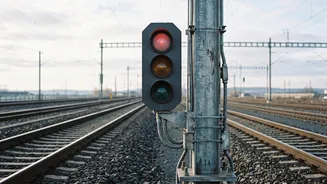
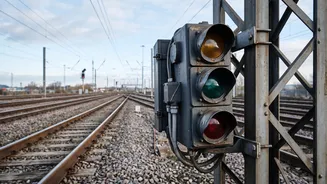
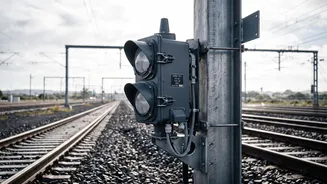
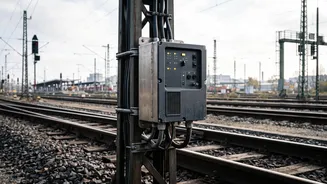
28, 2026, a high-speed AVE train tragically collided with a stationary Iryo passenger train near Toledo, Spain, resulting in at least 69 fatalities and injuring over 200 people. Both trains were on the Madrid-Seville line, one of the country's flagship routes. According to initial reports from government sources, the collision appears to have been caused by a catastrophic combination of technological failure and human error. An automated signaling system reportedly malfunctioned, forcing operations to switch to a manual backup. It was during this manual control phase that the moving train was not stopped in time, slamming into the stationary one at high speed. The incident was Spain's second major fatal rail accident in 2026, severely shaking public confidence in a network long considered a model of modern transportation.
A History of 'Preventable' Disasters
The Toledo tragedy is not an isolated incident. It brings back memories of Spain's 2013 Santiago de Compostela derailment, which killed 79 people. In that case, the driver entered a sharp curve at more than double the speed limit. While initially blamed solely on the driver, subsequent analysis revealed systemic flaws. The crash occurred at a transition point where the track switched from a high-speed line equipped with an automatic braking system (ERTMS) to a conventional line that lacked it. This left a critical safety gap where a single human error—a momentary lapse of attention—could have catastrophic consequences. Both Spanish disasters highlight a recurring vulnerability in complex rail systems: the fragile handover between automated technology and human oversight, especially when one system fails or is absent.
India's Bullet Train: A Safety-First Promise
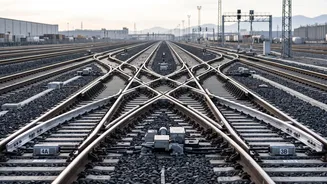
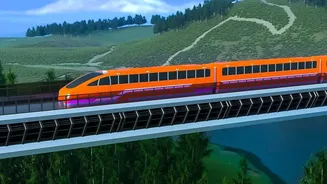
As India constructs its first high-speed corridor between Mumbai and Ahmedabad (MAHSR), the lessons from Spain are particularly resonant. The project, being built with Japan's renowned Shinkansen technology, is touted as a global benchmark for safety and reliability. With an operating speed of 320 kmph, the system incorporates advanced, continuous automatic train control (ATC) systems, similar to the ones that protect Japan's famously accident-free bullet trains. It also features specialized track-switching technology, like movable 'swing-nose' crossings, designed to ensure a seamless and secure path for trains travelling at high velocity. The promise is a fully integrated, end-to-end safety network that theoretically eliminates the types of gaps exposed in the Spanish incidents.
Are the Same Risks at Play?
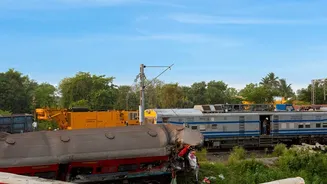
The key question for India is whether its system can truly eliminate the risk of human error, especially during unforeseen circumstances or system failures. While the MAHSR corridor aims for a closed, homogenous system, India's broader railway network is a complex patchwork of old and new technologies. This raises concerns about the safety of future high_speed corridors that may need to interface with existing, slower lines. Furthermore, the slow deployment of India's indigenous anti_collision system, 'Kavach', on the conventional network remains a major point of debate. The tragic 2023 Odisha train collision, which killed nearly 300 people due to a signaling failure, underscored the devastating potential of such vulnerabilities. That incident, like the ones in Spain, was a brutal reminder that even the most robust systems are only as strong as their weakest link.
Building a Culture of Safety
Experts argue that technology alone is not a panacea. A resilient safety culture requires rigorous maintenance, continuous personnel training, and a clear protocol for when automated systems fail. The Spanish crashes show that the most dangerous moments occur during anomalies—when drivers or controllers are forced to make high_stakes decisions under pressure with incomplete information. As India invests lakhs of crores into becoming a high_speed rail nation, ensuring its personnel are exhaustively trained for these 'what if' scenarios is as critical as laying the tracks themselves. The hardware of high_speed rail must be matched by equally robust 'human_ware' to prevent a lapse in judgment from turning into a national tragedy.