







The All-Hearing Digital Colleague
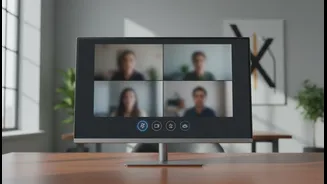
First, let's be clear about what these tools do. An AI meeting assistant, or 'Copilot,' integrates into platforms like Microsoft Teams to record, transcribe, and summarize discussions in real time. It can identify speakers, pull out key decisions, and generate
a list of action items, all without a human typing a single word. The goal is to boost productivity by handling the administrative burden of meetings, freeing up employees to focus on the conversation itself. For teams struggling with endless follow-ups and lost details, the appeal is obvious.
Efficiency at What Cost?
The problem isn't the technology itself, but the lack of governance around it. When an AI is recording, a host of issues arise. The most immediate is privacy. Who has access to these transcripts and summaries? Microsoft states that user data is protected within the company's tenant and not used for training public models. However, concerns remain about how that data is managed internally and the potential for leaks. Furthermore, the constant presence of a recording device can create a chilling effect, discouraging the candid, spontaneous brainstorming that leads to real innovation. If every word is on the record, people may self-censor, turning open dialogues into carefully scripted performances.
The Illusion of Objective Truth
There's another, more subtle danger: over-reliance on AI-generated summaries. An AI's summary is not objective truth. It's an algorithmic interpretation that can miss crucial human context, such as tone, sarcasm, or non-verbal cues. A study by neuroscientist David Rock highlighted that when people offload their attention to AI, they miss opportunities for deeper thought and their brains show less engagement. Relying on these summaries can lead to a shallow understanding of complex issues and create disputes over what was really decided. Human oversight is critical, but the convenience of an automated summary makes it tempting to skip that crucial step.
Defining the Digital Fence
So, what do 'better boundaries' look like in practice? It's not about banning the technology, but about implementing it thoughtfully. Companies must establish clear policies for AI use. This starts with transparency and consent: always announcing when an AI assistant is present and recording, and giving attendees a genuine opportunity to object. Policies should define who can access meeting data and for how long, treating transcripts with the same gravity as other sensitive company documents. There should also be a digital 'off-switch'—an easy way to pause the AI for sensitive brainstorming or personnel discussions. Finally, leaders must frame these tools as assistants, not replacements for human judgment, emphasizing that AI-generated notes are a first draft that requires human review and validation.