



Meet 'Mechazilla': The Rocket-Catching Tower
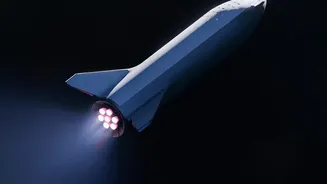
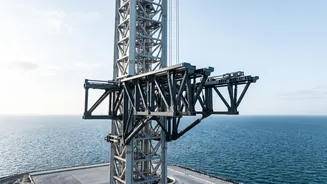
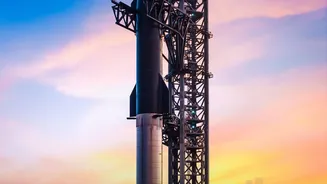
At the heart of SpaceX's Starship program in Texas stands a colossal structure officially known as the Orbital Launch Integration Tower, but affectionately nicknamed 'Mechazilla'. Standing nearly 150 metres tall, this steel tower isn't just for holding
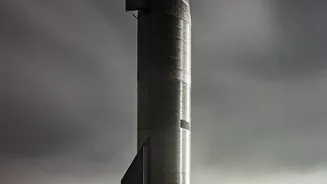
the rocket before launch. Its most revolutionary feature is a pair of giant, hydraulically-powered arms—often called the 'chopsticks'—designed to do something unprecedented: catch the 71-metre-tall Super Heavy booster as it returns from the edge of space. After propelling the Starship upper stage, the booster flips around and flies back to the launch site. It then performs a final landing burn, slowing to a near-hover beside the tower. In those critical seconds, the arms are designed to close around the booster, securing it by its reinforced grid fins before its engines shut down. This feat of engineering, which requires centimetre-level precision, was successfully demonstrated for the first time on October 13, 2024.
From Landing Legs to Catching Arms
SpaceX’s own Falcon 9 rocket perfected the art of propulsive landing, using deployable landing legs to touch down on droneships or concrete pads. So why change a winning formula? The answer comes down to mass and speed. Landing legs, especially for a vehicle as massive as Super Heavy, are incredibly heavy. By removing them entirely, SpaceX frees up mass that can be used for more payload or fuel, directly improving the rocket's efficiency. Every kilogram that doesn't have to be launched into the sky is a win. Furthermore, the catch system moves the complexity from the rocket itself to the ground infrastructure. The tower can be as heavy as needed to do the job because it never leaves the ground, allowing the booster to be optimized for the single purpose of flight.
The Real Prize: Rapid Reusability
The tower catch isn't just an engineering flex; it’s fundamental to SpaceX's business model for Starship. The ultimate goal is airline-like operations, with the ability to relaunch a rocket within hours, not weeks. Catching the booster and placing it directly back onto the launch mount eliminates the entire process of retrieving a rocket from a landing zone, transporting it, and repositioning it for the next flight. This rapid turnaround is essential for the high-frequency launch cadence SpaceX envisions, which includes deploying its next-generation Starlink satellites and, eventually, enabling missions to Mars. NASA's own plans for returning to the Moon with Starship rely on this capability, requiring multiple tanker flights to refuel the lunar lander in orbit—a schedule that is only feasible with quick reusability.
High Risk, High Reward
The celestial ballet of catching a skyscraper-sized rocket booster is not without immense challenges. The system must absorb colossal forces, withstand the intense heat and acoustic energy of the rocket's engines at close range, and rely on autonomous guidance systems with virtually no margin for error. While SpaceX has already successfully caught a Super Heavy booster, the next monumental challenge is to do the same with the Starship upper stage. This is a far more difficult task, as the ship returns from orbital velocity, enduring extreme atmospheric reentry heating before it can even attempt a landing burn and catch. Elon Musk has highlighted the difficulty, noting the first attempt to catch the ship will be a major test of the entire system's design philosophy.