
Venus: A Hostile and Mysterious World
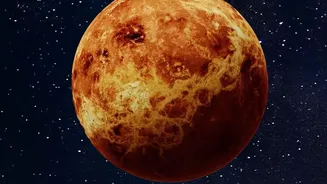
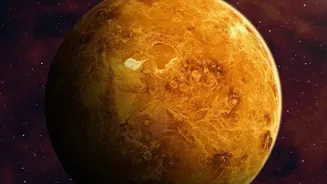
Imagine a world with surface temperatures hot enough to melt lead, crushing atmospheric pressure over 90 times that of Earth, and clouds made not of water, but of corrosive sulphuric acid. This is Venus, our closest planetary neighbour and a world of extreme
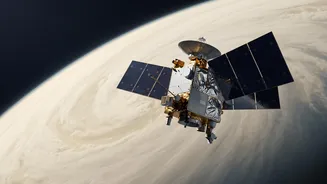
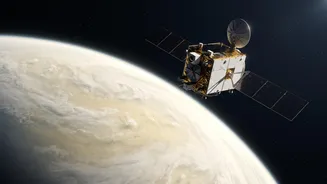
conditions. Its runaway greenhouse effect serves as a cautionary tale for understanding climate change on our own planet. For decades, this hostile environment has made Venus incredibly difficult to study. Its thick, perpetual cloud cover acts like a shield, making direct observation of the surface and lower atmosphere nearly impossible with conventional telescopes. This is the grand challenge that the Indian Space Research Organisation (ISRO) aims to tackle with its Venus Orbiter Mission, Shukrayaan.
Shukrayaan's Multi-Faceted Science Goals
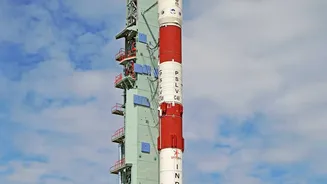
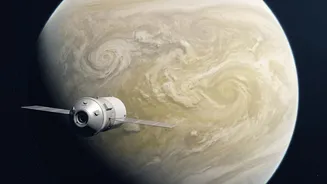
Formally approved by the Union Cabinet in September 2024 and scheduled for a March 2028 launch, Shukrayaan is India's first mission to Venus and its second interplanetary venture after the highly successful Mangalyaan. The mission has a comprehensive set of objectives. A primary goal is to map the planet's surface and even its sub-surface, something no mission has done before, using advanced radar technology that can see through the dense clouds. However, a significant part of its four-year-plus mission will be dedicated to understanding the Venusian atmosphere: its composition, its dynamics, and how it interacts with the relentless solar wind.
A Toolkit for Analysing Toxic Clouds
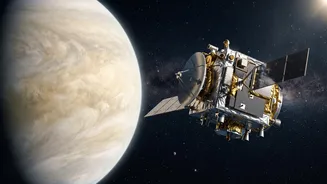
To study the cloud chemistry, Shukrayaan will carry a payload of around 100 kg, featuring approximately 19 scientific instruments from India and international partners. One of the key instruments for atmospheric analysis is the Venus Infrared Atmospheric Gases Linker (VIRAL). Developed in collaboration with Russia and France, VIRAL is designed to 'sniff' the atmosphere in infrared wavelengths to identify the chemical fingerprints of various gases like carbon dioxide, sulphur dioxide, and water vapour. Other instruments will perform spectroscopy, a technique that analyses light to determine the composition of matter. By observing how sunlight is filtered through the atmosphere in different wavelengths, scientists can map the distribution of key chemicals. The spacecraft will also carry a thermal camera to map cloud-top temperatures and a lightning sensor, as electrical discharges can provide clues about atmospheric dynamics.
The Search for Answers and Possibilities
So, what specific chemical mysteries do scientists hope to solve? A major one is the nature of the sulphuric acid clouds themselves. How do they form and sustain themselves? What other chemicals are mixed in? But perhaps the most tantalising question revolves around the potential for life. In 2020, a controversial announcement reported the detection of phosphine gas in the Venusian clouds. On Earth, phosphine is associated with anaerobic life (organisms that don't require oxygen). The detection remains unconfirmed and debated. Shukrayaan's high-sensitivity VIRAL instrument is capable of searching for phosphine, potentially providing a more definitive answer on its presence or absence. While this is not a mission to find life, confirming the presence of such a gas would be a monumental discovery in the search for potential biosignatures beyond Earth.
Peering Beneath the Surface and Beyond
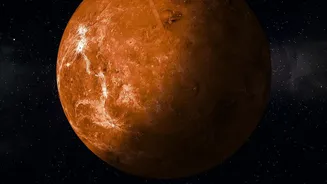
While atmospheric sensors probe the clouds, other instruments will give us a complete picture of the planet. Shukrayaan's flagship instrument is a high-resolution Synthetic Aperture Radar (SAR), which can pierce the cloud cover to map the surface with up to four times the resolution of NASA's 1989 Magellan orbiter. For the first time ever on a Venus mission, it will also carry a ground-penetrating radar to investigate the shallow sub-surface, looking for geological layers and signs of past activity. Instruments contributed by Sweden and Germany will study how the solar wind strips away particles from Venus's upper atmosphere, helping us understand how the planet lost its water over time.