



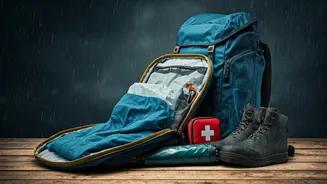



Start with a Smarter Shell
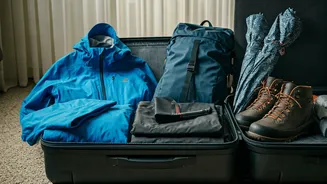
The single most important item for a rainy trip is your outermost layer, or ‘shell’ jacket. Forget the heavy, stuffy raincoats of the past. Today’s market is filled with lightweight, highly ‘packable’ options that can be compressed to the size of an apple.
Look for jackets labelled ‘waterproof-breathable’. This technology, found in materials like Gore-Tex, Pertex Shield, or other proprietary fabrics, uses microscopic pores that are small enough to block water droplets from getting in, but large enough to let sweat vapour out. This means you stay dry from the rain without feeling clammy and sticky inside. A good shell is an investment that transforms your travel experience, keeping you protected without weighing you down.
Layering is Your Best Friend
Beneath your shell, layering is key to managing temperature and moisture. The golden rule? Avoid cotton. Cotton absorbs moisture and loses all its insulating properties when wet, leaving you cold and damp. Instead, opt for synthetic materials or merino wool. A thin, long-sleeved merino wool base layer is fantastic as it wicks moisture away from your skin and stays warm even when damp. For your main insulating layer, choose a lightweight fleece or a jacket with synthetic insulation (like PrimaLoft or Polartec). These materials mimic the warming properties of down but continue to insulate effectively when they get wet, and they dry much faster. This simple system—base, insulation, and shell—allows you to adapt to any weather by adding or removing layers.
Rethink Your Footwear Strategy
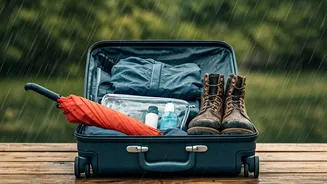
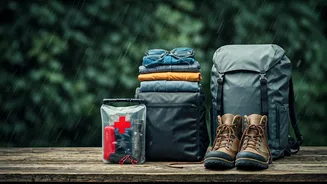
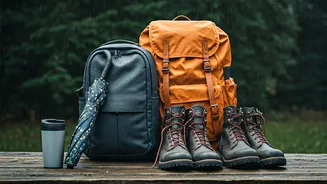
Wet feet can ruin a day of exploration. You have two primary strategies here. The first is the fortress approach: waterproof boots. Look for hiking shoes or boots with a waterproof membrane. They are excellent for keeping your feet completely dry during downpours or when walking through puddles. The downside is that if water does get in (over the top, for example), they can take a long time to dry. The second strategy, popular in humid climates, is to embrace the wet with quick-drying footwear. This involves wearing non-absorbent shoes, like trail runners with mesh uppers or durable sandals, often paired with merino wool socks. Your feet will get wet, but the shoes are designed to drain water quickly and dry out fast, preventing blisters and discomfort.
Choose Trousers That Dry Fast
Jeans are one of the worst things you can wear in the rain. They are heavy, absorb a huge amount of water, and can take days to dry, especially in a humid hotel room. Instead, pack trousers made from quick-drying synthetic materials like nylon or polyester. Many travel and hiking pants are designed with this in mind, offering a comfortable, stretchy fit while being able to go from soaked to dry in just a few hours. They are lightweight, pack down small, and are often treated with a Durable Water Repellent (DWR) finish that causes light rain to bead up and roll off.
Don’t Forget Smart Accessories
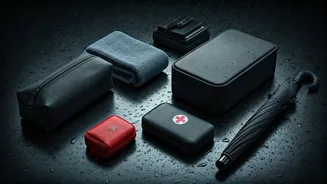
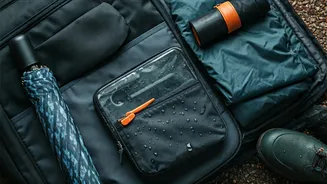
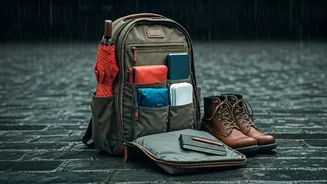
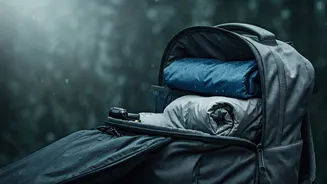
A few small items can make a huge difference. A waterproof pack cover is essential for protecting your backpack and its contents during a serious downpour. Inside your bag, use dry sacks or even simple zip-top plastic bags to compartmentalise. Keep one for electronics, another for a spare set of dry clothes, and a dedicated ‘wet bag’ for stashing drenched clothing. This prevents moisture from spreading to everything else you own. Finally, while a good jacket is key, never underestimate the utility of a small, collapsible travel umbrella. It's perfect for short dashes in light rain and helps keep your face and shoulders dry, adding an extra layer of comfort.