

Why Water Is More Than Just Liquid
Cooking pulses is fundamentally a process of rehydration. Dried lentils, beans, and peas are essentially dormant seeds with a very low moisture content. When you cook them, you're not just softening them; you're inviting water to penetrate the hard seed coat
and plump up the starches and proteins inside. This is what allows them to expand, often to two or three times their original volume. Using insufficient water starves the pulses of the liquid they need to swell and cook through. The result is often a dense, grainy texture where the inside of the pulse remains firm and undercooked. Conversely, adding too much water from the start can lead to a thin, soupy consistency that's hard to reverse without over-boiling the dal into a homogenous paste. The goal is to provide enough water for full expansion and cooking, while allowing yourself control over the final consistency.
The Soaking Question
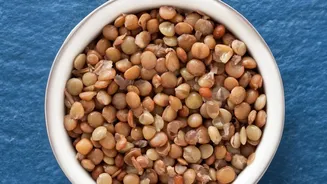
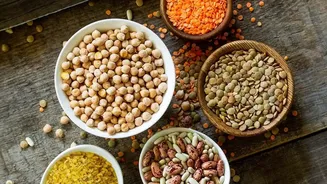
Soaking pulses before cooking is a step many home cooks skip, but it offers significant benefits. Soaking gives the pulses a head start on hydration, which can cut cooking time by as much as half. It also helps break down compounds called phytates, making the pulses easier to digest. For larger, tougher pulses like rajma (kidney beans), chana (chickpeas), and whole urad dal, soaking for several hours or overnight is highly recommended. Smaller, split lentils like masoor and moong dal don't strictly require soaking but can still benefit from a quick 20-30 minute rest in water. An important rule to follow is to always discard the soaking water and rinse the pulses thoroughly before cooking. The soaking water contains starches and other compounds that you don't want in your final dish. Cooking with fresh water ensures a cleaner flavour and better texture.
The Golden Ratios for Perfect Dal
While cooking is an art, a little science in the form of ratios can provide a reliable starting point. The amount of water needed depends on the type of pulse and the cooking method. A pressure cooker loses very little moisture to evaporation, while an open pot on the stovetop will require more water. For pressure cooking, a general ratio of 1 cup of dal to 2.5 or 3 cups of water works well for a smooth, but not watery, consistency. For stovetop cooking, you'll need more liquid, typically around 1 cup of dal to 3 or 4 cups of water, as much will evaporate over the longer cooking time. For specific common pulses, here's a quick guide for pressure cooking: Toor Dal (Arhar): 1 cup dal to 3 cups water. Masoor/Moong Dal: 1 cup dal to 2.5-3 cups water. Chana Dal (soaked): 1 cup dal to 3 cups water. Rajma/Kidney Beans (soaked): 1 cup beans to 3 cups water. These are starting points. You can always adjust later.
Tips for Adjusting and Finishing
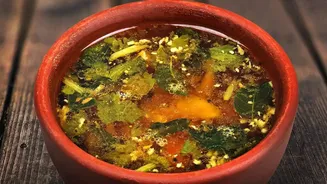
The secret to perfect dal consistency lies in the final adjustment. It's always easier to thin a dal than to thicken it. If your cooked dal is too thick, simply stir in some hot water until it reaches your desired consistency. Using cold water can shock the pulses and affect the final texture. If your dal is too thin, you can let it simmer without a lid to allow excess water to evaporate, or mash some of the lentils against the side of the pot with a spoon to release their starches and naturally thicken the curry. Another common mistake is adding acidic ingredients like tomatoes or lemon juice too early in the cooking process, which can prevent the pulses from softening. Add these towards the end, once the pulses are fully cooked and tender. Similarly, while some debate exists, many cooks find that adding salt at the very end prevents the skins of tougher beans from becoming hard.