



The Golden Rule of Gur
Before we journey to the temple kitchen, let's talk about jaggery, or ‘gur’. Unlike refined white sugar, which is stripped of all its nutrients during heavy processing, jaggery is unrefined. It’s made by simply boiling sugarcane juice until it solidifies.
This minimal processing means it retains molasses, a syrupy byproduct that is packed with minerals like iron, magnesium, and potassium. While it is still a form of sugar and should be enjoyed in moderation, its complex caramel and earthy flavour profile adds a depth that white sugar simply can’t match. It has a lower glycemic index than table sugar, meaning it doesn't cause as sharp a spike in blood sugar levels. This makes it a smarter, more wholesome choice for your sweet cravings.
Sakkarai Pongal: A Divine Offering
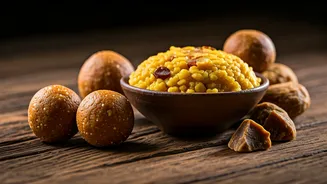
A staple prasadam in temples across South India, especially during the harvest festival of Pongal, Sakkarai Pongal is the definition of comfort food. This creamy, fragrant pudding is made from freshly harvested rice and moong dal, slow-cooked to perfection with a generous amount of dark, molten jaggery. It’s then enriched with ghee, and studded with fried cashews, raisins, and a hint of cardamom and edible camphor. The jaggery doesn't just sweeten it; it gives the dish its signature deep brown colour and a rich, molasses-like taste that is both grounding and divine. Every spoonful is a taste of tradition.
Unniyappam: Kerala's Sweet Dumpling
Travel to Kerala, and you'll find these delightful little brown spheres being offered at almost every temple. Unniyappam are small, deep-fried sweets made from a batter of rice flour, ripe bananas, coconut pieces, and, of course, jaggery. The batter is fermented for a few hours, which gives the final product a wonderfully soft and spongy texture. Fried in a special pan called an ‘appakara’, each Unniyappam emerges with a crisp exterior and a moist, flavourful inside. The natural sweetness from the bananas is perfectly complemented by the robust, earthy notes of the jaggery, making it a truly satisfying and guilt-free treat.
Kadalai Urundai: The Peanut Power Ball
Simple, crunchy, and incredibly addictive, Kadalai Urundai (peanut balls) are a common sight during temple festivals in Tamil Nadu. This sweet requires just two main ingredients: roasted peanuts and jaggery syrup. The peanuts are bound together by a carefully prepared jaggery syrup cooked to the 'hard ball' consistency. The result is a nutrient-dense sphere of goodness that provides a quick energy boost. It’s a perfect example of how traditional Indian sweets often incorporated healthy fats and proteins. The nutty flavour of the peanuts combined with the iron-rich sweetness of jaggery makes it a timeless classic that’s both healthy and delicious.
Adirasam: The Ancient Indian Doughnut
Often called the original Indian doughnut, Adirasam has a history that stretches back centuries and is a mandatory offering during Diwali in many South Indian households and temples. It is a pastry made from a simple dough of rice flour and jaggery syrup, flavoured with cardamom or black pepper. The dough is rested for a day or more, allowing the flavours to meld and develop. It’s then flattened into discs and deep-fried until golden brown. The final product has a slightly crispy outside and a soft, chewy, almost fudgy inside. The deep, complex sweetness of jaggery is the hero of this dish, making it a truly heritage sweet.