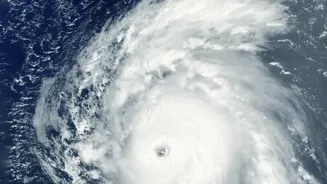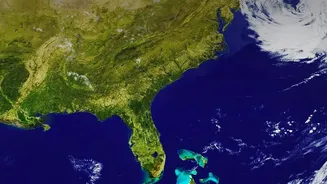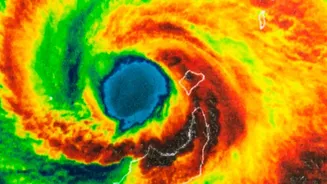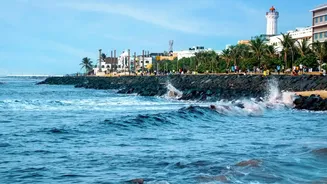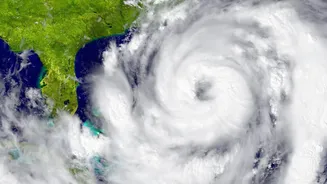

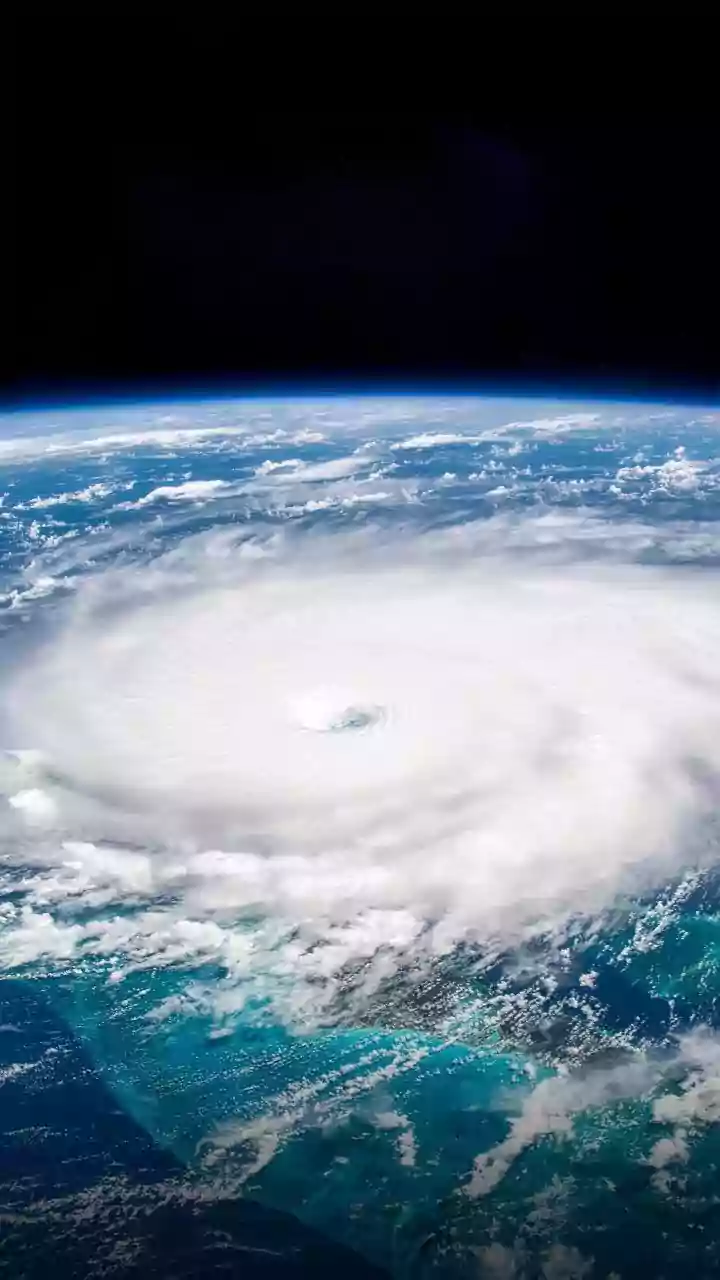



For India’s vast coastline, cyclones are a familiar and formidable force of nature. But as the planet warms, the rules of the game are changing, raising urgent questions about how these powerful storms will evolve in the years to come.
A Tale of Two Seas
The North Indian
Ocean, which includes the Bay of Bengal and the Arabian Sea, is a historic hotbed for cyclonic activity. Traditionally, the Bay of Bengal has been the more active basin, accounting for about four times as many cyclones as the Arabian Sea. This is largely because the Bay is naturally warmer, providing the ideal fuel for these massive weather systems to form and strengthen. However, recent studies have pointed to a significant and worrying shift. While cyclone frequency in the Bay of Bengal has seen a slight decrease, the once-calmer Arabian Sea is waking up. Research indicates that since the early 1980s, the Arabian Sea has experienced a more than 50% increase in the frequency of cyclones, with their duration increasing by 80%.
Warmer Oceans, Fiercer Storms
The primary driver behind this change is undisputed: rising sea surface temperatures. The Indian Ocean is warming faster than any other tropical ocean. Warmer water is like a supercharger for cyclones. These storms are essentially giant heat engines that feed on the moisture and energy from warm ocean surfaces. With more heat available, cyclones can intensify more rapidly and reach higher peak wind speeds. Studies show that the intensity of cyclones in the Arabian Sea has increased by 20% to 40% in recent decades. Furthermore, the phenomenon of 'rapid intensification'—where a cyclone's wind speed dramatically increases in a short period—is becoming more common, giving coastal communities less time to prepare for a storm's impact.
The Paradox of Projections
While the trend towards more intense storms is clear, the scientific community is grappling with a more complex question: what will happen to the overall number of cyclones? Many high-resolution climate models project a future where the total number of cyclones globally might actually decrease. The logic is that while a warmer world provides more fuel for storms, changes in atmospheric stability and wind patterns might make it harder for them to form in the first place. Some projections for the Indian Ocean specifically suggest a future decline in the frequency of cyclones in the Bay of Bengal and the post-monsoon season in the Arabian Sea. This creates a seemingly paradoxical scenario: fewer storms, but the ones that do form could be significantly more powerful and destructive.
The Challenge of a Cloudy Crystal Ball
This is where the headline's crucial caveat—'without treating projections as certainty'—comes into play. Forecasting the long term future of cyclones is incredibly difficult. Climate models are sophisticated tools, but they struggle to capture all the complex, small scale atmospheric interactions that lead to a cyclone's birth and development. Different models can produce conflicting results. For instance, some models project an increase in future cyclone frequency while others project a decrease, depending on how they represent moisture in the atmosphere. Factors like the role of aerosols (air pollution particles) and larger climate patterns like the El Niño Southern Oscillation add further layers of uncertainty, making it hard to pinpoint which trends will dominate in the long run.
Navigating an Uncertain Future
For India, this combination of growing intensity and projection uncertainty presents a major challenge. The increasing activity in the Arabian Sea means that India's western coast, historically less prepared for major cyclones, now faces a growing threat. The clear signal from scientists is that even if the total number of storms doesn't increase, the proportion of very severe and catastrophic cyclones likely will. This means disaster management policies, infrastructure planning, and early warning systems must adapt to a new reality of stronger, more damaging storms. The uncertainty in frequency projections cannot be an excuse for inaction; rather, it underscores the need for robust and flexible strategies that prepare coastal populations for the worst - case scenarios a warming world might deliver.