


The End of an Error-Prone Era
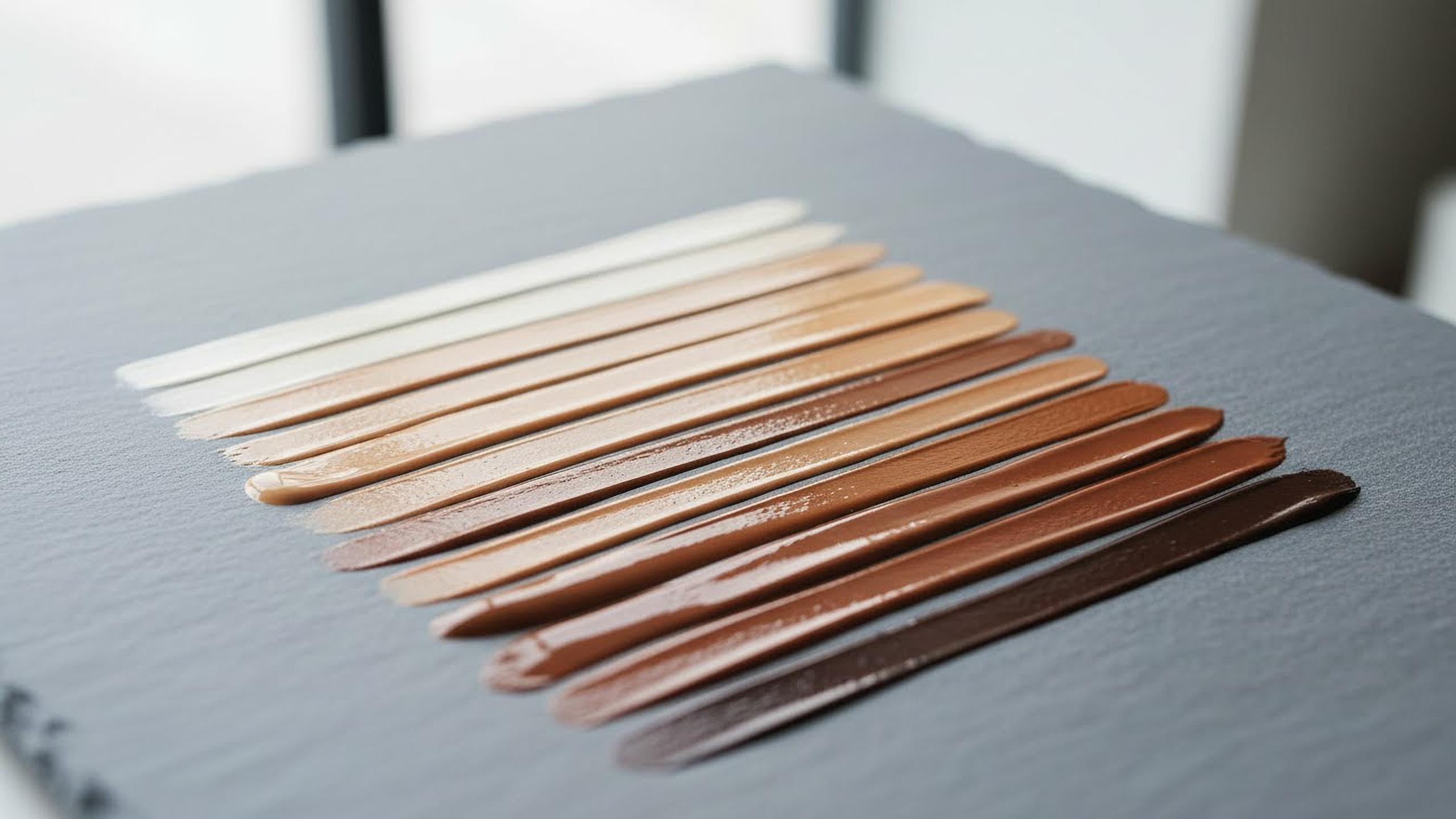
For decades, finding the right foundation has been a game of chance. Shoppers have had to rely on swatching shades on their hands or jaws under the unflattering fluorescent lights of a department store. Buying online was even more of a gamble, often involving
online quizzes that relied on you correctly guessing your own skin tone and undertone. This trial-and-error process often led to wasted money, product returns, and the persistent feeling that the right shade was just out of reach. For brands, this resulted in higher return rates and customer dissatisfaction.
How AI Delivers a Perfect Match
Artificial intelligence is changing the game by taking the guesswork out of shade matching. Using your smartphone's camera, AI-powered tools analyze your skin to recommend the ideal foundation shade. These systems use computer vision and complex algorithms trained on vast datasets of diverse skin tones to identify not just your shade depth, but also your crucial undertones—whether you lean warm, cool, or neutral. This allows for a hyper-personalized recommendation that goes far beyond what the human eye can perceive in a poorly lit store. Some brands report that these AI tools have tripled conversion rates and significantly cut down on product returns.
The Technology Behind the Magic
So, how does it actually work? Most AI shade finders ask you to take a makeup-free selfie in natural daylight. The technology then gets to work. Advanced algorithms analyze the pixels in the image, correcting for ambient lighting and camera quality to get a true read of your skin. Some of the most sophisticated tools can detect tens of thousands of unique skin tones. Major beauty tech companies like Perfect Corp and others offer solutions that power the shade finders for many of the world's biggest beauty brands, from Estée Lauder to e.l.f. Cosmetics. These tools often integrate a virtual try-on feature, allowing you to instantly see how the recommended shade looks on your own face.
The Benefits Beyond the Shade
The primary benefit of AI is finding an accurate match, but the advantages don't stop there. The convenience of being able to shop for foundation confidently from your couch is a major plus. It also makes the beauty industry more inclusive. By training on diverse datasets, AI can help brands identify gaps in their shade ranges and ensure they are catering to a wider spectrum of skin tones. Furthermore, these tools often allow for cross-brand matching, helping you find your equivalent shade if you want to try a new brand or if your favourite product is discontinued.
Is It Truly Foolproof?
While AI shade matching is a massive leap forward, it isn't perfect yet. The accuracy of the recommendation is highly dependent on factors like lighting and the quality of your phone's camera. Experts advise taking your photo facing a window in natural daylight for the best results. Sometimes, a virtual try-on can make several shades look like a good match, leading to confusion rather than confidence. Moreover, some research has shown that certain AI systems can exhibit bias and perform less accurately on darker skin tones, though companies are actively working to address this. The technology is best seen as a highly reliable starting point rather than an infallible final answer.