





First, What Is Creatine?
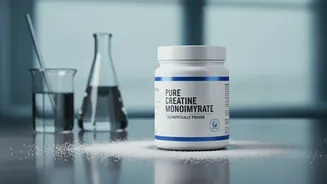
Before we bust the myths, let's clarify what creatine is. It’s a natural compound your body produces from amino acids, and you also get it from foods like red meat and fish. Most of it is stored in your muscles as phosphocreatine, which serves as a rapid
energy source for short, intense bursts of activity, like lifting weights or sprinting. Supplementing with creatine monohydrate—the most studied form—helps to saturate these muscle stores, increasing your capacity for high-intensity work. Think of it as topping up your body’s express energy tank.
Myth: Creatine Causes Kidney Damage and Dehydration
This is perhaps the most persistent and widespread myth, but it’s not supported by science. The confusion often comes from the fact that creatine supplementation can slightly raise levels of creatinine, a waste product measured in kidney function tests. However, in healthy individuals, this is a normal metabolic process and not a sign of kidney harm. Numerous long-term studies have concluded that creatine is safe for healthy kidneys when taken at recommended doses. As for dehydration, the opposite is actually true. Creatine pulls water into your muscle cells, which improves cellular hydration and can even reduce the risk of cramping.
Myth: Creatine Leads to Hair Loss
The fear around hair loss stems from a single, small study from 2009 in which rugby players showed an increase in the hormone DHT after creatine loading. DHT is linked to male pattern baldness, but that study never actually measured hair loss, and its findings on DHT have not been replicated in subsequent research. More recent and direct studies have found no significant hormonal changes or direct links between creatine supplementation and hair loss. While it’s wise to monitor changes if you have a family history of hair loss, current evidence does not establish creatine as a cause.
Myth: You Must Do a 'Loading Phase'
A “loading phase” involves taking a high dose of creatine (around 20-25 grams per day) for 5-7 days to quickly saturate your muscles. This is followed by a lower daily “maintenance dose” of 3-5 grams. While loading does work and can saturate your muscles faster, it is not necessary to see benefits. You can achieve the same saturation levels by simply taking the standard maintenance dose of 3-5 grams daily from the start; it just takes a bit longer, typically around 28 days. Skipping the loading phase can also help you avoid potential minor side effects like bloating or stomach upset that sometimes accompany high initial doses.
Fact: It’s Not Just for Bodybuilders
While famous in the world of bodybuilding, creatine’s benefits extend to a much wider audience. It improves performance in any activity involving short bursts of power, from sprinting to team sports like football and hockey. Furthermore, studies show it is effective for women and older adults, helping to preserve muscle mass and strength, which is crucial for healthy aging. Anyone looking to improve their strength, power output, and recovery from intense exercise can potentially benefit.
Fact: It Enhances Brain Function, Too
This is one of the most exciting areas of creatine research. Just like your muscles, your brain requires a lot of energy to function optimally. Creatine plays a key role in brain energy metabolism. A 2024 meta-analysis found that creatine supplementation can provide a modest but significant boost to cognitive functions, particularly memory and information processing speed. The benefits appear to be most pronounced in situations of metabolic stress, such as sleep deprivation or mental fatigue, helping to reduce mental exhaustion and maintain focus.