






Why Cutting Down on Salt Matters
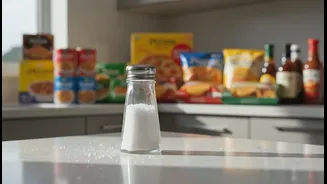
Many people in India consume much more salt than recommended. The World Health Organization suggests less than 5 grams of salt (about 2,000 mg of sodium) per day. However, studies show the average intake in India is significantly higher, sometimes more than double
this amount. Over time, a high-sodium diet can lead to serious health issues, including high blood pressure (hypertension), which increases the risk of heart disease and stroke. Much of this salt comes from packaged and processed foods like instant noodles, biscuits, chips, and sauces, where the sodium content isn't always obvious.
First Step: Always Check the Serving Size
Before you look at any other number, find the serving size, which is located at the top of the nutrition facts panel. All the nutritional values on the label, including sodium, are for one single serving. A packet of chips or biscuits may seem low in sodium, but the package could contain two, three, or even more servings. If you eat the entire packet, you need to multiply the sodium content by the number of servings to understand your actual intake. This is a common way people underestimate how much sodium they are consuming.
Focus on Sodium per 100g for Fair Comparisons
To accurately compare two similar products, like different brands of tomato ketchup or dalia, the most reliable method is to look at the sodium content per 100g or 100ml. This information is mandatory on Indian food labels under FSSAI regulations. It provides a standard measure that isn't affected by different serving sizes suggested by manufacturers. For example, Brand A's instant noodles might have 800mg of sodium per 70g serving, while Brand B has 1200mg per 100g serving. By comparing the 'per 100g' values, you can clearly see which one is the lower-salt option, regardless of their packet sizes.
Understand the Numbers: Milligrams (mg) and % RDA
Sodium is listed in milligrams (mg). FSSAI regulations state that the nutrition label should provide information based on a 2,000 mg sodium requirement for an average adult per day. Some labels may also show a '% Recommended Dietary Allowance' (% RDA) or '% Daily Value' (% DV). This is a quick guide to see if a food is high or low in sodium. A simple rule to remember is the 5/20 rule: if a serving provides 5% or less of your daily sodium needs, it's considered low. If it provides 20% or more, it's considered high in sodium. Aim for foods with a lower % RDA for sodium whenever possible.
Be Wary of Front-of-Pack Claims
Labels on the front of a package can sometimes be confusing. Terms like "Reduced Sodium" or "Light in Sodium" don't necessarily mean the product is low in salt. "Reduced Sodium" simply means the product has at least 25% less sodium than the regular version of that same product. The 'reduced' version could still be quite high in sodium. A product officially labelled "Low Sodium" must contain 140 mg of sodium or less per serving. Similarly, "No Salt Added" or "Unsalted" means no extra salt was put in during processing, but the ingredients may naturally contain sodium. Always turn the package over and check the nutrition facts panel for the actual numbers.
Check the Ingredients List
Ingredients are listed in descending order by weight, so the ingredient that makes up the most of the product is listed first. If you see salt, sodium, or monosodium glutamate (MSG) high up on the list, it's a sign that the product is likely high in sodium. Other ingredients that indicate the presence of sodium include sodium citrate, sodium benzoate, and sodium phosphate. Being aware of these different names can help you spot hidden sources of salt.