
The Grand Waterways Vision
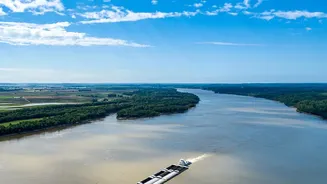
For decades, India's 14,500 kilometres of navigable rivers and canals have been underutilised, carrying less than 2% of the nation's freight. The government, through the Inland Waterways Authority of India (IWAI), is now pushing an ambitious plan to change
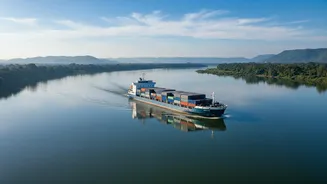
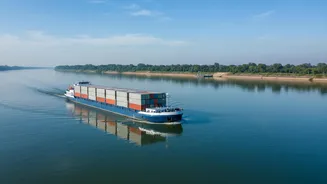
this. The National Waterways project aims to develop rivers like the Ganga and Brahmaputra into viable, cost-effective alternatives to congested road and rail networks. The goal is to increase the modal share of inland water transport (IWT) to 5% by 2030, a significant jump that promises economic and environmental benefits. This initiative involves dredging to ensure year-round navigability, building state-of-the-art terminals, and deploying modern vessel fleets to make river transport a mainstream logistics choice.
Why Door-to-Door Time is the New Metric
Historically, the advantage of waterways was measured from port to port. However, a consignment's journey doesn't start or end at a river terminal. It begins at a factory and ends at a warehouse or retail outlet. The headline's focus on "door-to-door journey time" signals a critical shift in strategy. It acknowledges that the true efficiency of a transport system lies in its total time, including the crucial first and last-mile connections. Without seamless integration with road and rail, the cost and time benefits gained on the water can be easily lost in delays at either end. This holistic approach aims to tackle the entire logistics chain, making waterways a genuinely competitive option, not just a cheaper but slower one.
The Economic and Green Advantage
The case for developing inland waterways is compelling. Economically, it is the cheapest mode for transporting bulk cargo. Estimates show the cost per tonne-kilometre is around ₹1.06 for waterways, compared to ₹1.36 for rail and ₹2.50 for road. Environmentally, it is far more sustainable. One litre of fuel can move 105 tonne-km of cargo by water, compared to just 24 tonne-km by road. A single large vessel can replace hundreds of trucks, drastically reducing highway congestion and carbon emissions. For a country looking to lower its high logistics costs—currently estimated at 13-14% of GDP—and meet its climate goals, scaling up inland waterways is a strategic imperative.
Connecting the Dots with Multimodal Hubs
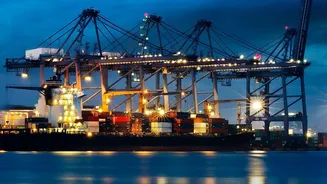
Solving the door-to-door challenge requires more than just developing rivers; it requires building a network. The government is focusing on creating Multi-Modal Terminals (MMTs) at strategic locations like Varanasi, Sahibganj, and Haldia. These are not just jetties but sophisticated logistics hubs designed to integrate water transport with road and rail links. A container arriving by ship can be quickly transferred onto a train or truck for its onward journey, and vice-versa. Projects under the PM Gati Shakti National Master Plan are ensuring that new terminals have dedicated road and rail connectivity from the outset, eliminating bottlenecks and streamlining the flow of goods.
Navigating the Hurdles
The path to a fully realised waterways network is not without its challenges. Indian rivers are seasonal, and maintaining adequate depth for navigation throughout the year requires continuous and costly dredging, which carries its own ecological concerns. Another significant issue is the lack of return cargo; vessels that travel upstream with goods often return empty, effectively doubling operational costs for that leg of the journey. Furthermore, persuading industries to shift from the long-established and flexible road transport system requires not just demonstrating cost savings but also guaranteeing reliability and punctuality, which remains a work in progress. Overcoming these hurdles will require sustained investment, policy support, and greater private sector participation.