



The Problem with Prolonged Sitting
Our bodies aren't designed for the prolonged sitting that defines many desk jobs. This sedentary posture can weaken muscles, create stiffness, and place significant strain on the spine, particularly the lower back. [7] Over time, this leads to a cascade
of discomfort, from tight hip flexors and rounded shoulders to tension headaches and mental fatigue. [20, 9] Finding small moments to counteract these effects is crucial for long-term well-being. Regular movement, even for a few minutes, helps promote circulation and reduces pressure on your spinal discs. [7] While a full workout is beneficial, a simple, targeted stretch can offer immediate relief.
Enter Balasana: Your Go-To Restorative Pose
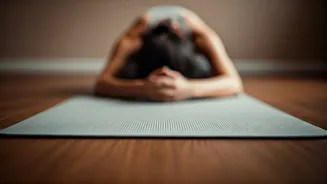
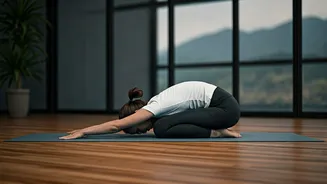
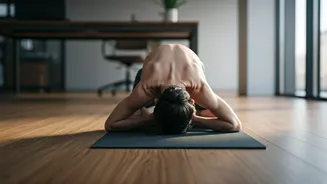
Balasana, or Child's Pose, is a foundational resting posture in yoga, named for its resemblance to the fetal position. [2] It is known as a moment of calm and restoration, but it's also an active pose that provides a significant physical stretch. [17, 13] The pose gently lengthens the spine, opens the hips, and calms the nervous system. [13, 22] It’s celebrated for its ability to relieve stress and tension in the back, shoulders, and neck—precisely the areas that suffer most from desk work. [9] This makes it an incredibly effective tool to have in your wellness arsenal, accessible to almost everyone, regardless of yoga experience. [11]
How to Perform the Classic Child's Pose
Finding the full benefit of Balasana is all about proper form. Here’s a simple step-by-step guide: 1. Begin by kneeling on the floor or a mat. Touch your big toes together and sit back on your heels. [3] 2. Separate your knees so they are about hip-width apart, which creates space for your torso. [13] 3. On an exhale, fold forward, allowing your torso to rest between or on top of your thighs. [4] 4. Let your forehead rest gently on the floor. [5] Don't force it; if your head doesn't reach, place a folded blanket or a block underneath for support. [11] 5. Position your arms. For deep shoulder relaxation, rest your arms alongside your body with palms facing up. [3] For a more active stretch through the back and shoulders, extend your arms out in front of you with palms facing down. [5] 6. Breathe deeply. Focus on sending your breath into your back, feeling it expand. Hold for 30 seconds to a few minutes, releasing tension with each exhale. [10, 11]
Variations for Every Body and Need
Child's Pose is highly adaptable. If the classic version doesn't feel comfortable, try one of these modifications: * **For Tight Hips or Knees:** Place a rolled blanket or bolster between the back of your thighs and your calves to reduce pressure on the knees. [4, 5] You can also practice a Wide-Knee Child's Pose, separating your knees as wide as your mat, to create more space for the hips and torso. [18] * **For a Deeper Shoulder Stretch:** From the extended-arm position, come up onto your fingertips to create an active stretch, or place your hands on yoga blocks. [19] Another option is the "Thread the Needle" variation: slide one arm under the opposite armpit, resting your shoulder and head on the floor for a gentle twist. [8, 19] * **For Desk-Side Relief:** You don't even need a mat. A standing variation can be done by placing your hands on your desk, walking your feet back, and hinging at your hips until your back is flat. [17] A seated version involves folding forward over your thighs while in your chair. [17]
Making It a Workday Habit
The key to relief is consistency. You don't need to hold the pose for a long time to feel its benefits. Set a reminder to stand up and stretch every 30-60 minutes. [7] A one-minute Child's Pose can be a powerful reset button for both body and mind. It calms the central nervous system, promotes better digestion through gentle compression, and encourages deeper, more mindful breathing. [22, 23] Think of it not as an interruption to your work, but as an investment in your focus and comfort for the rest of the day. By incorporating this simple pose into your routine, you actively counteract the physical stress of your job and cultivate a sense of peace amidst the daily hustle. [22]