




An Orbital Emergency Call
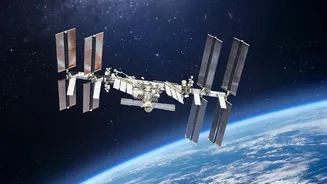
The International Space Station (ISS) is more than just a laboratory in orbit; it's a complex, continuously operating outpost that relies on constant communication with Mission Control in Houston. When a key Space-to-Ground Antenna (SGANT) failed, it created
a significant issue, impacting the high-speed data transmission essential for scientific experiments and daily operations. This made its replacement a time-sensitive and high-priority task for the Expedition 75 crew. The repair required a two-part spacewalk. An initial outing on August 18 saw the astronauts remove the faulty hardware, but the complex work of disconnecting cables and bolts took longer than planned, necessitating a second spacewalk to install the new unit.
A Choreographed Dance in the Void
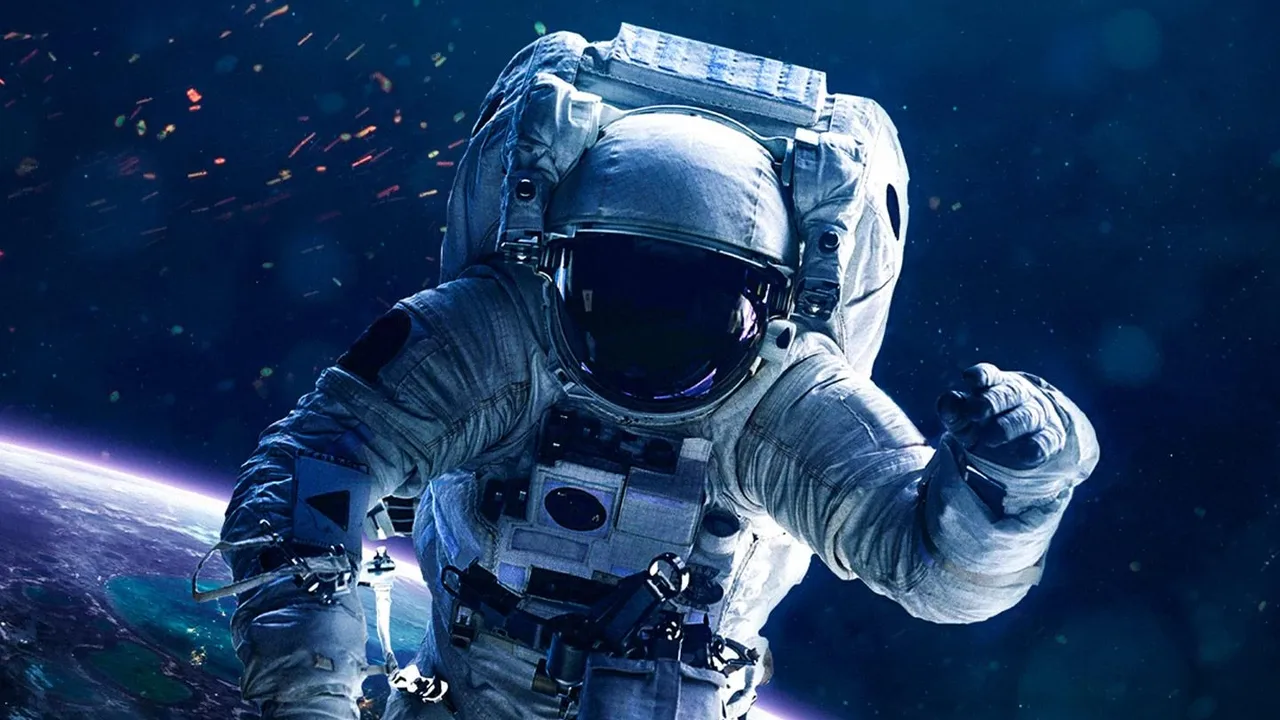
The delicate and dangerous task fell to NASA astronaut Anil Menon and European Space Agency (ESA) astronaut Sophie Adenot. On Tuesday, August 25, they ventured outside the station's Quest airlock for the 283rd spacewalk in support of ISS maintenance and assembly. Spacewalks, or Extravehicular Activities (EVAs), are among the most demanding tasks an astronaut can perform. For this mission, Menon was attached to the end of the Canadarm2 robotic arm, which maneuvered him into position, while Adenot translated using handrails. The entire operation, which began at 8:27 a.m. EDT, was a meticulously planned procedure lasting about six and a half hours.
The Delicate Swap and a Piece of History
During the nearly seven-hour EVA, Menon and Adenot successfully installed the spare antenna and connected it, restoring a crucial communications link for the orbiting lab. After installing the new hardware, they moved the broken antenna to a more permanent storage location on the station's truss. Initial tests from the ground confirmed that the new antenna was receiving power and transmitting data successfully. The spacewalk marked a significant milestone for both astronauts. It was the third EVA for Anil Menon, who traces his ancestry to Kerala, India. For Sophie Adenot, it was her second spacewalk, building on her historic first EVA on August 18, which made her the first woman from France to work in the vacuum of space.
Why This High-Stakes Repair Matters
The ISS has been continuously occupied for over two decades, serving as a vital platform for scientific research that benefits life on Earth and prepares humanity for future long-duration missions to the Moon and Mars. Like any complex machine, it requires constant upkeep. This successful repair highlights the incredible skill and international cooperation needed to maintain our foothold in low-Earth orbit. It underscores the hands-on, high-stakes work that astronauts must be prepared to carry out to keep the station functional. Each successful EVA not only extends the life of the station but also provides invaluable experience for the challenges of future space exploration, where repairs will be even more critical and remote.