






The River That Watered an Industry
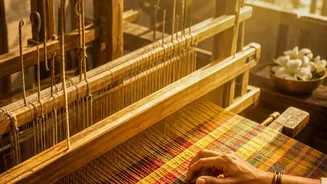
Long before the first modern mill, the Coimbatore region was a textile hub, with evidence of trade reaching even ancient Rome. The area's rich black soil was perfect for cotton cultivation. The key ingredient that tied it all together was the Noyyal River.
Originating in the Vellingiri Hills of the Western Ghats, the seasonal river and its intricate system of tanks and channels, many built by Chola kings, provided the lifeblood for agriculture and industry. When the industrial revolution arrived, this ready water source was essential for washing, processing, and dyeing cotton, laying the foundation for an industrial boom.
Birth of the Manchester of South India
The modern textile story began in the late 19th century. The establishment of the Coimbatore Spinning and Weaving Mills in 1888 by Sir Robert Stanes marked the start of industrial-scale production. This was followed by a wave of new mills in the early 1900s. A major catalyst for growth was the commissioning of the Pykara hydro-electric project in the 1930s, which provided abundant and cheap power. This, combined with a decline in Mumbai's cotton industry, led to a textile boom in Coimbatore. Mills mushroomed along the Noyyal's banks, transforming the city's economy and landscape, and cementing its status as a major industrial centre.
A Legacy of Prosperity and Pollution
The unbridled growth came at a severe cost. For decades, textile units, particularly dyeing and bleaching factories in the Coimbatore-Tiruppur corridor, discharged untreated effluents directly into the Noyyal. By the 1990s, the river was heavily contaminated with toxic chemicals, heavy metals, and dyes. Once a source of drinking water and irrigation, the river became unusable, and the groundwater in surrounding areas was poisoned. Agricultural land was rendered infertile, and a public health crisis emerged. The Orathapalayam Dam, built for irrigation, tragically became a storage tank for industrial effluent. The very river that enabled Coimbatore’s prosperity became a symbol of its environmental toll.
The Tangible Echoes of History
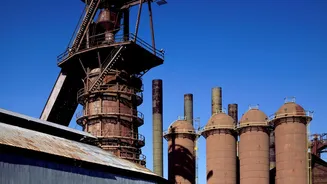
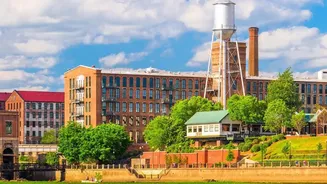
Despite the decay, the industrial heritage of the Noyyal remains visible. Along its course stand the remnants of this bygone era: imposing colonial-era mill buildings, old company houses, and the foundational engineering that powered it all. The network of anicuts (check dams) and canals, some over 700 years old, are themselves heritage structures that speak to a long history of water management. Though many old mills are gone, some structures remain, repurposed or decaying, serving as silent witnesses to the city’s industrial journey. These sites, from the old Stanes Mill to the intricate system of tanks, form a scattered, unofficial museum of Coimbatore's textile past.
Restoring a River, Reclaiming a Heritage
In recent years, there has been a growing movement to save the Noyyal and, with it, its heritage. Citizen-led groups like Siruthuli, in collaboration with government bodies, have initiated extensive clean-up and restoration projects. Efforts have focused on desilting the riverbed, restoring streams, renovating ancient check dams, and raising awareness. The goal is not just to clean the water but to revive the entire river ecosystem. There is a growing recognition that the river is not a drain but a vital piece of Coimbatore's natural and cultural heritage. These efforts offer hope that the Noyyal can be revived, allowing its story—of both creation and destruction—to be preserved for the future.