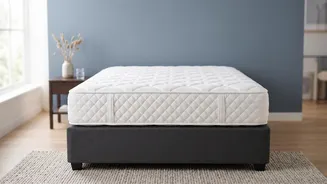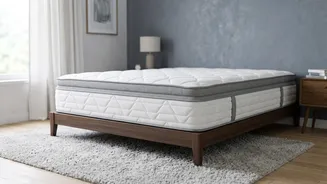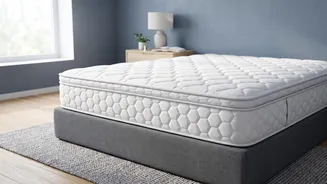








Choosing a spring mattress can feel overwhelming, with terms that sound similar but mean very different things. The core of the decision often comes down to a trade-off between two key features: motion transfer and bounce. It's a choice that pits a stable,
undisturbed night against a lively, responsive surface. Understanding this balance is the first step towards finding the perfect bed for your sleep style.
What is Motion Transfer?
Motion transfer is a term that describes how movement spreads across the surface of a mattress. Imagine a glass of water on one side of the bed. If someone on the other side tosses and turns, does the water ripple or stay still? A mattress with low motion transfer absorbs movement locally, meaning you are less likely to be disturbed by a restless partner, a child climbing into bed, or even a pet jumping on or off. This quality, often called motion isolation, is a top priority for couples and light sleepers who wake up easily. Mattresses that excel at this often feel more stable and grounded, absorbing energy rather than spreading it.
Understanding Mattress Bounce
Bounce, on the other hand, is about responsiveness. It describes how quickly a mattress returns to its original shape after pressure is removed. A bouncy mattress has a springy, lively feel; it pushes back when you move, making it easier to change positions, sit up, or get out of bed. This is different from firmness, which describes how hard or soft a mattress feels. You can have a soft but bouncy bed or a firm one with very little bounce. While some people love the responsive feel, the downside of high bounce can be higher motion transfer—the very energy that makes it easy to move can also travel across the bed and disturb a partner.
The Heart of the Mattress: Coil Types
The trade-off between motion isolation and bounce is decided deep inside the mattress, in its support core. For spring mattresses, this means the type of steel coils used. Not all coils are created equal, and their design directly impacts how the mattress performs. The four main types are Bonnell, offset, continuous wire, and pocketed coils. The crucial difference lies in whether the springs are connected to each other or work independently. This single design choice is the main reason two spring mattresses can feel completely different.
For Undisturbed Sleep: Pocket Coils
If your main goal is to minimise disruptions from a partner, pocketed coils are the superior choice. In this system, each coil is individually wrapped in a fabric 'pocket'. Because the springs are not wired together, they can move independently. When you put pressure on one coil, only that coil and its immediate neighbours compress. This design is excellent at isolating motion, so you feel very little of what happens on the other side of the bed. This makes pocket coil mattresses a go-to recommendation for couples. The trade-off is that they may feel slightly less bouncy than traditional interconnected spring systems.
For a Responsive Feel: Bonnell and Continuous Coils
Bonnell coils are the oldest and most common type, shaped like an hourglass and linked together by wires to form a single unit. Continuous wire systems are similar, formed from one long piece of wire. Because these coils are all interconnected, they move as a system. This creates a very responsive and bouncy feel, which some people prefer. However, this interconnectedness is also why they are poor at isolating motion. When someone moves, the energy travels across the entire mattress, creating the 'trampoline effect' that can easily wake a sleeping partner. These mattresses are often more affordable and can be a good choice for single sleepers or guest rooms where partner disturbance is not a concern.
Finding Your Perfect Balance
Ultimately, there is no single 'best' option—only what is best for you. The choice between low motion transfer and high bounce is a personal one. If you share a bed and are a light sleeper, a mattress with pocketed coils that prioritises motion isolation is likely the right call. You will sacrifice some bounce for the sake of undisturbed sleep. If you sleep alone, prefer a more traditional and responsive feel, or find it difficult to move on lessndouncy surfaces, a Bonnell or continuous coil mattress might be more comfortable and is often more budget friendly. Hybrid mattresses, which combine a coil base with layers of foam or latex, also offer a middle ground, often using pocketed coils for support while adding foam on top to help absorb movement.