





A New Paradigm in Public Safety
For decades, earthquake early warning (EEW) systems have been the exclusive domain of governments and well-funded research institutions. They rely on networks of highly sensitive, scientific-grade seismometers that are incredibly expensive to build and maintain.
This has left vast, populated regions of the world without any form of automated alert. Now, a technological revolution is democratizing earthquake safety. By harnessing the power of the Internet of Things (IoT) and the smartphones already in our pockets, a new generation of low-cost warning systems is emerging. These systems use a radically different approach: instead of a few perfect sensors, they use thousands, or even millions, of good-enough ones to create a dense, resilient, and affordable public safety network.
The Science of a Split-Second Warning
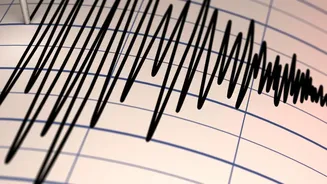
The entire concept of an early warning hinges on a simple fact of seismology: earthquakes release different types of energy waves that travel at different speeds. The first to arrive is the P-wave (Primary wave). It travels fastest and is generally less destructive, often felt as a preliminary jolt or rumble. Following behind is the slower but far more damaging S-wave (Secondary wave), which causes the violent side-to-side and up-and-down shaking responsible for most structural collapses. The time gap between the arrival of the P-wave and the S-wave can be several seconds to over a minute, depending on your distance from the earthquake's epicentre. It is within this precious window that modern EEW systems operate. By detecting the initial P-wave, a system can issue an alert before the destructive S-wave arrives, giving people a chance to take protective action.
How the IoT Network Does It
The unsung hero of this technology is the MEMS (Micro-Electro-Mechanical Systems) accelerometer. It’s a tiny, inexpensive motion sensor built into virtually every modern smartphone to handle tasks like rotating the screen. Researchers and engineers realised that these same sensors are sensitive enough to detect the ground vibrations from an earthquake’s P-wave. Companies and research projects are now deploying dedicated IoT devices—small boxes containing these accelerometers—that can be installed in buildings across a city or region. Others, like Google's Android Earthquake Alerts system, go a step further by turning the phones themselves into a massive, crowdsourced seismic network. When one stationary phone or dedicated sensor detects shaking consistent with a P-wave, it instantly sends a signal to a central cloud server.
From Sensor to Smartphone in Seconds
A single sensor alert could be a false alarm—a passing truck or construction work. The system's true power lies in the network. The cloud-based servers use sophisticated algorithms to analyse incoming signals from many sensors in real-time. If multiple sensors in the same area report shaking simultaneously, the system can confirm a genuine earthquake is underway. It then rapidly calculates the epicentre and estimates the magnitude. Once confirmed, a warning is broadcast to smartphone users in areas projected to be affected by the incoming S-waves. This entire process, from initial detection to the alert appearing on a user’s screen, happens in a matter of seconds. The alert itself is unambiguous: a loud alarm and a clear instruction to “Drop, Cover, and Hold On.” For those far enough from the epicentre, this can mean a warning of 10, 20, or even 30 seconds—enough time to move away from windows or get under a sturdy table.
Real-World Impact and Future Potential
This is not a theoretical exercise. Systems like the one built into Android phones are already active in numerous countries, detecting thousands of earthquakes and issuing millions of alerts. Social enterprises like Grillo are deploying low-cost sensor networks in Mexico and other seismically active regions, providing warnings where none existed before. While these low-cost systems are not a replacement for high-end scientific networks, they serve as a powerful supplement, drastically increasing the density of sensor coverage in urban areas. They prove that a connected city can become its own shield, leveraging everyday technology to protect its citizens. As more devices come online and algorithms become smarter, the speed and accuracy of these warnings will only improve.