



A Country Without A Road Network
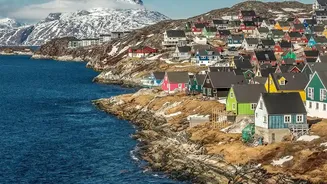
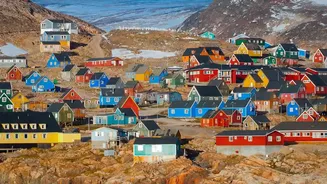
It’s a fact that can be difficult to grasp: in Greenland, you cannot drive from one town to another. While towns like the capital, Nuuk, have their own local road systems with buses and a handful of traffic lights, these roads simply end at the edge of town,
giving way to the vast, untamed wilderness. The entire country has a very limited road network, and none of it links the scattered coastal settlements where the majority of the 56,000 residents live. This isn't an oversight or a sign of being 'backward'; it is a practical adaptation to one of the most extreme environments on Earth. Instead of asphalt, Greenlanders rely almost entirely on air and sea travel to move between communities.
The Challenge of Ice and Water
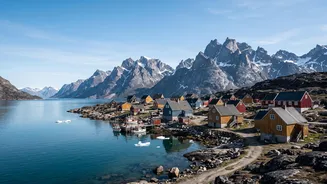
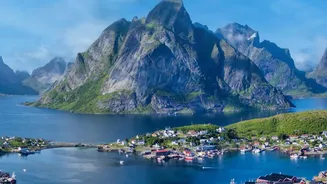
The primary reason for the lack of roads is Greenland's formidable geography. About 80% of the island is covered by a massive ice sheet that can be up to three kilometres thick. The remaining ice-free land, where all towns are located, is a rugged, mountainous coastline deeply scarred by fjords. These aren't gentle inlets but colossal channels of water, some cutting hundreds of kilometres inland and reaching depths of over 1,400 meters. Building bridges across them would be an immense engineering feat, and constructing roads over the unstable, shifting permafrost and through mountainous terrain is both logistically nightmarish and prohibitively expensive for such a small population.
The Coastal Highway of the Sea
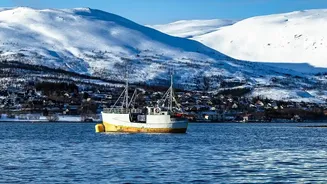
Where roads are absent, the sea becomes the essential link. For centuries, the coastline has served as Greenland's transportation network. Today, this role is filled by a variety of vessels, from private boats to passenger ferries that form a lifeline for many communities. The most iconic of these is the Sarfaq Ittuk, a coastal ferry operated by Arctic Umiaq Line. It travels weekly along the west coast, from Ilulissat in the north to Qaqortoq in the south, stopping at 12 towns and settlements along the way. For some of the smallest, most remote villages, this ferry is the only consistent connection to the outside world, delivering people, mail, and goods.
More Than Just Transportation
Traveling by boat in Greenland is far more than just getting from point A to B; it's a fundamental part of the culture and a profound experience in itself. Onboard the Sarfaq Ittuk, you'll find more locals than tourists, as it is a way of life. The journey is a social event, a place for chance encounters and joyful reunions as families greet the ship at every port. It also offers a front-row seat to some of the planet's most spectacular scenery. Passengers are treated to views of dramatic granite peaks, sprawling glaciers, and, of course, a constant parade of icebergs. The ship's bridge will even announce whale sightings, turning a routine trip into an impromptu wildlife safari.
Embracing a Different Pace of Life
For visitors, a journey on the coastal ferry is an opportunity to slow down and see the country through the eyes of its people. It’s a chance to understand how life is shaped by the rhythms of the sea and the seasons. The Sarfaq Ittuk operates from spring through early January, with the full route to Ilulissat navigable only in the peak summer months. While air travel, primarily via helicopters and small planes, handles more urgent or long-distance travel, the ferry embodies a more patient, communal, and scenic way of life. This reliance on the sea isn't a limitation but a defining characteristic of Greenlandic identity, demonstrating a unique harmony between human life and the powerful forces of nature.