




A Mid-Air Security Scare
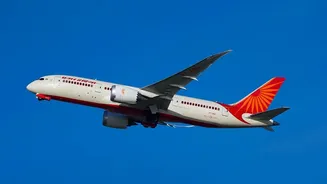
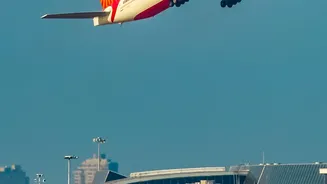
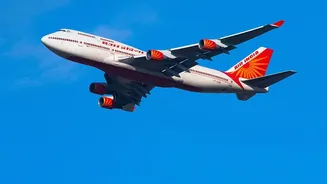
The incident unfolded when air traffic control systems detected that the Boeing 787 aircraft was transmitting 'squawk 7500', the universal transponder code for unlawful interference or hijacking. Despite the flight crew reportedly telling controllers
that everything was normal on board, established safety protocols are uncompromising. Any such signal, whether intentional or accidental, triggers a mandatory and immediate security response. The flight was promptly ordered to divert to the nearest suitable airport, which was Jaipur. Upon landing, the aircraft was directed to a remote isolation bay, a standard procedure to contain any potential threat away from the main terminal and other aircraft.
The Anatomy of a Non-Negotiable Protocol
When a threat is perceived, whether from a transponder code, a phone call, or an onboard note, a multi-agency response kicks in. At the departure or destination airport, a Bomb Threat Assessment Committee (BTAC), comprising officials from the Bureau of Civil Aviation Security (BCAS), the Central Industrial Security Force (CISF), the airline, and the airport operator, is convened. This committee assesses the threat's credibility and dictates the course of action. In most cases involving a specific flight, the threat is treated as 'specific' out of an abundance of caution, mandating a full-scale security operation. This involves deplaning all passengers and crew, offloading all baggage and cargo for rescreening, and a meticulous, inch-by-inch search of the empty aircraft by security and engineering staff. It's a time-consuming but vital process designed to eliminate every possibility of danger.
The Steep Financial Cost of Caution
While safety is priceless, a diversion is an incredibly expensive event for an airline. The costs begin to mount the moment the plane changes course. There is the significant expense of extra fuel burned during the diversion and potential holding patterns. Upon landing at an unscheduled airport, the airline faces fees for landing, parking, and ground handling services. The hours-long delay often means the flight crew exceeds its legally mandated duty time, necessitating a new crew to be brought in. Meanwhile, the airline must arrange for meals and, in cases of overnight delays, accommodation for hundreds of passengers. Industry estimates place the cost of a single diversion anywhere from tens of thousands to upwards of $200,000, depending on the aircraft size and the length of the disruption. These figures don't even include the cascading operational chaos, as the displaced aircraft and crew cause knock-on delays across the airline's network.
The Human Toll of a False Alarm
Beyond the financial and logistical fallout is the significant human cost. For passengers, a sudden diversion is a frightening and confusing experience. Once on the ground, they face hours of uncertainty, followed by the tedious process of deplaning and undergoing security checks all over again. In the case of Flight AI 2030, the ordeal stranded 306 people for hours, causing immense stress and disrupting countless personal and professional plans. Missed connections, cancelled meetings, and ruined family events are the unseen collateral damage of a false alert. While passengers may understand the necessity of caution, the experience is draining and leaves a lasting negative impression that erodes confidence in the reliability of air travel.
A System Under Strain
The incident with Flight AI 2030, which may have been caused by a technical glitch, highlights a critical dilemma in modern aviation. The system is designed to be failsafe, treating every alert as real until proven otherwise, because the consequences of ignoring a genuine threat are catastrophic. However, the increasing frequency of hoax calls and technical false alarms puts this robust system under immense strain. Each incident consumes vast resources from security agencies, airport operators, and airlines. While authorities are working to impose stricter penalties for those who intentionally cause such disruptions, including imprisonment and heavy fines, the challenge remains. The diversion of AI 2030 serves as a powerful reminder that in the complex world of aviation, even an alarm that ends in relief comes with a very real and very high price.