



What Is ‘Fungal Acne,’ Really?
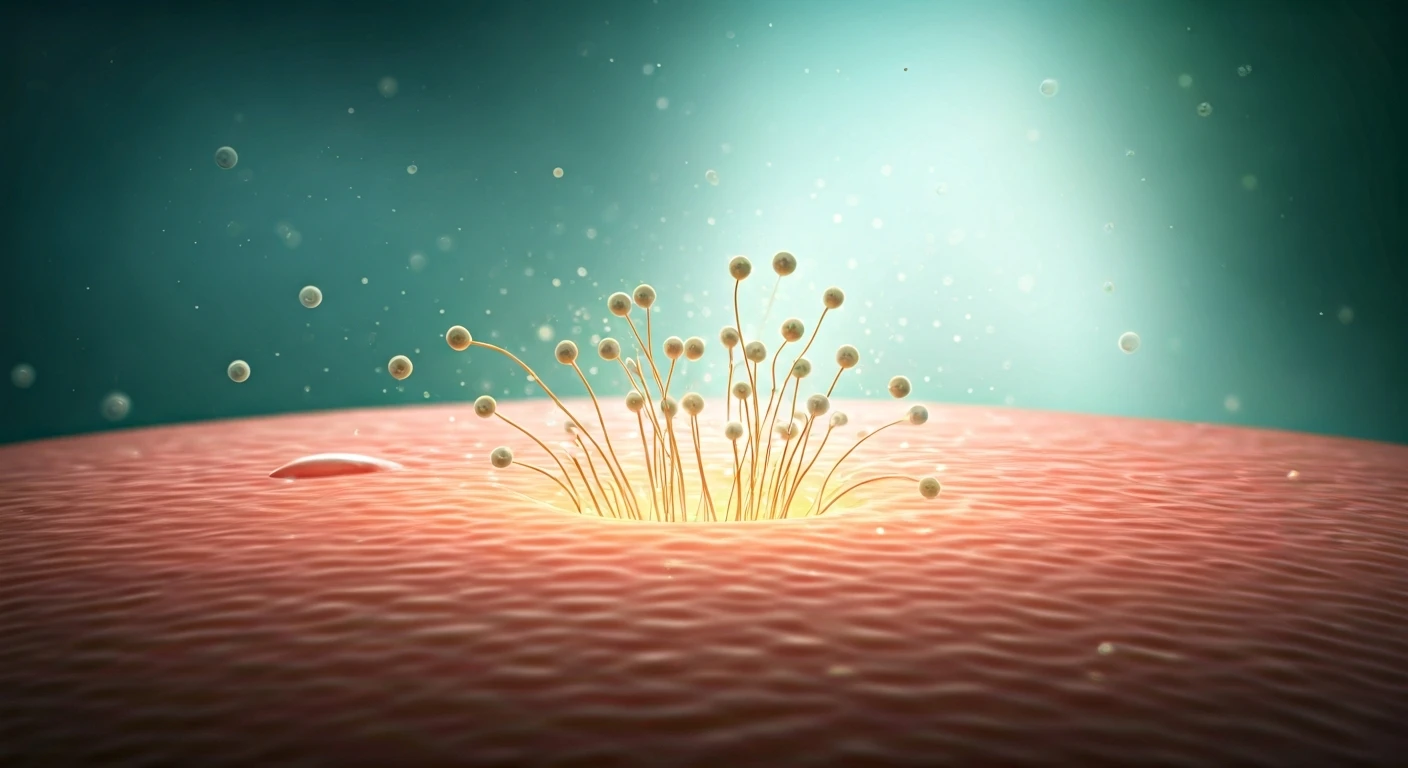
Despite its name, fungal acne isn’t actually acne. Medically known as Malassezia folliculitis (or Pityrosporum folliculitis), it's a fungal infection of the hair follicles. [1, 3] This condition is caused by an overgrowth of Malassezia, a type of yeast
that naturally lives on everyone's skin. [2, 3] While regular acne (acne vulgaris) is caused by bacteria clogging pores, fungal acne is triggered when this yeast gets out of balance and invades the hair follicles, causing inflammation. [2, 8] This is a crucial distinction, as treatments for bacterial acne often have no effect on fungal acne and can sometimes even make it worse. [3, 4]
Why Does Humidity Make It Worse?
Malassezia yeast thrives in warm, moist, and oily environments. [3, 10] High humidity is the perfect catalyst for a flare-up. When the air is saturated with moisture, sweat doesn't evaporate as efficiently from your skin. [19, 20] This trapped sweat mixes with your skin’s natural oils (sebum), creating an ideal breeding ground for the yeast to multiply. [10, 16] The combination of increased sweating and oil production in humid weather provides a feast for the yeast, leading to the characteristic itchy, red bumps on the chest, back, shoulders, and forehead. [5, 10]
How to Tell If You Have It
It’s easy to misdiagnose fungal acne, but there are a few key signs that set it apart from bacterial breakouts. The most telling symptom is itchiness; fungal acne is often very itchy, whereas bacterial acne typically isn't. [1, 9, 17] The appearance is also different. Fungal acne usually presents as small, uniform red bumps or pustules that appear in clusters, almost like a rash. [1, 8, 18] In contrast, bacterial acne features a variety of lesion sizes, including blackheads, whiteheads, and deeper, more painful cysts that are scattered more randomly. [8, 15] If your breakouts are monomorphic (all the same size) and stubbornly itchy, there’s a good chance you’re dealing with a fungal issue. [17, 18]
How to Treat Flare-Ups at Home
Since fungal acne is caused by yeast, it requires antifungal treatments. Luckily, many effective options are available over-the-counter. Anti-dandruff shampoos containing ingredients like ketoconazole, selenium sulfide, or zinc pyrithione are a popular and effective remedy. [2, 7] You can use these as a body or face wash: apply a thin layer to the affected areas, let it sit for a few minutes to allow the active ingredients to work, and then rinse thoroughly. [13] Topical antifungal creams marketed for athlete's foot or jock itch, which contain ingredients like clotrimazole or miconazole, can also be effective. [3, 13] Consistency is key, as it can take several weeks of regular use to see significant improvement. [13]
How to Prevent Future Breakouts
Prevention is all about managing the conditions that allow yeast to thrive. Start by wearing loose, breathable fabrics like cotton to reduce trapped heat and sweat. [13, 23] It's crucial to shower and change out of sweaty clothes as soon as possible after a workout or on a particularly humid day. [2, 23] When it comes to skincare, opt for lightweight, oil-free, and non-comedogenic products that won't clog your follicles or feed the yeast. [7, 13] Some people find success with a maintenance routine, such as using an antifungal wash once or twice a week to keep the yeast in check, especially during humid months. [7, 11]
When to See a Dermatologist
If at-home treatments aren't clearing the breakout after several weeks, or if the condition is severe and widespread, it's time to consult a dermatologist. [13] A professional can confirm the diagnosis, which sometimes requires looking at a skin scraping under a microscope. [12] They can also prescribe more potent treatments, such as prescription-strength topical creams or oral antifungal medications like fluconazole or itraconazole. [2, 5] These oral medications are highly effective because they can reach the yeast deep within the hair follicle where creams might not. [2, 4]