



A Glimpse Into Alien Skies
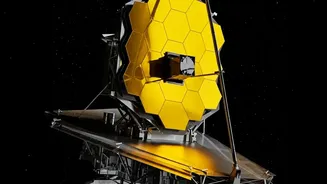
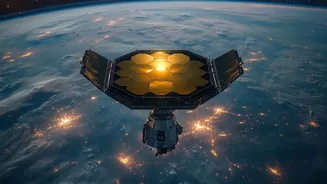
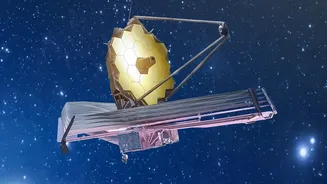
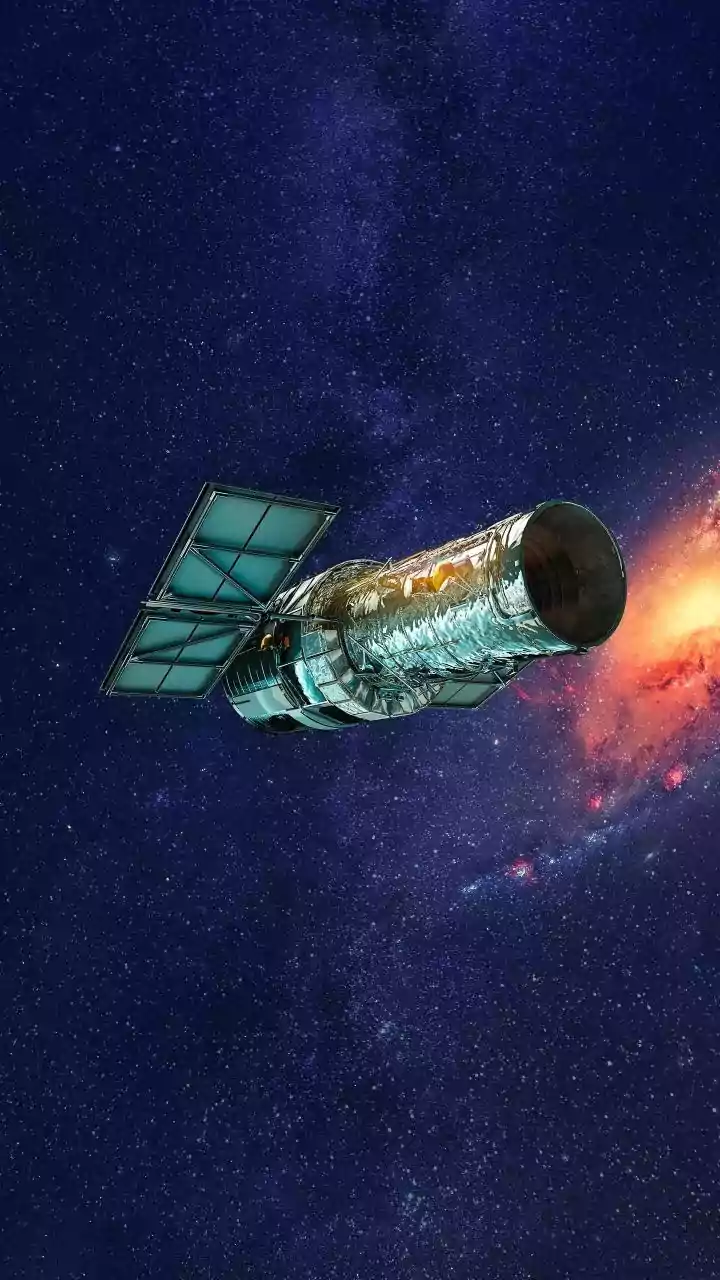
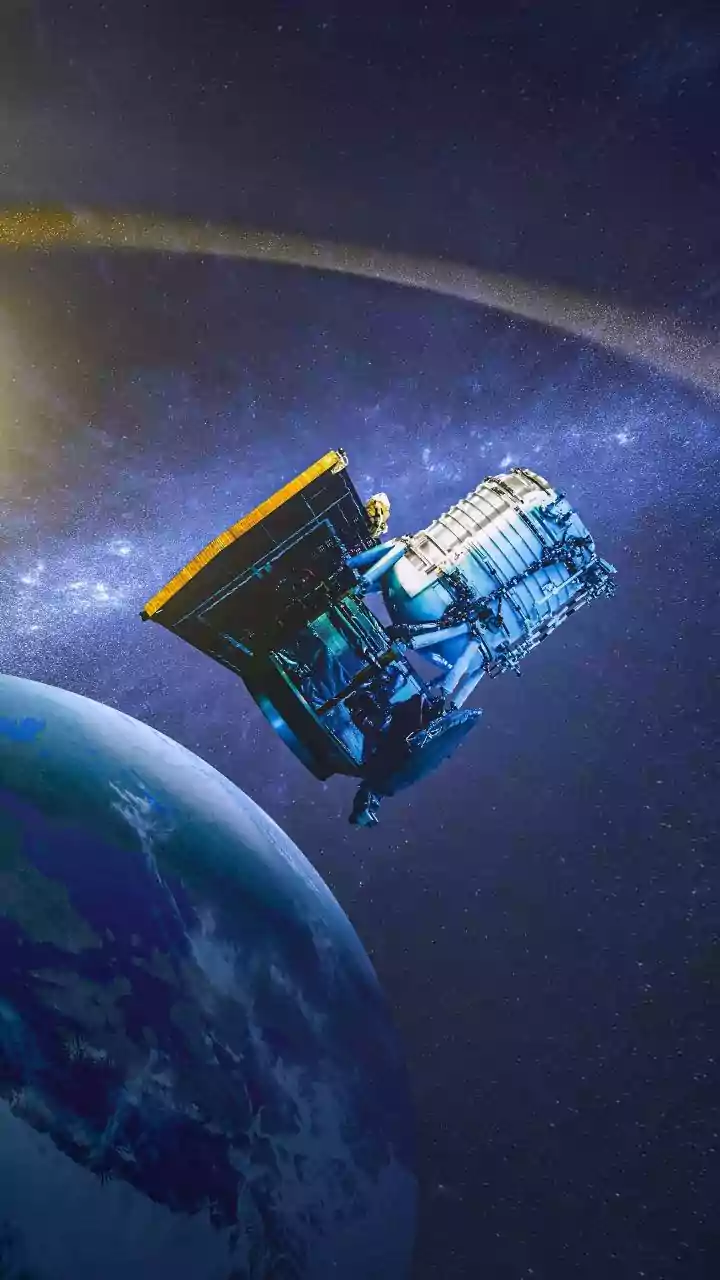
The James Webb Space Telescope, a joint marvel of engineering from NASA, the European Space Agency, and the Canadian Space Agency, has been revolutionising astronomy since it began operations. Its massive gold-coated mirror and unparalleled infrared sensitivity
allow it to peer into the atmospheres of distant planets, known as exoplanets, with a clarity we could only dream of just a few years ago. This capability is central to one of humanity's most profound questions: Are there other planets like Earth? The latest subject of its intense gaze is a class of planets known as 'super-Earths' — worlds larger than our own but smaller than gas giants like Neptune, and believed to be rocky.
The Target: A Sizzling Super-Earth
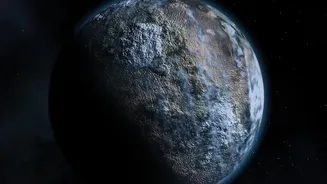
One of the most compelling recent targets is the exoplanet 55 Cancri e, located about 41 light-years away. This planet is an extreme example of a super-Earth. It orbits its star so closely that a year lasts less than 18 hours, and its surface is a scorching hellscape with temperatures hot enough to melt rock. For a long time, scientists debated whether a planet so close to its star could even hold onto an atmosphere, assuming it would be blasted away by intense stellar radiation. This is precisely what makes the new findings so significant. While 55 Cancri e is far too hot to be habitable, it serves as a crucial natural laboratory for studying rocky planet atmospheres.
Searching for Atmospheric Fingerprints
To find these clues, astronomers use a technique called transmission spectroscopy. As an exoplanet passes in front of its star from our perspective, a tiny fraction of the starlight filters through the planet's atmosphere. Different gas molecules in that atmosphere absorb specific wavelengths, or colours, of light. The JWST is exquisitely designed to capture this filtered light and analyse the resulting spectrum. The missing slivers of light act like a chemical fingerprint, telling scientists what elements and compounds are present. This recent work has revealed signs consistent with a substantial atmosphere containing carbon dioxide and, crucially, water vapour.
The Tantalising Clue of Water
Detecting water vapour is a monumental step, but it’s important to understand the context. This is not a discovery of flowing rivers or vast oceans. Instead, scientists have found evidence that the atmosphere of 55 Cancri e contains water in its gaseous form, along with other molecules. The findings suggest the presence of what's known as a 'secondary' atmosphere. This atmosphere isn't a remnant from the planet's formation but is instead being continuously replenished, likely by gases bubbling out of a vast, bubbling ocean of magma that may cover the planet's surface. The water vapour is part of this dynamic, volcanic environment.
Not Habitable, But Hugely Important
It's vital to stress that 55 Cancri e is completely inhospitable to life as we know it. With surface temperatures around 1,700 degrees Celsius, it's more of a lava world than a life-bearing one. So, why the excitement? The discovery is a game-changer because it proves that a rocky planet, even one in an extreme environment, can maintain a significant atmosphere rich in heavy molecules. It demonstrates that the building blocks for potentially habitable atmospheres can exist on rocky worlds and, most importantly, that our technology is now powerful enough to detect them. It's a critical proof of concept that opens the door to studying more temperate, Earth-like planets in the future.