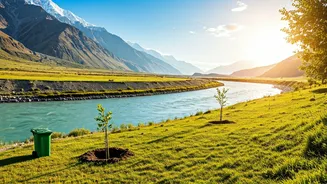






A River’s Plea
From the pristine glaciers of Gangotri to the vast delta of Gangasagar, the River Ganga charts a course through the heart of India's cultural and spiritual landscape. Revered as 'Ganga Maiya' (Mother Ganga), its waters are believed to wash away sins.
But for decades, this sacred river has been crying for help. A torrent of untreated industrial waste, urban sewage, and plastic pollution has turned vast stretches of this life-giving artery into a toxic stream, threatening both the ecosystem it supports and the millions of people who depend on it.
The Birth of a Mission
Government initiatives like the Namami Gange Programme have worked to tackle this enormous challenge at a macro level. However, a parallel movement has emerged, one that operates on a deeply personal, grassroots scale. The 'Atulya Ganga' (Incomparable Ganga) initiative, spearheaded by a group of army veterans, embodies this spirit. They conceptualised a modern-day 'parikrama'—a traditional reverential walk around a sacred entity. Their mission was to walk the entire 5,500-kilometre length of the Ganga's banks, from Gangotri to Gangasagar and back, to document pollution, raise awareness, and mobilise communities.
More Than Just a Walk
This was no simple pilgrimage. The journey blended physical endurance, scientific rigour, and spiritual practice. The walkers, led by men like Colonel Manoj Keshwar and Gopal Sharma, did not just observe. They actively engaged. Yoga and meditation sessions were held daily on the riverbanks, not just for personal well-being but as a public spectacle to draw people to the river and its cause. This fusion of spirituality and activism created a powerful, relatable message: caring for the Ganga is a form of worship, an act of service to both nature and the nation.
From Awareness to Action
The true impact of the movement lies in its ability to drive local campaigns. As the walkers passed through towns and villages, they became catalysts for action. They organised and participated in cleanliness drives on polluted ghats, encouraging locals to join in. They visited schools to educate children—the future custodians of the river—about waste management and the importance of a clean Ganga. By collecting water samples at regular intervals and making the data public, they provided concrete evidence of pollution hotspots, empowering local citizens to demand accountability from municipal authorities and industries.
The Ripple Effect of Citizen Action
The Atulya Ganga walk was not just about the trash they helped collect or the trees they planted. Its real power was symbolic and inspirational. It demonstrated that citizens need not wait for top-down solutions. The sight of veterans marching for months on end, dedicating their time and energy to a cause greater than themselves, resonated deeply. It has inspired smaller, localised groups to adopt their own stretches of the river, organising weekend cleanups and awareness campaigns. The movement has effectively created a template for environmental stewardship that is rooted in Indian cultural traditions—a powerful combination of devotion (bhakti), knowledge (gyan), and action (karma).