







Recent headlines about new protections for Goa’s famous turtle nesting beaches have caused a stir, leading to fears of a widespread ‘beach ban’. But what’s really going on? Let's break down the proposal and separate the facts from the fiction.
What is Actually Being Proposed?
In mid-November
2026, Goa's Forest Department submitted a proposal to the Department of Environment and Climate Change. The plan suggests officially designating 24 beaches—10 in North Goa and 14 in South Goa—as turtle nesting sites under the Coastal Regulation Zone (CRZ) Notification, 2019. This isn't a ban on tourism or public access. Instead, it’s a proposal to introduce stricter regulations to manage activities that can harm nesting turtles, particularly the endangered Olive Ridley species. The goal is to bring these beaches under a unified conservation framework. Currently, only four beaches (Morjim, Mandrem, Agonda, and Galgibaga) are formally notified for turtle protection, though nesting occurs elsewhere. The new proposal aims to expand this protection to reflect the reality of where turtles nest.
Why These Protections Are Needed
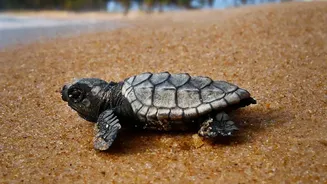
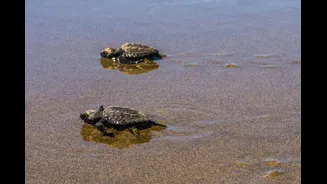
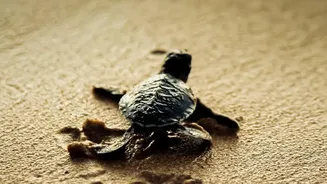
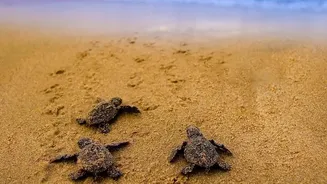
Goa's coastline is a crucial habitat for Olive Ridley turtles, which arrive annually between October and May to lay their eggs. These turtles and their hatchlings face numerous threats from human activity. Artificial lighting from shacks, hotels, and events can disorient female turtles looking for a nesting spot and lead hatchlings away from the sea. Loud music, vehicle movement on the sand, and improperly managed waste also pose significant dangers. Conservationists point out that these disturbances can reduce the number of successful nests. In fact, the proposal was prompted partly by concerns over a decline in nesting numbers observed during the recent season compared to previous years. By creating formal guidelines, authorities hope to minimise these threats and give the turtle population a better chance of survival.
Dispelling the 'Beach Ban' Myth
The heart of the confusion lies in the word 'restriction'. The proposal does not call for shutting down beaches. It suggests implementing controlled measures, primarily during the nesting season and at night. These regulations would likely include tighter controls on artificial lighting, managing the placement and operation hours of beach shacks, restricting late-night events, and preventing vehicles from driving on the sand in nesting areas. The aim is to create a balance where tourism can coexist with conservation. Access for the public and traditional fishing communities would continue, but with rules in place to ensure nesting sites remain undisturbed. The proposal is about responsible management, not outright prohibition.
The Beaches in Focus
The proposal significantly expands the list of protected areas beyond the currently notified sites of Morjim, Mandrem, Agonda, and Galgibaga. The new list includes some of Goa's most popular tourist destinations. In North Goa, beaches like Baga, Calangute, Candolim, Vagator, and Ashvem are on the list. In the South, the proposal covers Palolem, Patnem, Cavelossim, Varca, and Cola, among others. This comprehensive approach acknowledges that turtles don't just stick to the four well-known beaches. However, this wide scope is also the source of concern for local businesses who fear a one-size-fits-all regulation might not work for beaches with different levels of tourist activity.
Balancing Ecology and Economy
Local stakeholders, especially shack owners and traditional fishermen, have voiced significant concerns. They worry that broad restrictions could cripple their livelihoods, which are deeply tied to the tourism season that overlaps with the turtle nesting period. The Secretary of the Shack Owners Welfare Society, John Lobo, stated that while they support turtle protection, applying the same rules across 24 beaches is impractical and could harm the entire tourism industry. Fishermen are concerned that new rules might interfere with traditional fishing practices. These groups are seeking clarity and are asking to be included in the decision-making process to ensure that any new regulations are practical and don't unfairly penalise local communities that have coexisted with the turtles for generations.