






From Science Fiction to Commercial Fact
The dream of visiting space has captivated humanity for generations, but until recently, it was a privilege reserved for a handful of highly trained astronauts selected by national space agencies. The shift began with the rise of private aerospace companies,
often dubbed 'NewSpace.' Pioneers like Elon Musk’s SpaceX, Jeff Bezos’s Blue Origin, and Richard Branson’s Virgin Galactic started by competing for government contracts to launch satellites and ferry cargo to the International Space Station (ISS). Having proven their technology, their focus has expanded. They have successfully commercialised rocket launches, drastically lowering costs and opening the door to a new, ambitious market: private citizens with deep pockets who want to see Earth from above.
The Three Tiers of Space Travel
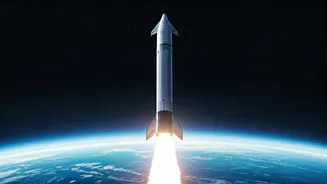
Not all space tourism is created equal. Today’s market is primarily split into three distinct experiences offered by the main players. First is Virgin Galactic. Their VSS Unity spaceplane is carried to a high altitude by a mothership before detaching, firing its rocket engine, and ascending to the edge of space. It offers several minutes of weightlessness and incredible views before gliding back to a runway landing. Second is Blue Origin with its New Shepard rocket. This is a more traditional rocket experience: a capsule launches vertically, separates from its booster, and spends a few minutes in suborbital space before returning to Earth under parachutes. Both offer what’s called a 'suborbital' flight—they go up and come straight back down without completing a full orbit of the Earth.
The Ultimate Upgrade: Orbital Flights
The third and most exclusive tier is orbital tourism, dominated by SpaceX in partnership with companies like Axiom Space. Instead of a few minutes in space, these missions last for days or even weeks. Passengers orbit the Earth multiple times in a SpaceX Dragon capsule, living and working in a zero-gravity environment, much like professional astronauts. These missions can include docking with the International Space Station, allowing private citizens to visit the orbiting laboratory. The Inspiration4 mission in 2021 was a landmark, becoming the first all-civilian crew to orbit the Earth. These trips represent a massive leap in complexity, duration, and, of course, cost compared to their suborbital counterparts.
The Price of a Ticket to the Stars
This ultimate getaway comes with a celestial price tag. A seat on a Virgin Galactic suborbital flight costs around $450,000. Blue Origin has not publicised its official pricing, but seats are believed to be in a similar, if not higher, price range, with one seat auctioned off for a staggering $28 million. For the truly premium experience of an orbital flight, the cost skyrockets into the tens of millions. A multi-day trip with Axiom Space aboard a SpaceX rocket to the ISS is reported to cost upwards of $55 million per person. The high cost reflects the immense expense of rocket development, fuel, ground support, and the rigorous safety protocols required for human spaceflight. For now, this is a luxury reserved for the world’s wealthiest individuals.
What’s Next on the Itinerary?
The industry is still in its infancy. Virgin Galactic and Blue Origin are working to increase their flight frequency to make the experience more routine. In the long term, visionaries in the field talk about building private space stations and even tourist bases on the Moon. Axiom Space is already constructing commercial modules that will first attach to the ISS and later form a private, free-flying station. Other companies are designing inflatable space habitats. While a weekend trip to a lunar resort is still the stuff of science fiction, the goal for these companies is clear: drive down costs through reusability and technological innovation, gradually making space more accessible. The journey will be long, but the first commercial steps have already been taken.