




Why Go Natural This Monsoon?
During the monsoon, high humidity traps airborne particles and prevents homes from ventilating properly. Using conventional chemical cleaners can release Volatile Organic Compounds (VOCs), which may lead to headaches and irritate your eyes, nose, and throat.
Spray cleaners are a particular concern, as they can be inhaled easily. In a damp, enclosed space, switching to natural alternatives like vinegar, baking soda, and neem is a smart choice for maintaining better indoor air quality while tackling monsoon-specific cleaning challenges.
The Power of White Vinegar
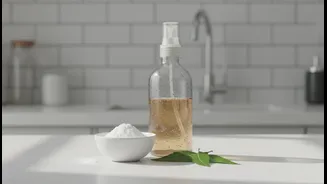
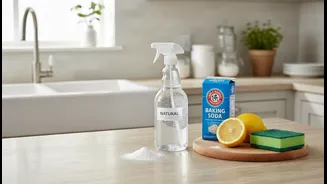
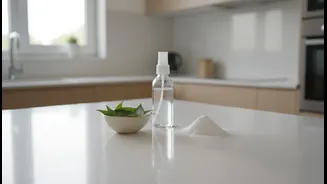
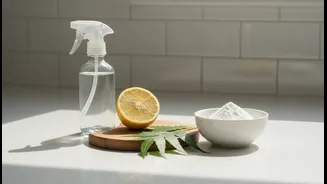
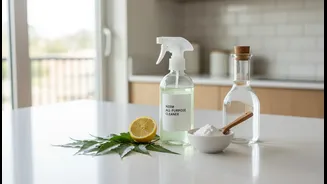
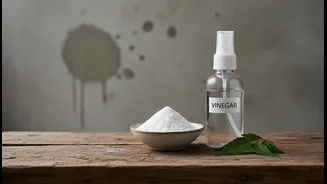
White vinegar is a monsoon cleaning champion due to its acidic nature, which is effective against mould and mildew. It also works as a natural deodoriser and disinfectant. For an all-purpose surface cleaner, mix equal parts white vinegar and water in a spray bottle. Use this solution on tiles, countertops, sinks, and glass. To combat the musty smell in clothes that haven't dried properly, add a cup of vinegar to the rinse cycle of your washing machine. It helps neutralise odours and removes detergent residue that traps moisture. The vinegar smell dissipates as the clothes dry.
Baking Soda: The Moisture and Odour Absorber
Baking soda, or sodium bicarbonate, is mildly abrasive and excellent at absorbing moisture and foul odours — two major monsoon concerns. To fight damp smells in wardrobes and refrigerators, simply place an open bowl of baking soda inside. For carpets and rugs that feel damp, sprinkle a generous amount of baking soda, let it sit for a few hours to absorb moisture, and then vacuum it up thoroughly. You can also make a powerful cleaning paste by mixing baking soda with a small amount of water. This is ideal for scrubbing grime from stovetops, sinks, and tile grout without using harsh chemicals.
Neem: Nature’s Pest Repellent
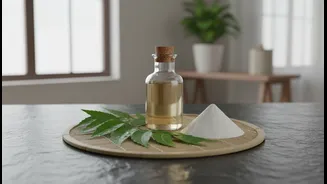
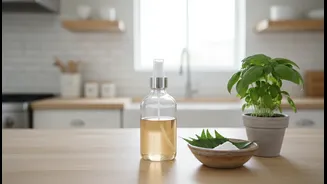
The rainy season often invites unwanted pests like ants, flies, and other insects into the home. Neem has been a traditional Indian solution for centuries, valued for its potent antibacterial and insect-repellent properties. To create a natural floor cleaner that deters pests, boil a handful of neem leaves in water. Once cooled, strain the liquid and use it to mop your floors. The residual smell, while not overpowering, helps keep insects at bay. You can also use diluted neem oil as a spray for plants and around window sills to manage pests. Its active compound, azadirachtin, disrupts the life cycle of many common insects.
Your DIY Monsoon Cleaning Recipes
Combining these ingredients creates even more powerful solutions. For a drain cleaner that tackles monsoon clogs and smells, pour half a cup of baking soda down the drain, followed by half a cup of vinegar. Let it foam for 15 minutes before flushing with boiling water. For a heavy-duty scrub for mouldy patches on bathroom tiles, create a paste with baking soda and vinegar. Apply it to the area, let it sit, and then scrub with a brush before rinsing. An effective floor-mopping solution can be made by adding a cup of vinegar and some neem water to your bucket of warm water.
Important Precautions to Remember
While these ingredients are natural, they require careful handling. Never use vinegar on porous stone surfaces like marble or granite, as its acidity can cause etching. Also, avoid using baking soda on aluminum cookware. The most critical rule is to never mix vinegar with chemical bleach, as this combination creates toxic chlorine gas. When using any new cleaning solution, it's always wise to test it on a small, inconspicuous area first to ensure it doesn't cause damage or discolouration.