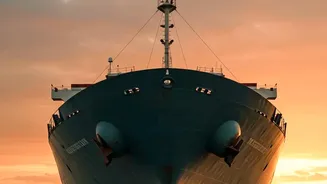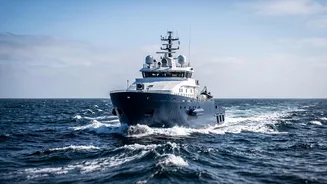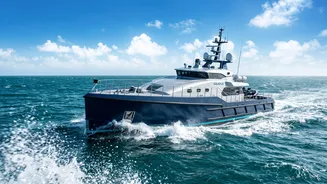




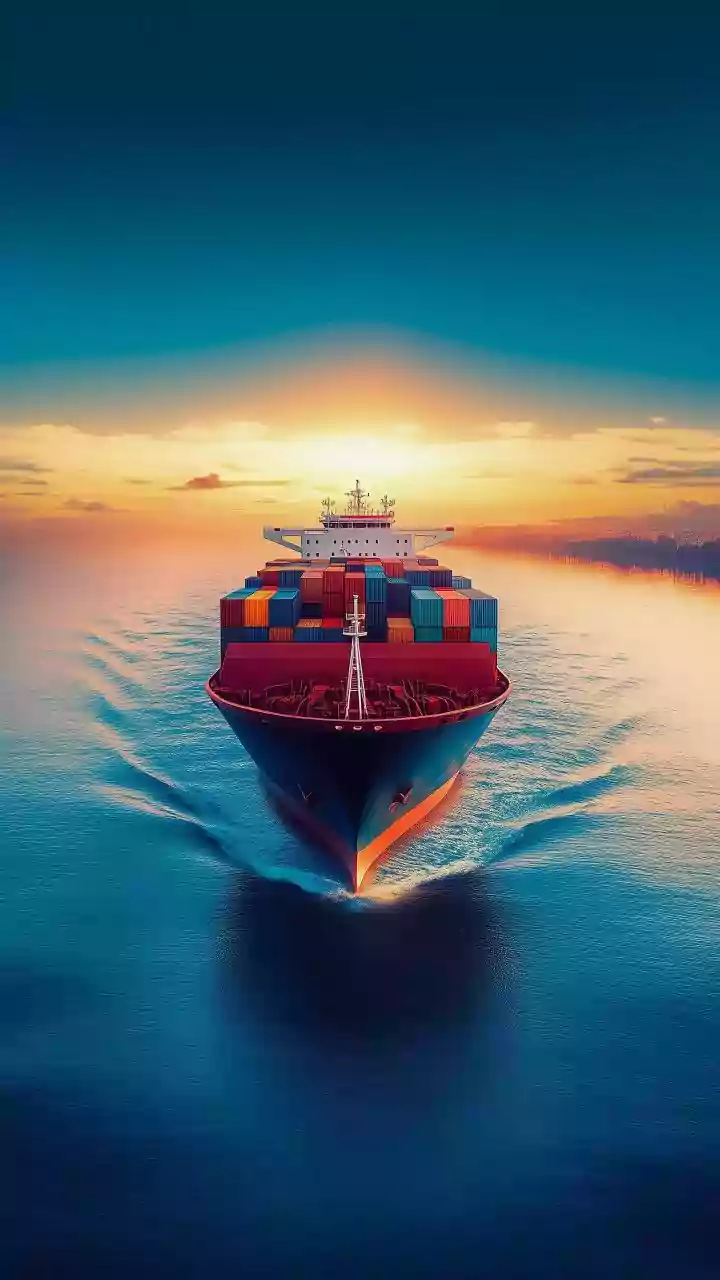
The idea of self-driving ships navigating the world’s oceans is moving from science fiction to reality, and the Indian Institute of Technology Madras is now at the helm of this transformation with its latest innovation, SeaNav.
The Challenge of Building a Self-Driving Ship
Autonomous vehicles are
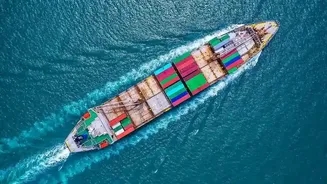
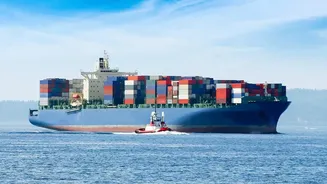
already on our roads, but creating a ship that can pilot itself is a monumental task. The global shipping industry, which moves over 80% of world trade, operates in one of the planet's most unpredictable environments. Testing new navigation algorithms on a real vessel is not only incredibly expensive but also complex and potentially dangerous. A single error could have enormous consequences. This is the primary hurdle that researchers worldwide have been trying to overcome: how do you safely test and perfect an autonomous system for a 300-metre-long tanker without putting actual ships, cargo, and the environment at risk?
Introducing SeaNav: A Digital Twin for the High Seas
Researchers at IIT Madras's Department of Ocean Engineering have developed an ingenious solution called SeaNav. It’s a real-time digital twin platform designed specifically for testing, validating, and training autonomous maritime navigation systems. Think of it as an ultra-realistic video game for artificial intelligence. Instead of deploying untested software on a real ship, developers can run it through millions of scenarios in SeaNav's virtual world. The platform creates a high-fidelity environment where ships, sensors, ocean conditions, and vessel traffic are simulated with incredible accuracy, allowing for safe and efficient development.
How Does It Actually Work?
SeaNav is much more than a simple simulation. Built on the powerful Unity3D engine, it creates a 'digital twin' of the maritime world, accurately replicating everything from ocean waves and vessel movements to complex port environments. The system has been calibrated using a benchmark model of a 320-meter tanker, ensuring that the results generated in the virtual world closely mirror real-world operations. According to Dr. Suresh Rajendran, an Associate Professor at IIT Madras, the platform combines digital twins, AI, advanced sensor fusion, and even virtual reality. This allows both AI systems and human operators to be trained in a completely safe setting before they are deployed in the real world.
A Major Leap for India's Maritime Goals
The development of SeaNav is a significant milestone for India's national ambitions. The platform directly aligns with the government's 'Sagarmala Programme' and 'Maritime India Vision 2030', both of which emphasize the need for smart ports, digital technologies, and autonomous systems. For years, countries in Europe and Asia have been leading the race to develop autonomous ships. Innovations like SeaNav signal India's growing capabilities and intent to become a key player in this advanced technological field, moving from a follower to a potential leader. This indigenous solution reduces reliance on foreign technology and paves the way for India to develop its own autonomous vessel ecosystem.
More Than Just Navigation
The applications for SeaNav extend far beyond commercial shipping. Its multi-vessel simulation capabilities make it a valuable tool for coastal surveillance, search—and—rescue operations, and maritime defence. By simulating complex scenarios, authorities can develop more effective strategies and train personnel for critical missions without deploying real assets. Furthermore, the technology aims to enhance safety at major Indian ports like Chennai, Mumbai, Visakhapatnam, and Kochi by supporting the development of AI—assisted tools to manage traffic and prevent accidents, making busy harbours safer and more efficient.