

Andhra’s Sour Sensation: Gongura Pachadi
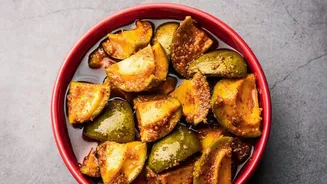
Travel down to Andhra Pradesh and Telangana, and you'll find a pickle that's as iconic as any mango achar: Gongura Pachadi. Made from sorrel leaves, known locally as gongura, this dish is a vibrant explosion of tangy and spicy flavours. The leaves, which
come in green and a more sour red-stemmed variety, are cooked down and blended with a fiery mix of red chillies, garlic, and spices. This pachadi is not just a condiment but a staple, often mixed directly with hot steamed rice and a dollop of ghee to create a simple yet profoundly satisfying meal. Its unique sourness sets it apart, offering a delicious taste of the region's culinary identity.
Bengal’s Pungent Pride: Kasundi
In Bengal, mustard is more than just an ingredient; it's a culinary obsession, and nothing showcases this better than Kasundi. Often called the 'queen of pickles', this is a pungent, ferocious mustard relish made from fermented mustard seeds. Far sharper and more intense than typical mustard sauces, its potent flavour can rival that of wasabi. Traditionally, Kasundi was a complex, ritualistic preparation, with recipes passed down through generations. While it's now a popular dipping sauce for snacks like fish cutlets and chops, its classic pairing is with hot greens (saag) and rice, where its sharp kick elevates the simplest of meals.
The Fiery Ghost of the Northeast: Bhoot Jolokia Pickle
For those who chase extreme heat, the Northeast offers a formidable challenge: Bhoot Jolokia pickle. Made from one of the world's hottest chillies, also known as the ghost pepper or Raja Mircha, this pickle is not for the faint of heart. Cultivated in Assam and Nagaland, the chilli boasts over a million Scoville Heat Units. The pickle balances this intense fire with the smoky flavour of the chilli itself, pungent mustard oil, and spices like garlic and ginger. A tiny amount is enough to add a powerful kick to any meal, from dal and rice to curries, making it a beloved condiment for spice lovers across the region.
Nagaland’s Umami Secret: Axone
A cornerstone of Naga cuisine, Axone (also known as Akhuni) is a fermented soybean product with a powerful, pungent aroma and a deep, savoury flavour. The name itself, from the Sümi dialect, translates to 'strong smell'. To make it, soybeans are boiled, mashed, and then wrapped in banana leaves to ferment for several days, sometimes over a fire. The resulting paste is a powerhouse of umami, used to enrich curries made with pork, fish, or chicken, and to make chutneys. While its smell can be an acquired taste, Axone is treasured for its ability to add a complex, savoury depth that is quintessentially Naga.
Himalayan Treasure: Lingri Pickle
High in the Himalayas, especially in Himachal Pradesh and Uttarakhand, a special seasonal pickle is made from a foraged delicacy: the fiddlehead fern, known locally as lingri or lungru. These young, coiled fern shoots are harvested for only a few weeks during spring and monsoon from damp forest floors. To make the pickle, the tender ferns are blanched and then cured in mustard oil with traditional mountain spices. The pickle has a unique crunchy texture and an earthy, green taste that is a world away from common vegetable pickles, capturing the flavour of the Himalayan wilderness in a jar.
Sikkim’s Radical Radish: Sinki
Another unique fermented food from the Himalayas is Sinki, a staple in Sikkim made from radish taproots. Unlike pickles preserved in salt or oil, Sinki relies on lactic acid fermentation. Radish roots are crushed and packed into a pit lined with bamboo sheaths and straw, then covered and left to ferment for about a month. Afterwards, it is sun-dried and can be stored for over a year. Sinki has a distinct sour-acidic taste and is most commonly used to make a flavourful soup (Sinki ko jhol) served with rice. It stands as a testament to indigenous preservation techniques that create both sustenance and flavour.