




The Unforgiving Lunar Night
Imagine a night that lasts for two full weeks, where temperatures plummet to an unimaginable minus 173 degrees Celsius. This is the reality on the Moon. With no atmosphere to trap and distribute heat, the lunar surface becomes one of the most hostile
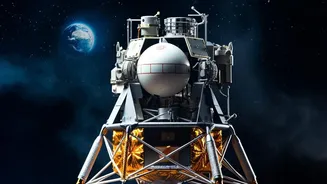
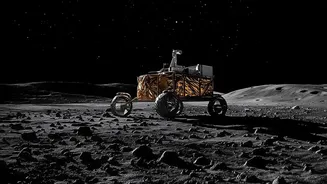
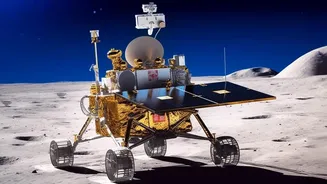
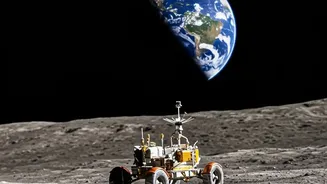
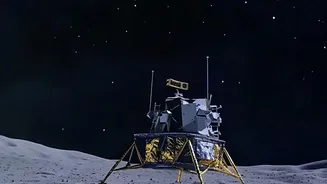
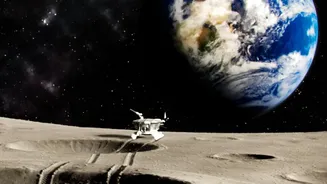
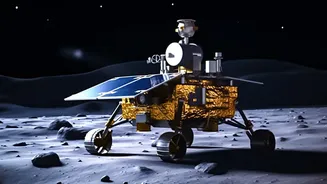
environments in the solar system as soon as the sun sets. For robotic landers and rovers, this extreme cold is a mission-killer. Batteries lose their ability to hold a charge, sensitive electronics freeze and crack, and lubricants can solidify, seizing up moving parts. Historically, most lunar missions have been designed as short-term sprints, timed to operate only during the lunar day before freezing to death. This has severely limited the scope of scientific research and our ability to establish a long-term presence.
A Hot New Solution: Self-Heating Tech
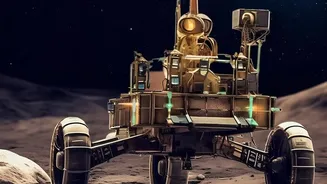
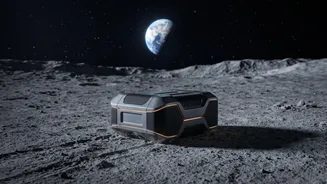
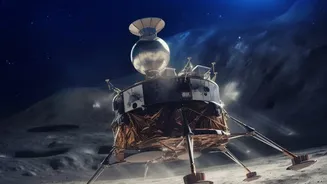
To turn lunar missions from temporary visits into extended stays, engineers are developing innovative self-heating modules. These are not your average space heaters. The primary technology involves Radioisotope Heater Units (RHUs). These are small, incredibly reliable devices that use the natural decay of a radioactive element, such as americium-241, to generate a steady supply of heat for years, all without any moving parts or reliance on solar power. Companies like Zeno Power are partnering with aerospace firms like Firefly Aerospace to integrate these nuclear-powered heaters into upcoming lunar landers, with demonstration missions planned. Another approach involves using controlled chemical reactions. Masten Space Systems, for example, developed a system that uses leftover oxidizer from a lander's propulsion system to generate heat through metal oxidation, offering a powerful, non-radioactive alternative. These technologies are designed to keep the spacecraft's core components—especially the batteries and computers—within their operational temperature range until the sun rises again.
Beyond Survival: A New Era of Exploration
Surviving the lunar night isn't just about preventing a lander from freezing; it's about unlocking the full potential of lunar exploration. With the ability to operate continuously, missions can gather far more data, conduct longer experiments, and explore much larger areas. This capability is essential for NASA's Artemis program, which aims to establish a sustainable human presence on the Moon. Long-duration robotic missions are needed to scout for resources like water ice, which is believed to be trapped in permanently shadowed regions at the poles. These regions are, by definition, perpetually dark and cold, making survival technology indispensable. By ensuring assets can operate for months or even years, these heating modules increase the scientific return on investment for each mission and lay the groundwork for permanent infrastructure, like power stations and habitats. The goal is to transform the Moon from a place we visit into a place where we can live and work.
Implications for India's Lunar Ambitions
This technological leap holds immense significance for India's own space exploration goals. The Indian Space Research Organisation (ISRO) has achieved remarkable success with its Chandrayaan missions, but like most, they have been constrained by the lunar night. The ability to survive the frigid darkness would be a game-changer for future missions. A lander equipped with a robust heating system could conduct long-term seismic studies, analyze the lunar soil over a full day-night cycle, and support more complex rover operations. The upcoming Lunar Polar Exploration Mission (LUPEX), a joint effort between India and Japan, aims to explore the lunar south pole for water ice, a region where night survival is a key challenge. While ISRO develops its own systems, the global advancements in radioisotope and chemical heating modules provide a proven technological pathway. Adopting or developing similar technologies will be crucial for ISRO to expand its scientific footprint on the Moon and cement India's position as a leading space-faring nation.