



The Late-Season Superstar
While the mango season in India starts as early as March, seasoned aficionados know that patience is a virtue. [11] The grand finale of the season belongs to the Chausa, a variety that typically begins to appear in mid-June and peaks in July and August.
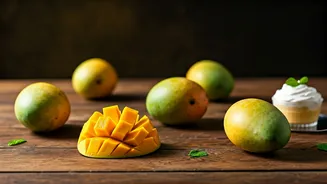
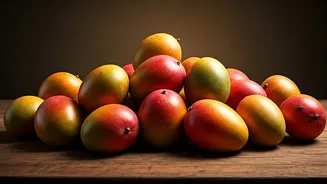
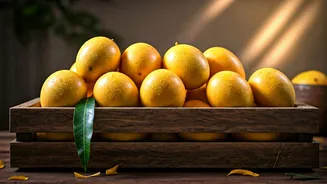
[2, 12, 14] Originally from the Hardoi-Malihabad belt of Uttar Pradesh, the Chausa was famously popularised by Sher Shah Suri in the 16th century after his victory at Chausa, Bihar. [2, 3] What makes it a showstopper? An intensely sweet, honey-like flavour, a rich aromatic profile, and a near-fiberless, meltingly soft pulp that makes it ideal for both eating fresh and pulping. [2, 13] Its golden-yellow skin, often with a greenish tint, holds a treasure that many consider the pinnacle of mango perfection. [3, 21]
The Weekend Prepping Phenomenon
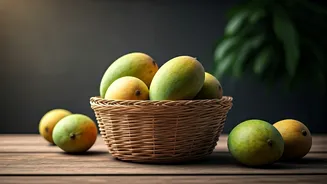
The arrival of Chausa coincides with the monsoon, and for many families, it triggers a beloved ritual: weekend prepping. This isn't about survivalist hoarding; it's a joyful, strategic effort to capture the fleeting taste of summer. With Chausa’s exceptionally juicy and pulp-rich flesh, it is perfect for creating large batches of aamras (mango pulp), which can be stored and enjoyed for weeks. [9] Weekends are spent peeling, chopping, and blending, turning kilos of fresh mangoes into golden puree. This puree becomes the base for countless weekday treats, from breakfast smoothies and lassis to quick after-dinner desserts. It’s a way to stretch the season and ensure that the king of fruits remains a part of the daily menu, even after its short market appearance ends.
A Buyer's Guide for Your Mandi Mission
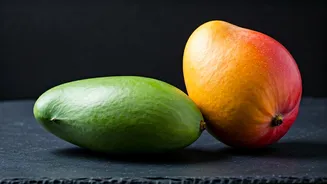
Stepping into a mandi can be overwhelming, so here’s how to pick the perfect Chausa. First, trust your nose; a ripe Chausa will have a strong, sweet fragrance near the stem. [16] Look for fruit that has a uniform greenish-yellow to golden-yellow hue and feels slightly soft when gentle pressure is applied. [3, 16] Avoid mangoes with wrinkled skin or dark, bruised spots. [16] Don't be deterred by a few black spots or sap marks, as these can sometimes indicate a very sweet, naturally ripened fruit with high sugar content. [17] Prices can fluctuate, but you can generally expect to find Chausa being sold by the kilogram, with wholesale rates currently varying by region and quality. [18, 24] If you buy semi-ripe mangoes, you can ripen them at home over a few days by keeping them at room temperature.
Prep Ideas Beyond the Traditional Aamras
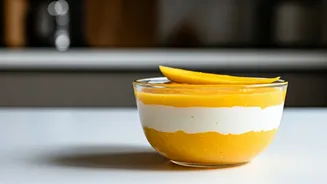
While aamras is king, your weekend prep can yield a variety of other delicious results. The non-fibrous texture of Chausa makes it perfect for more sophisticated desserts. Consider making a no-churn mango ice cream or kulfi, blending the pulp with condensed milk and cream for a rich treat. [27] Another simple idea is a mango trifle: layer crushed biscuits, mango pulp, and whipped cream in jars for a quick and elegant dessert. [20] For a savoury twist, the sweet pulp can be used to create a vibrant mango salsa with chopped onions, coriander, and a hint of chilli — a perfect accompaniment to grilled chicken or fish. [27] You can even make a chunky mango jam by cooking down the fruit with sugar and a squeeze of lime. [25]