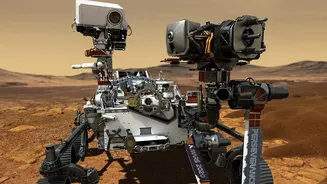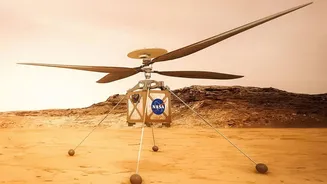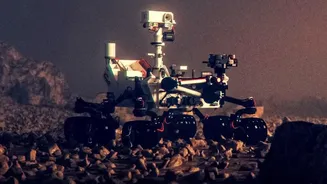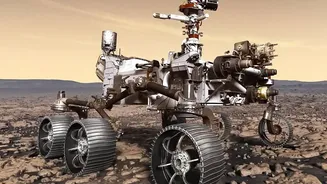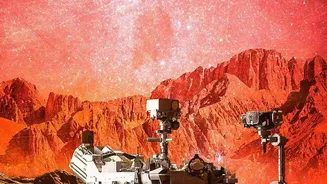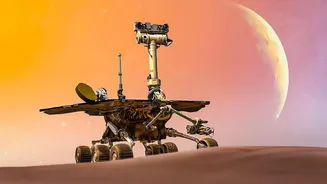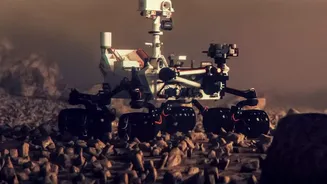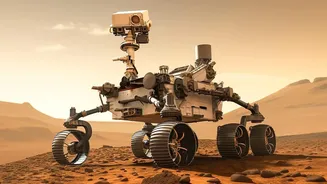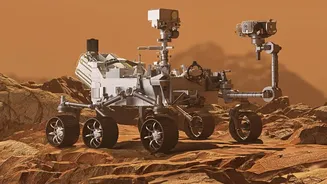



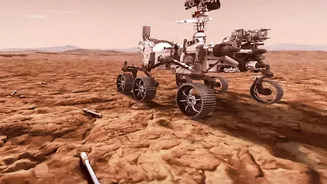
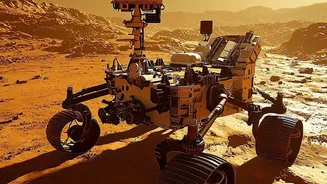
For years, NASA's Perseverance rover has been drilling and storing precious rock samples on Mars. Now, the agency is kickstarting a fresh effort to map out the incredibly complex journey required to bring them home for the first time in history.
A Treasure Trove on the Red Planet
Since
its arrival in Jezero Crater in February 2021, the Perseverance rover has been acting as a meticulous geologist, collecting a diverse portfolio of Martian rock, soil, and atmospheric samples. These samples, sealed in ultra-clean titanium tubes, are humanity's best hope for answering a profound question: did life ever exist on Mars? The crater, believed to be an ancient lakebed, offers a prime location to find potential signs of past microbial life. The rover has gathered samples from various geological formations, including igneous and sedimentary rocks, and has strategically dropped a cache of ten tubes on the surface as a backup, while keeping others stored onboard. This collection represents a scientific treasure waiting for an unprecedented interplanetary retrieval.
Why NASA Needs a New Plan
Bringing samples from another planet is one of the most ambitious goals in space exploration, but the original Mars Sample Return (MSR) program has faced significant hurdles. Independent reviews flagged major challenges, with one projecting the mission's cost could swell to $11 billion and push the sample return date to 2040. NASA deemed this timeline and budget unacceptable. In response, the agency announced a new initiative on November 9, 2026: the Perseverance Sample Retrieval Architecture, or PSRA. This new strategic review is tasked with finding a more efficient, affordable, and timely way to get the job done, especially as international efforts, like China's Tianwen-3 mission, aim for a Mars sample return as early as 2031.
The Cosmic Relay Race
While the PSRA team will re-evaluate the architecture, the fundamental concept remains a multi-stage cosmic relay. The original plan, a joint effort with the European Space Agency (ESA), provides a blueprint. First, a Sample Retrieval Lander would touch down on Mars. This lander would carry a small rocket, the Mars Ascent Vehicle (MAV). The next step involves collecting the sample tubes, either directly from Perseverance or from the depot the rover created on the surface. These tubes would then be loaded into a basketball-sized container aboard the MAV. This is where one of the mission's most historic moments would occur: the first-ever rocket launch from the surface of another planet, sending the precious container into Martian orbit.
The Long Journey Home
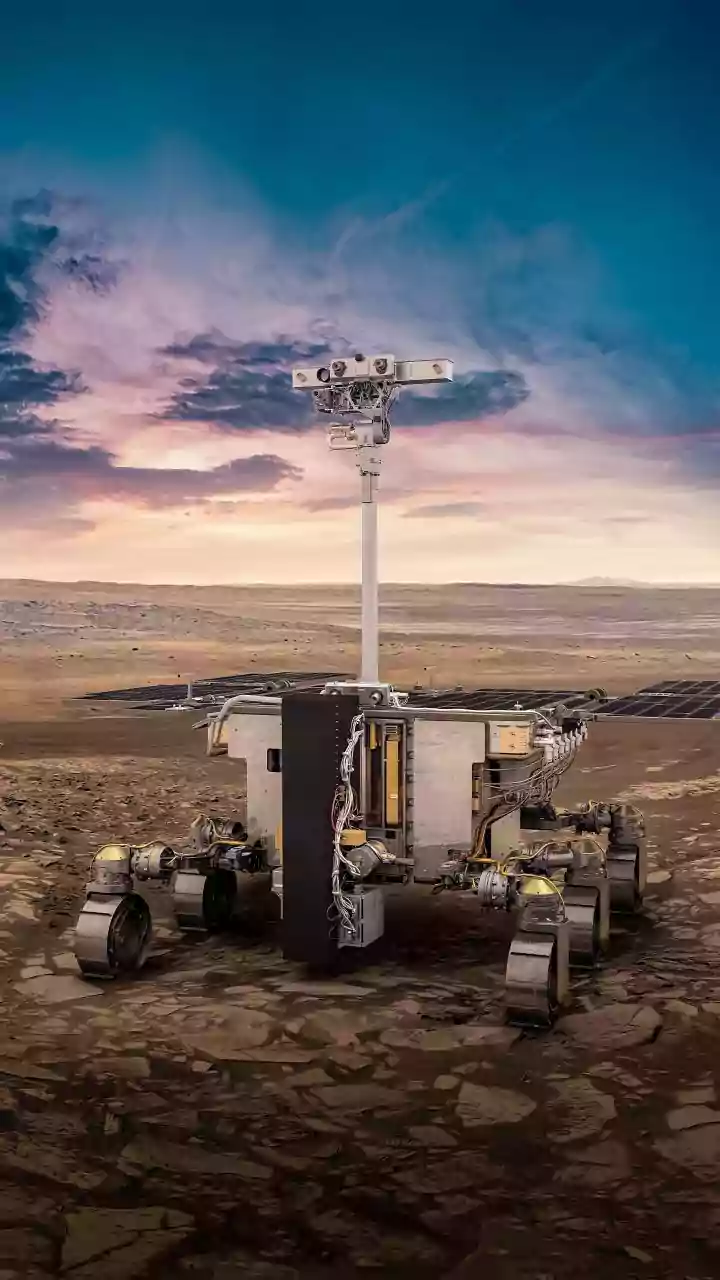
Once the sample container is in orbit around Mars, the next phase of the relay begins. ESA’s Earth Return Orbiter (ERO), a large and sophisticated spacecraft, would be tasked with a cosmic game of catch. It would need to locate, rendezvous with, and capture the orbiting sample container. After securing its cargo, the ERO would fire its engines to break free from Mars's gravity and begin the long two-year journey back to Earth. For safety, the samples would be sealed in a highly secure biocontainment system to prevent any contamination of Earth. In the final step, as the orbiter approaches our home planet, it would release a specialized Earth Entry System, a capsule designed to protect the samples as they plummet through the atmosphere for a landing in a designated secure location.
A Fresh Start for an Old Dream
The new PSRA initiative signals NASA's determination to overcome the project's previous setbacks. The strategy team is set to kick off its work in January 2027, with a final report expected by the winter of 2027–2028. Their goal is to develop impartial recommendations by reviewing past lessons, evaluating current technologies, and exploring all acquisition options to design a feasible mission. The challenge is immense, involving robotics, interplanetary navigation, and unprecedented engineering feats. Yet, the pressure to succeed is not just scientific; it's about maintaining a leadership position in a new era of space exploration. The PSRA is more than a plan; it’s a reboot of one of the most important scientific quests of our time.