





The Monsoon's Arrival
There are few things as evocative in India as the arrival of the monsoon. It's more than just a change in weather; it's a cultural event. The relentless heat of summer finally breaks, replaced by grey skies and the rhythmic pitter-patter of rain. Life
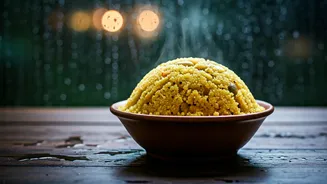
slows down. The roads glisten, the trees look greener, and the air is thick with the scent of petrichor—that magical smell of rain on dry soil. This sensory shift triggers a deep-seated, almost primal, response. We are drawn indoors, seeking cosiness, and our thoughts invariably turn to food. Not just any food, but food that feels like a hug in a bowl.
The Psychology of Comfort Food
Why does a downpour make us crave specific dishes? It's a mix of psychology and physiology. The drop in temperature makes our bodies desire warm foods to maintain internal heat. But beyond the science, there's a powerful emotional connection. Comfort foods are often linked to positive memories, particularly from childhood. They are typically simple, easy to digest, and loaded with carbohydrates, which can give our mood a subtle lift. On a gloomy day, when the world outside seems a little melancholy, a plate of familiar, nourishing food provides a sense of security and well-being. It’s a simple pleasure that grounds us in the present moment.
Enter the Humble Hero: Upma
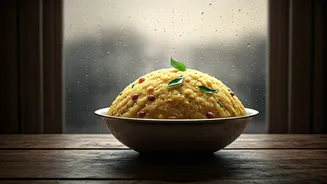
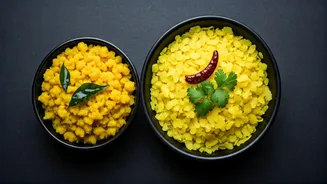
In the pantheon of Indian comfort foods, upma holds a special, if understated, place. Made from roasted semolina (rava), it is the epitome of simplicity and speed. It isn't as rich as a paratha or as complex as a dosa, and that is precisely its power. Upma is honest. It’s a quick-fix breakfast, a light lunch, or an emergency evening snack. Its genius lies in its texture—soft, fluffy, and light—and its ability to be a canvas for a few, well-chosen flavours. It doesn’t demand attention with a riot of spices; it soothes with its gentle warmth and savoury taste, making it the ideal candidate for a rainy-day meal.
The Symphony in the Kitchen
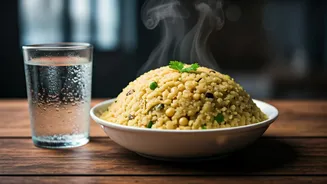
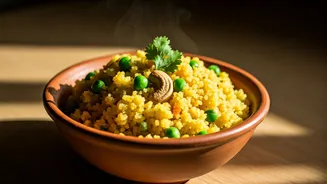
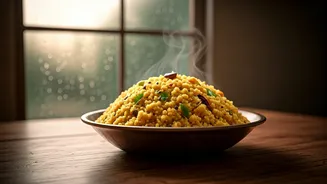
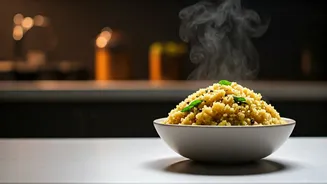
The magic of rainy-day upma begins long before it reaches the plate. It starts with the kitchen sounds that cut through the drumming of the rain. The sharp pop and crackle of mustard seeds hitting hot oil. The sizzle of chopped onions, ginger, and green chillies releasing their sharp, aromatic fragrances. The gentle hiss as curry leaves are tossed into the pan, their distinct scent filling the air. Then comes the roasted rava, slowly absorbing the hot water, swelling and transforming from a grainy powder into a soft, steaming mound. Each step is a note in a culinary symphony, a familiar and reassuring process that promises warmth and satisfaction. Watching the steam rise from the finished dish is like seeing a plume of pure comfort.
A Dish of Infinite Possibility
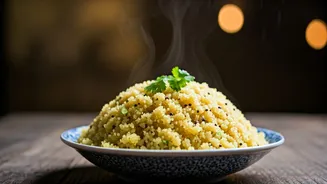
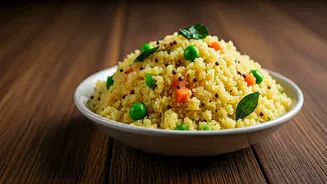
While classic upma is perfect in its simplicity, its true beauty lies in its adaptability. Every household has its own version. Some add a rainbow of finely chopped vegetables like carrots, peas, and beans, turning it into a more wholesome meal. Others prefer the tang of a tomato upma or the crunch of roasted peanuts and cashews. A squeeze of lemon at the end can brighten the flavours, while a dollop of ghee on top adds a luxurious richness. Served with a side of coconut chutney, a sprinkle of sev, or simply on its own, upma can be whatever you need it to be. This versatility ensures it never gets boring and remains a beloved staple across the country.
A Spoonful of Nostalgia
Ultimately, the connection between rainy mornings and hot upma is about more than just taste and temperature. It’s about nostalgia. For many, the flavour of upma is intertwined with memories of home—of a mother or grandmother preparing a quick, loving meal on a school holiday made special by the rain. It's the taste of being cared for. That simple bowl of steaming semolina carries with it the warmth of family, the comfort of routine, and the uncomplicated joy of a day when the world outside pauses for a while. It’s not just food; it’s a feeling. It’s the delicious, edible proof that sometimes, the simplest things in life are the most profound.