


Your Simple Starter Kit
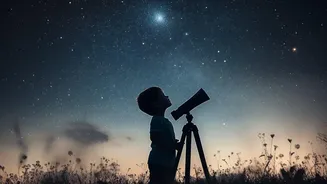
Getting started with stargazing is easier than you think. You don't need a fancy telescope. All you truly need is a clear night, a spot away from bright city lights, and a little patience. The post-monsoon period offers excellent atmospheric clarity,
making it a golden window for observation. Find a comfortable spot, perhaps on a rooftop or a quiet park, and give your eyes about 20-30 minutes to fully adjust to the darkness. This will help you spot fainter stars and meteors. For navigation, consider using a free stargazing app on your phone. Apps like SkyView Lite or Stellarium can help you identify planets, constellations, and satellites in real-time just by pointing your phone at the sky.
Saturn Takes Centre Stage
October's main planetary attraction is the magnificent ringed planet, Saturn. On October 4, Saturn reaches opposition, which means Earth is directly between it and the Sun. This makes it appear at its biggest and brightest for the year, rising in the east around sunset and remaining visible all night. For observers in India, Saturn will rise around 6:11 p.m. and reach its highest point just after midnight. While you can spot it as a bright, steady, yellowish point of light with your naked eye, even a basic pair of binoculars or a small telescope will reveal its famous rings, a truly unforgettable sight. The weeks surrounding October 4 are also excellent for viewing.
Wishes Upon a Shooting Star
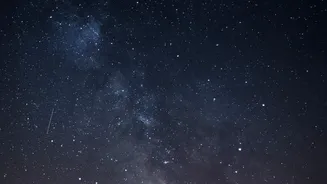
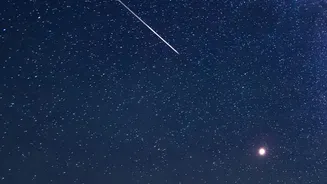
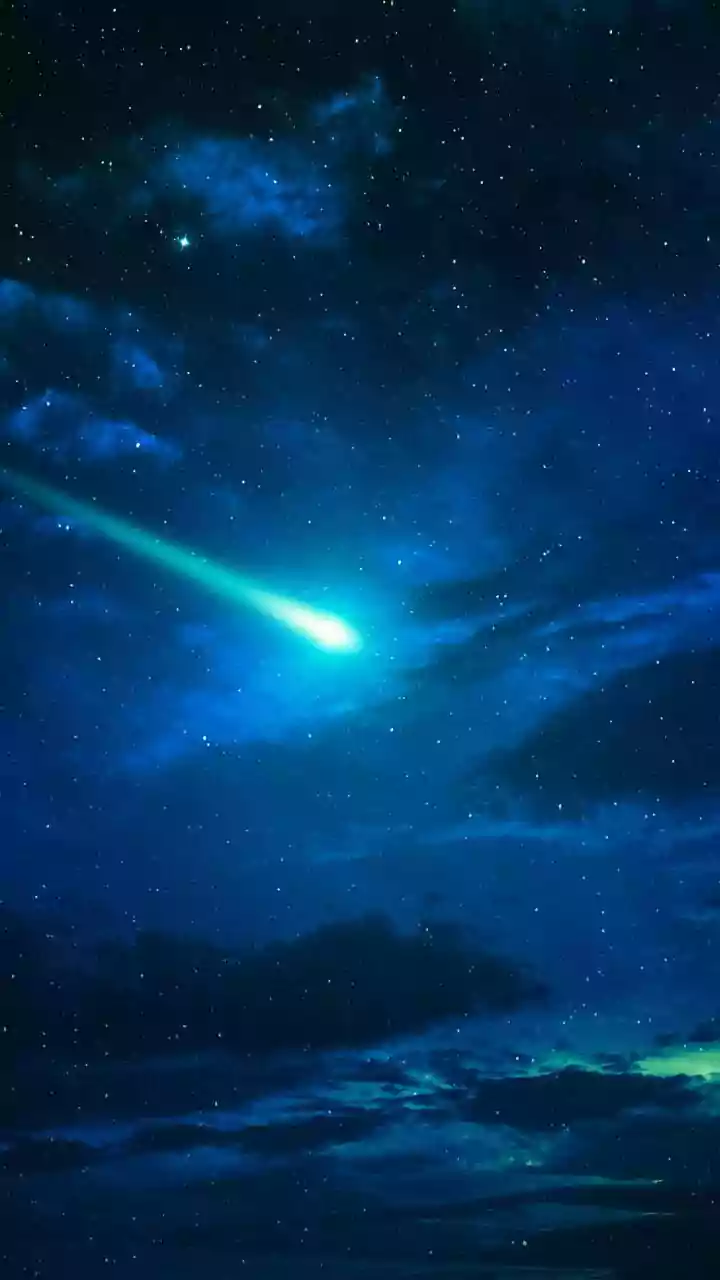
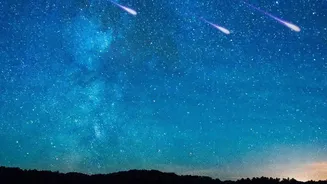
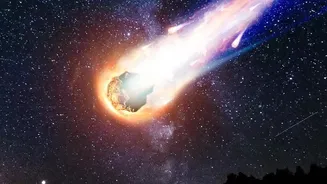
October hosts two meteor showers, offering chances to see 'shooting stars'. First up is the Draconid meteor shower, peaking on the night of October 8-9. This is a gentle shower, with about 5-10 meteors per hour, but it has a key advantage: the best time to watch is in the evening, right after nightfall, not in the early morning hours. Even better, the shower's peak coincides with the days around the New Moon on October 10, meaning the sky will be perfectly dark and free of moonlight. Later in the month, the Orionid meteor shower peaks on the night of October 21-22. Produced by debris from the famous Halley's Comet, the Orionids are faster and can be more numerous, with up to 20 meteors per hour. The best time to watch is after midnight, especially in the pre-dawn hours of October 22. While a bright moon will be present earlier in the night, it will set a few hours before dawn, leaving a dark window for optimal viewing.
Follow the Moon's Phases
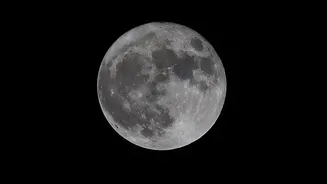
The Moon itself is a fascinating object to follow. Its phases determine the best nights for stargazing. The New Moon falls on October 10. The days around this date are the darkest, making them ideal for spotting faint stars, the Milky Way, and meteor showers. As the moon waxes, it will pass through its First Quarter on October 18. The month concludes with the Full Hunter's Moon on October 26. While the bright light of a full moon washes out fainter stars, its own bright, cratered surface is a beautiful sight, especially as it rises above the horizon.
A Challenge for Your Eyes
Once you've spotted Saturn and a few meteors, try looking for something more distant. On a dark, moonless night in October, you can find the Andromeda Galaxy. Located 2.5 million light-years away, it's the most distant object you can see with your unaided eye. To find it, look for the Great Square of Pegasus high in the sky. From there, use a star map or app to locate a faint, elongated smudge of light nearby. It won't look like much without a telescope, but the simple act of seeing the light from another galaxy with your own eyes is a profound experience that connects you to the vastness of the universe.