


Meet Psyche, the Metal World
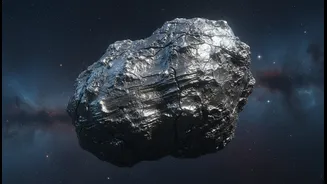
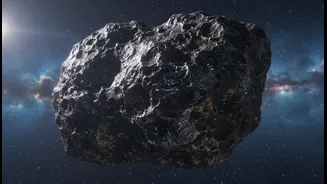
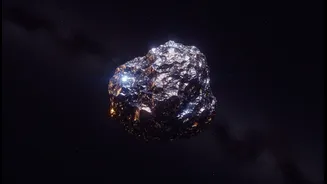
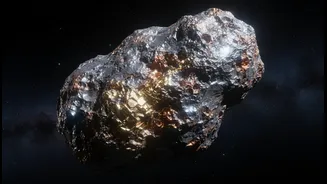
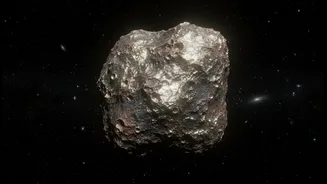
Psyche is not your average space rock. It is one of the most massive objects in the main asteroid belt, measuring about 280 kilometers at its widest point. What makes it truly special is its composition. While most asteroids are rocky or icy, radar and
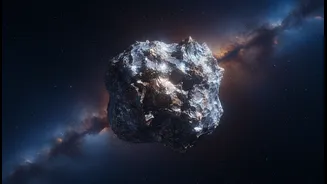
thermal observations have led scientists to believe Psyche is extraordinarily rich in metal. For decades, the leading theory was that Psyche is the naked iron-rich core of a planetesimal—a building block of a planet—which had its rocky outer layers blasted away by violent collisions billions of years ago. This made it a tantalizing target for scientists, offering a chance to study a planetary core, a type of world that is otherwise unreachable deep within planets like our own Earth.
How We Thought Planets Were Born
The traditional story of planet formation, known as the planetesimal hypothesis, is one of gradual construction. It begins with a giant cloud of dust and gas, a solar nebula. Gravity caused this material to clump together, first into tiny grains, then pebbles, and eventually into kilometer-sized bodies called planetesimals. These planetesimals continued to collide and merge. Some were destroyed, while others grew larger, eventually becoming the protoplanets and then the planets we see today. In this model, larger planetesimals would heat up and differentiate, forming a dense metallic core and a lighter rocky mantle and crust, just like Earth. A world like Psyche was thought to be a clear example of this process gone awry—a differentiated body that suffered catastrophic impacts, leaving only its durable core behind.
New Discoveries Complicate the Story
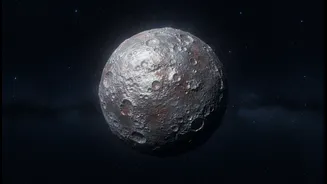
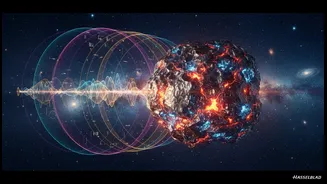
The narrative of Psyche as a simple stripped core is being challenged by new research. Detailed maps created from ground-based telescopes reveal that Psyche’s surface is surprisingly diverse. While it is metal-rich overall, the distribution of metals and silicate rock varies significantly across its surface. Furthermore, density measurements show that Psyche is only about half as dense as it should be if it were a solid lump of iron. To account for this, it would need to be incredibly porous, which scientists have found is unlikely as its own gravity would have compacted the empty space over time. This suggests that Psyche is not pure metal, but likely a mix of metal and rock. Some new theories even propose that Psyche experienced “ferrovolcanism”—eruptions of molten metal that coated parts of a rockier surface, which could explain the metallic sheen without it being a solid core.
Rethinking Ancient Building Blocks
These findings force us to update our theories about the earliest planetesimals. If Psyche is not a stripped core, it could be a different kind of object entirely—perhaps a body that formed from metal-rich material from the very beginning, rather than differentiating later. Another possibility is that it represents a more chaotic formation process, where catastrophic collisions didn't just strip layers but thoroughly mixed rock and metal together. This would mean that the neat, layered model of planetesimal formation might be too simple. The solar system’s early building blocks may have been far more varied and their histories more violent than previously assumed. Psyche may represent a class of planetesimal that is not a precursor to planets like Earth, but a different evolutionary path altogether.
The Mission to Find Answers
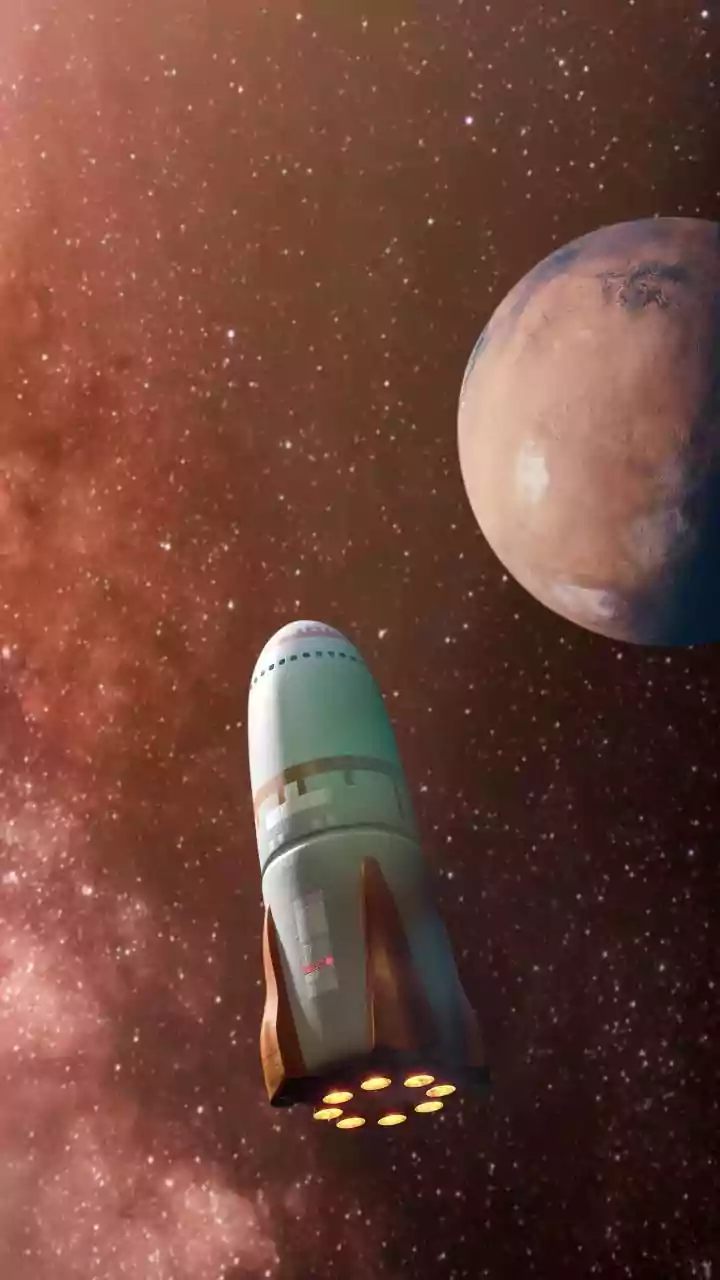
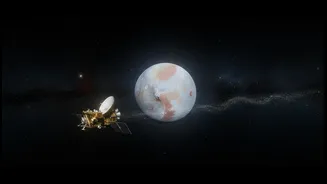
Ultimately, these are still theories based on long-distance observations. The final answers will come from NASA's Psyche mission, a spacecraft that launched in October 2023 and is currently on its long journey to the asteroid. The probe recently performed a successful gravity-assist flyby of Mars in May 2026, using the planet's gravity to set its course for arrival at Psyche in August 2029. During the flyby, mission teams calibrated their science instruments, ensuring they are ready for the main event. Once it arrives, the spacecraft will spend nearly two years orbiting Psyche, mapping its surface and determining its precise composition. This direct investigation will finally reveal whether Psyche is a planetary core, a product of metal volcanoes, or something no one has yet imagined.