



A Different Kind of Reuse
When most people hear “reusable spacecraft,” they picture rockets like SpaceX's Falcon 9, landing vertically to be refueled and launched again. While Japan is also developing this type of technology with its RV-X demonstrator, the country's deep-space
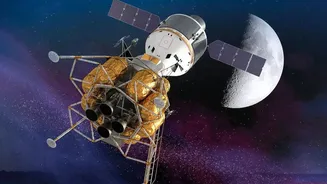
missions showcase a different, more nuanced philosophy. This approach isn’t about relaunching from Earth; it’s about maximizing a spacecraft's value and lifespan during a single, multi-year journey where no service depots exist. Missions like the upcoming Martian Moons eXploration (MMX) and DESTINY+ are designed for longevity, equipped to perform multiple complex tasks over many years, effectively “reusing” the craft for new objectives far from home.
The Philosophy of Pragmatic Endurance
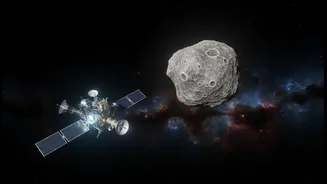
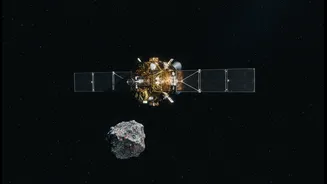
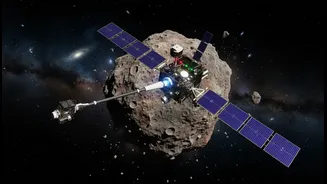
JAXA's strategy is born from the harsh realities of interplanetary travel. A spacecraft millions of kilometers from Earth cannot be easily repaired. Therefore, instead of designing for quick refurbishment, JAXA focuses on robust engineering, system redundancy, and mission flexibility. The upcoming DESTINY+ mission, for example, will use highly efficient ion engines to travel for years, perform a flyby of the asteroid Phaethon, and analyze cosmic dust along the way. This is an asset being reused for multiple scientific goals over its long cruise. Similarly, the MMX mission will travel to Mars, survey both of its moons, land on Phobos to collect a sample, and then return the sample to Earth over a five-year period. This isn't reuse in the launch-pad sense, but in the sense of a single, highly capable asset delivering value at multiple points in its journey.
A Tale of Two Strategies
The contrast with the commercial launch sector is stark, but both strategies are valid for their respective goals. The rapid-relaunch model is revolutionary for decreasing the cost of getting payloads into Earth orbit. It's about high frequency and affordability. JAXA's approach, on the other hand, is tailored for one-of-a-kind scientific missions into deep space, where survival and reliability are the primary currencies. While Japan is pursuing rocket-landing technology to stay competitive in the satellite launch market, its deep-space missions treat the spacecraft itself as a long-term robotic explorer. The MMX probe will spend years in the Martian system, a feat that requires a different kind of durability than a rocket booster designed to fly for eight minutes.
Designed for the Deep Dark
This philosophy directly influences spacecraft design. JAXA's probes are built to be remarkably self-sufficient. They feature advanced technologies like low-power, high-endurance ion engines and sophisticated autonomous navigation systems to perform maneuvers like lunar swing-bys that slingshot them toward distant targets. The upcoming DESTINY+ mission will demonstrate lightweight solar panels and advanced thermal controls, all aimed at ensuring the vehicle can survive a multi-year journey and a high-speed flyby close to its target asteroid. The scientific instruments themselves are also part of this vision. The dust analyzer on DESTINY+, for instance, will be active throughout the cruise phase, collecting valuable data long before it reaches its primary target. This turns the entire journey into a scientific opportunity.
What This Means for Future Exploration
JAXA’s approach carves out a vital niche for Japan in the global space ecosystem. By focusing on high-reliability, long-duration missions, the agency is building a reputation for successfully tackling some of the most challenging targets in the solar system. Previous successes like the Hayabusa missions, which returned asteroid samples to Earth, are a testament to this capability. The upcoming MMX mission, which will be the first to bring back a sample from the Martian system, continues this legacy. This strategy ensures that while others may focus on making access to space cheaper, Japan is focused on making sure we can do meaningful, complex science once we get there.