



The Urban Waste Challenge
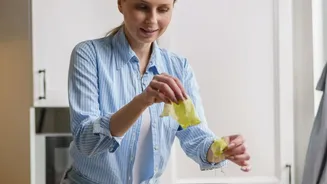
Managing household waste in a compact urban apartment is a daily challenge. Wet scraps—vegetable peels, fruit cuttings, leftover food—make up a significant portion of kitchen refuse. When sent to landfills, this organic matter decomposes without oxygen,
releasing methane, a potent greenhouse gas. For environmentally-conscious residents, the desire to divert this waste is strong, but traditional composting methods seem ill-suited for a small balcony or utility area, raising concerns about space, pests, and unpleasant odours. This is where micro-composting offers a powerful, apartment-friendly solution, turning a waste problem into a valuable resource.
Meet Your Balcony's New Best Friends
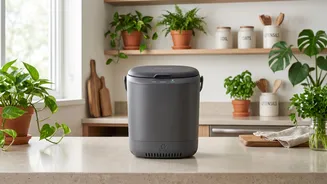
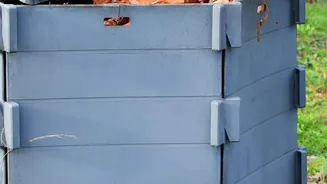
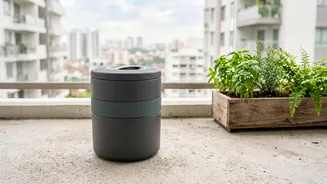
Micro-composting tools are specifically designed for small-scale, indoor, or balcony use. They are contained, efficient, and surprisingly low-maintenance. Several popular options are available for Indian households. Tiered terracotta pots, often called 'Khambas', are a traditional and aesthetic choice, using a multi-level system to separate fresh scraps from maturing compost. Another excellent method is vermicomposting, or worm composting. These systems use red wiggler worms in a contained bin to quickly and odourlessly process food scraps into nutrient-rich worm castings, a prized organic fertilizer. When managed correctly, worm bins produce a pleasant, earthy smell, not the odour of rotting garbage.
The Magic of Bokashi
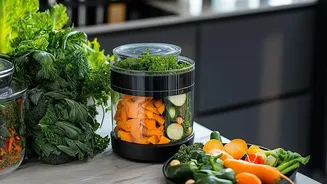
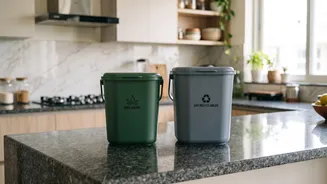
For those looking to process all food waste, including cooked foods, dairy, and meat, the Japanese method of Bokashi is a game-changer. Bokashi is not traditional composting but an anaerobic fermentation process. Kitchen scraps are layered in an airtight bucket with an inoculated bran, which is a mix of beneficial microbes. This process 'pickles' the waste in about two weeks, preventing rot and foul smells. The resulting pre-compost is highly acidic, deterring pests. This fermented material can then be buried in a garden bed or a larger compost pile to fully decompose. The system also produces a nutrient-rich liquid 'tea' that, when diluted, can be used as a potent plant fertilizer.
A Simple Guide to Success
Starting is simpler than you think. The key to successful balcony composting is balance. Your compost needs a mix of 'greens' (nitrogen-rich wet scraps like vegetable peels and coffee grounds) and 'browns' (carbon-rich dry materials like shredded newspaper, cardboard, or dried leaves). A good rule of thumb is to aim for a ratio of roughly three parts browns to one part greens. This balance is crucial for avoiding foul smells and ensuring proper decomposition. Always cover fresh food scraps with a layer of browns or finished compost. Ensure your container has good drainage and aeration to prevent the contents from becoming a soggy, smelly mess. If the pile gets too wet, add more dry 'browns'; if too dry, a light spray of water will help.
More Than Just Compost
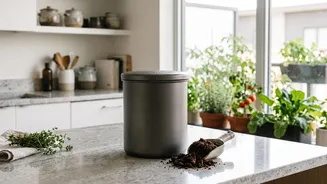
Adopting micro-composting is about more than just reducing waste; it’s an act of empowerment. It reconnects urban households with natural cycles, providing a tangible way to take positive environmental action. The process transforms daily scraps into 'black gold'—a valuable soil amendment that can bring life to balcony pots, herb gardens, and houseplants, reducing the need for chemical fertilizers. This closed-loop system, where waste from your kitchen feeds the plants on your balcony, offers a deep sense of satisfaction and a practical step towards a more sustainable lifestyle, right from the comfort of your city home.