




The Monsoon's Cleansing Effect
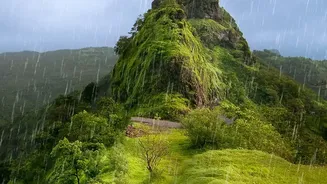
Throughout the monsoon season, from roughly June to September, heavy and sustained rains provide a natural atmospheric cleanse. Rain droplets capture and wash away pollutants, including particulate matter (PM2.5 and PM10), dust, and other aerosols. Stronger
winds during this period also help disperse pollutants, leading to the clear blue skies and significantly better Air Quality Index (AQI) readings that residents across the Indo-Gangetic plains enjoy. This period of clean air offers a welcome, albeit temporary, respite from the severe pollution that characterizes other parts of the year.
When the Winds Die Down
The end of the monsoon marks a significant shift in weather patterns. As the season withdraws, wind speeds drop considerably. The brisk winds that once scattered pollutants die down, leading to calm, stagnant air. This lack of wind means that any pollutants emitted locally—from vehicles, industry, or construction—are no longer swept away. They begin to hang in the air, slowly accumulating and causing the AQI to creep up day by day. This meteorological shift sets the stage for the severe pollution episodes to come.
A 'Lid' on the Atmosphere
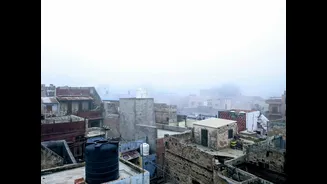
A crucial factor in the post-monsoon pollution spike is a phenomenon called temperature inversion. During autumn and winter, the ground cools down rapidly at night, making the air near the surface colder than the air layer above it. This warmer layer of air acts like a lid, trapping the colder, denser air—and all its pollutants—below. This prevents the vertical mixing and dispersion of pollutants that would normally occur. The mixing height, or the altitude to which pollutants can disperse, shrinks dramatically from about a kilometre in summer to just a few hundred meters, concentrating pollution at the breathing level.
The Agricultural Haze Returns
October coincides with the paddy harvesting season in the neighbouring states of Punjab and Haryana. Farmers are left with a very short window to clear their fields of rice stubble before sowing the next crop, winter wheat. For many, the quickest and cheapest method is to burn the stubble. This practice, known as stubble burning, releases vast plumes of smoke containing particulate matter, carbon, and other toxins. These northwesterly winds carry the smoke directly towards Delhi and across the Indo-Gangetic Plain, where it gets trapped by the inversion layer, contributing significantly to the region's hazardous smog. While efforts are being made to curb this practice, it remains a major seasonal contributor to air pollution.
The Festive Factor
The post-monsoon period is also a time of major festivals in India, most notably Diwali. The widespread use of firecrackers, despite bans and restrictions in many areas, leads to a sharp, overnight spike in PM2.5 and other toxic pollutants. On Diwali night, concentrations of harmful particles can soar to many times the safe limit, turning the air quality to 'severe' in a matter of hours. While this spike is often short-lived, it adds a significant burden to an already deteriorating air quality situation, exacerbating respiratory problems.
An Unchanging Urban Baseline
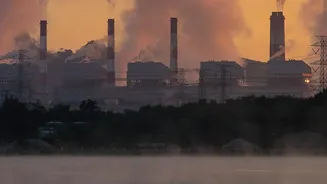
Finally, it's important to remember that the sources of year-round urban pollution do not disappear. Emissions from the millions of vehicles on the roads, industrial activity, power plants, and dust from construction sites continue unabated. These sources provide a constant baseline of pollution that is simply made worse by the seasonal meteorological and agricultural factors. The combination of stagnant weather, temperature inversion, smoke from farm fires, and festive emissions creates a perfect storm, turning the air toxic and making October the start of a long and difficult pollution season for millions.