
What Exactly Are You Looking For?
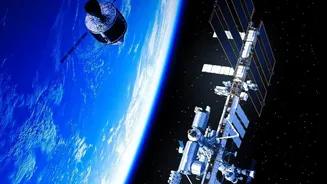
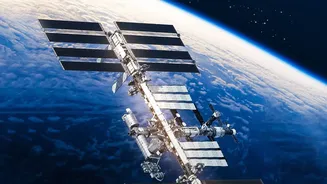
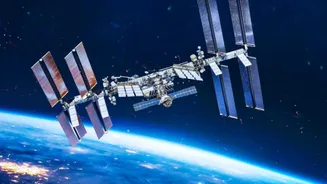
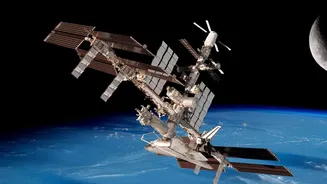
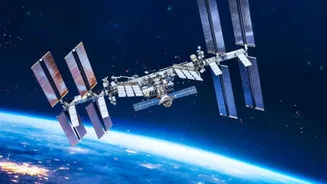
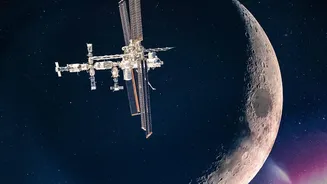
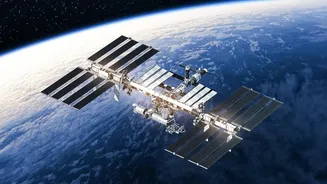
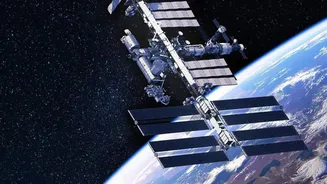
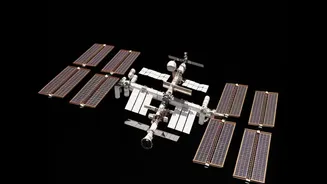
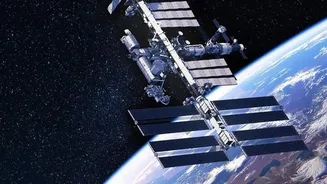
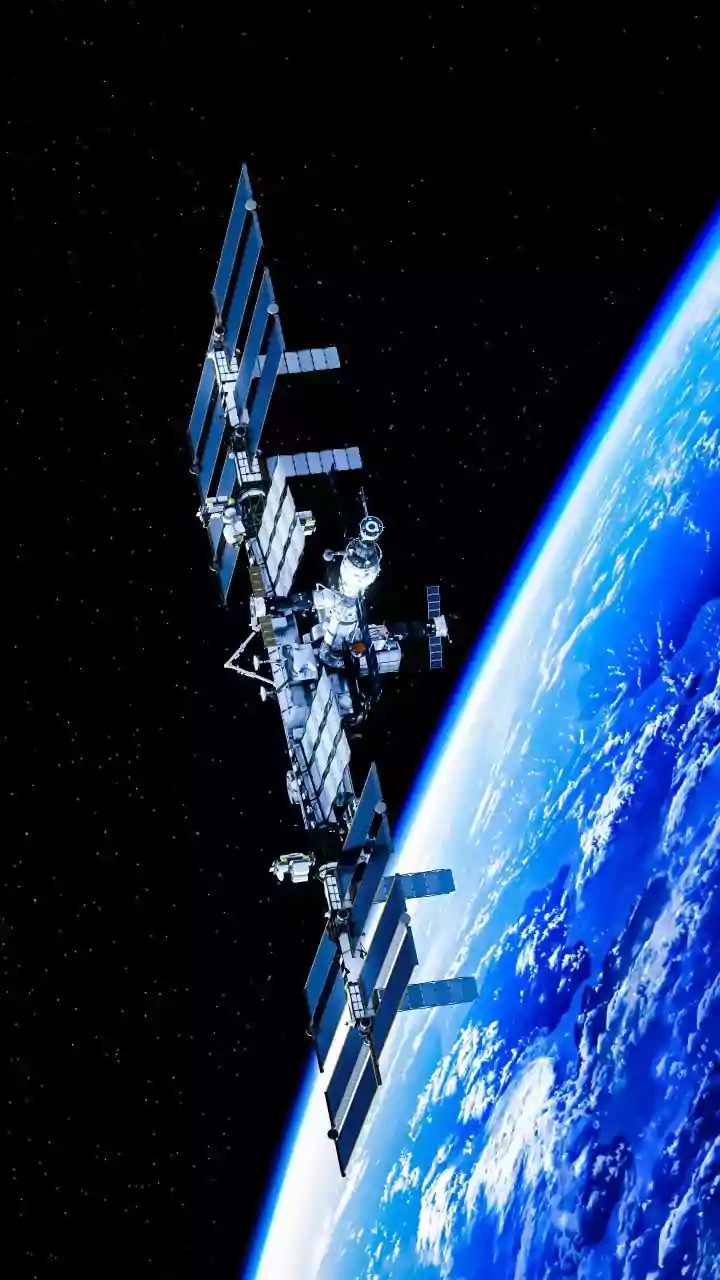
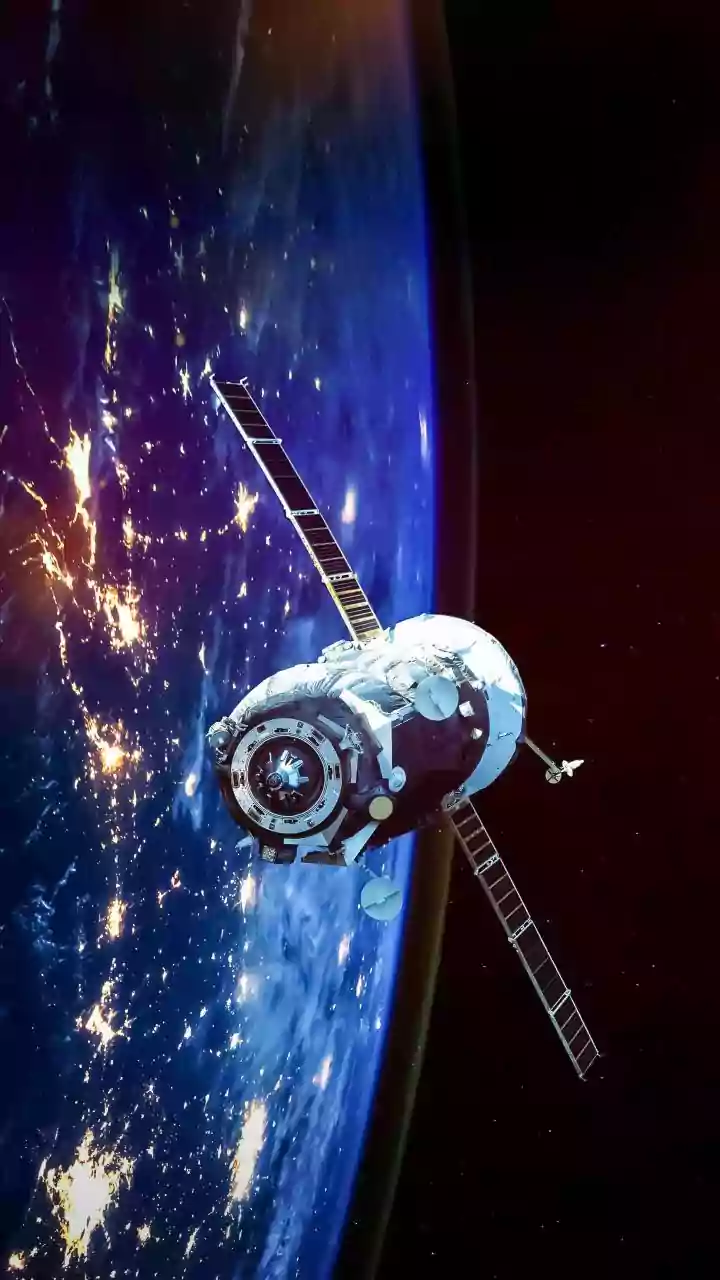
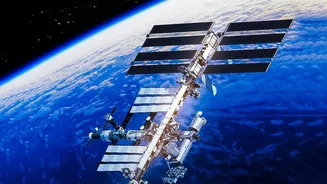
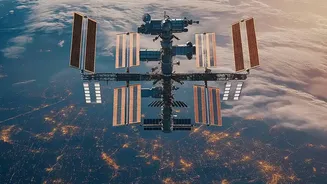
The International Space Station is a massive orbiting laboratory, about the size of a football field, flying 400 kilometres above our heads at a staggering 28,000 km/h. It has been continuously occupied by astronauts since the year 2000, serving as a hub
for scientific research. You don't need a telescope to see it. The ISS is visible because its vast solar panels reflect sunlight, making it appear as a very bright, steady point of light moving silently across the sky. It doesn’t have flashing lights like an airplane and moves much faster, often outshining every star and planet except for Venus and the Moon. This makes it easily visible even from light-polluted cities.
The Best Time to Watch
The magic window for spotting the ISS is during twilight hours—specifically, the first couple of hours after sunset or before sunrise. This is the perfect time because your viewing spot on the ground is dark, but the station, at its high altitude, is still bathed in sunlight. During the middle of the night, the ISS passes through Earth's shadow and becomes invisible. A 'good' pass is one where the station flies high above the horizon, appearing brighter and staying visible for several minutes—sometimes up to seven. Passes that are low on the horizon can be faint and easily obscured by buildings or trees.
Top Free Apps for Your Flyover Hunt
Gone are the days of complex charts. Today, your smartphone is your best guide. Several free apps can tell you exactly when and where to look. NASA's official 'Spot The Station' app is a great starting point, available for both iOS and Android. It provides alerts for high-quality viewing opportunities in your specific location. 'ISS Detector' is another highly popular app that not only tracks the ISS but can be extended to find Starlink satellite trains and other bright objects. Many users also recommend 'Heavens-Above' and 'SkyView', which use augmented reality to show you exactly where to point your phone in the sky.
How to Prepare for a Sighting
Once your app notifies you of an upcoming pass, a little preparation goes a long way. First, find a spot with a clear, open view of the sky, away from tall buildings and bright lights if possible. Head outside about five minutes early to let your eyes adjust to the darkness. The app will tell you the direction in which the station will appear (e.g., 'rising in the SW') and where it will disappear. All you need to do is face that direction and wait. You'll see what looks like a fast-moving star emerge, travel steadily across the sky, and then fade as it enters Earth's shadow. It's a simple but profound experience.
Making the Moment Memorable
While you can't see the astronauts, knowing they are up there makes the sighting special. The ISS circles the Earth about 16 times a day, meaning people all over the world share in this sky-watching experience. It’s a wonderful activity to do with family and friends, offering a direct connection to space exploration happening right above our heads. You don’t need any special equipment, but if you have a pair of binoculars, they can enhance the view, making the bright dot appear even more brilliant as it journeys across the cosmos. Don't be discouraged by cloudy skies; the apps will show you the next opportunity, ensuring you get another chance to witness this silent, shining beacon of human ingenuity.