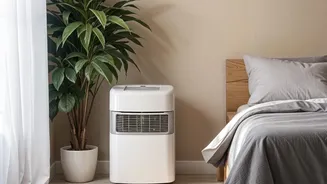





The desire for cleaner indoor air often leads to a common dilemma: should you trust the natural appeal of houseplants or the technological power of an air purifier? We explore the science behind both to help you make the best choice for your home.
The Great Green Hope: Can Plants Really Purify Your Air?
The
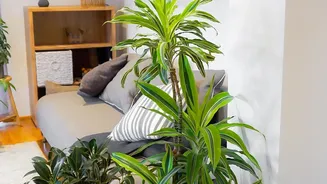
idea that houseplants can scrub the air clean is a popular one, largely rooted in a 1989 NASA study. This research showed that in a small, sealed chamber, certain plants could remove volatile organic compounds (VOCs) like benzene and formaldehyde from the air. However, translating this to a real home environment is where the theory falls apart. Subsequent research has repeatedly shown that the effect is negligible in a typical room. Our homes are not sealed chambers; they have constant air exchange from doors, windows, and ventilation systems. Studies have concluded you would need an impractically large number of plants—anywhere from 10 to 1,000 per square metre—to even begin to compete with a building's natural ventilation, let alone an actual purifier. While poorly maintained plants can even introduce mould, their main benefits are psychological and aesthetic, boosting mood and reducing stress, not meaningfully cleaning the air.
The Mechanical Solution: How Air Purifiers Work
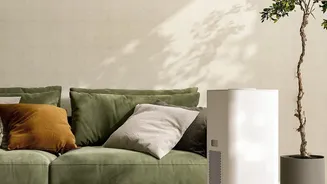
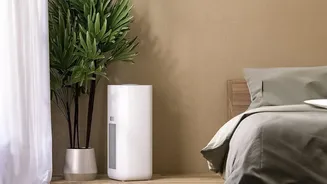
Unlike plants, air purifiers are specifically engineered to clean the air. Most quality units use a multi-stage filtration system. The most crucial component is the HEPA (High-Efficiency Particulate Air) filter. A True HEPA filter is certified to capture 99.97% of airborne particles as small as 0.3 microns. This includes common irritants like dust, pollen, pet dander, and mould spores. Many purifiers also include an activated carbon filter, which is designed to adsorb gases, odours, and VOCs that a HEPA filter can't trap. The machine works by using a fan to actively pull room air through these filters, trapping pollutants and circulating clean air back out. This process of active and continuous circulation is why a single purifier can be thousands of times more effective at removing pollutants than a houseplant.
The Verdict: Plants for Vibe, Purifiers for Purity
When it comes to measurably improving indoor air quality, there is no contest: air purifiers are significantly more effective. Houseplants are a wonderful addition to any home, providing beauty, a connection to nature, and proven mental health benefits. They can make a space feel more alive and calming. However, they should be seen as a decorative and wellness enhancement, not a functional air cleaning tool. If your goal is to reduce allergens, dust, smoke, or other airborne pollutants to protect your health, a mechanical air purifier is the only scientifically-backed solution for the home.
Choosing Your Purifier: Understanding CADR
Once you've decided on a purifier, the most important metric for choosing the right one is its Clean Air Delivery Rate (CADR). CADR is a performance rating, usually certified by the Association of Home Appliance Manufacturers (AHAM), that measures how much clean air a purifier delivers in a specific amount of time. It's measured in cubic feet per minute (CFM) or cubic metres per hour (m³/h). A purifier will typically have three CADR ratings: one for smoke, one for dust, and one for pollen. The smoke rating is often considered the most important as smoke particles are the smallest and hardest to capture. Simply put, the higher the CADR, the faster and more efficiently the purifier can clean a room.
The Right Fit: Matching Purifier Size to Your Room
To ensure your purifier is effective, its CADR must be appropriate for your room size. A common rule of thumb provided by AHAM is the '2/3 Rule': the purifier's smoke CADR rating (in CFM) should be at least twondthirds of the room's area in square feet. For example, a room that is 150 square feet (e.g., 10 ft x 15 ft) would require an air purifier with a CADR of at least 100 CFM. This guideline assumes a standard 8ndfoot ceiling and is designed to provide about 4.8 air changes per hour (ACH), meaning the purifier can process the entire volume of air in the room almost five times every hour. For rooms with higher ceilings, or for people with significant allergies or asthma, it's wise to choose a purifier with an even higher CADR to ensure more robust cleaning.
Beyond CADR: Other Factors to Consider
While CADR is the primary factor for sizing, other features are also important. Consider the noise level, especially if the purifier will be used in a bedroom or office; look for the decibel (dB) rating on lower fan settings. Also, investigate the cost and availability of replacement filters. The ongoing cost of filters is a significant part of owning a purifier, and a machine is useless if its filters are hard to find. Finally, if your main concerns are odours, chemicals from new furniture, or smoke, ensure the model you choose has a substantial activated carbon filter in addition to its HEPA filter.