



The Dream of Untouched Wilderness
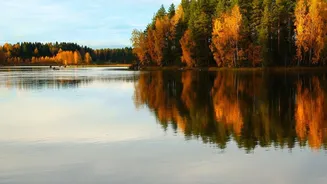
The image of Finland, particularly its northern Lapland region, is one of Europe’s last great wildernesses. Marketing materials and social media are filled with scenes of pristine, snow-blanketed landscapes, reindeer roaming freely, and the magical dance
of the Aurora Borealis across a perfectly dark sky. This vision appeals to a deep-seated desire for disconnection and authenticity—a chance to stand in a silent forest, breathe some of the world’s cleanest air, and feel genuinely close to nature. This powerful allure is built on truth; Finland is a country of vast forests and 188,000 lakes, where nature is deeply ingrained in the national identity. The legal concept of ‘Everyman’s Right’ even allows anyone to roam, forage, and camp freely on most land, reinforcing the idea of an open, accessible wilderness. It’s this promise of quiet, solitude, and raw nature that brings travellers from around the world to the edge of the Arctic Circle.
The Reality of Curated Experiences
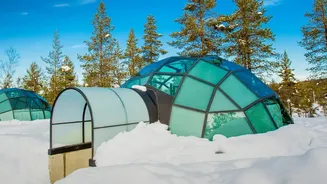
Upon arrival, many tourists find that this promised wilderness is highly managed. The most popular attractions are often concentrated in tourism hubs like Rovaniemi, Levi, and Saariselkä. The Santa Claus Village, for example, is a primary draw but is frequently described by visitors as a crowded and commercialised theme park. Similarly, the dream of watching the Northern Lights from a glass igloo can be a mixed experience. While the concept is magical, guest reviews often mention frustrations with high costs, condensation obscuring the view, or failed 'aurora alarms' that don't go off even when the lights are visible. Many of these igloo resorts are clustered together, creating light pollution that can diminish the very spectacle they're meant to showcase. Activities like reindeer and husky 'safaris' can feel less like an authentic cultural immersion and more like a scheduled ride in a busy park, designed for high tourist turnover. These setups, while often fun, can clash with the expectation of a wild, spontaneous Arctic adventure.
Why Structure Isn't All Bad
The existence of these 'artificial' setups isn't necessarily a bait-and-switch. There are practical and important reasons for managing tourism so carefully. Firstly, safety. The Arctic wilderness is an extreme environment where unprepared visitors could easily find themselves in danger. Structured tours and resorts provide a safe way for people without expert survival skills to experience the landscape. Secondly, sustainability is a major factor. Concentrating tourists into well-equipped hubs helps protect the vast, fragile ecosystems elsewhere. Metsähallitus, the state enterprise managing Finland’s national parks, works with tourism operators to ensure activities are sustainable. By creating designated areas for high-volume tourism, Finland can preserve its 12 official, truly wild wilderness reserves—massive, roadless areas with few trails or amenities, intended for serious trekkers. Finally, these curated experiences make the Arctic accessible, generating local jobs and funding conservation efforts, which have become increasingly important for regional development.
How to Find Your Authentic Finland
For travellers seeking a wilder, more authentic experience, the key is to look beyond the main tourism circuits. This doesn't mean you must be an elite survivalist. One of the best strategies is to hire a local, independent guide who can lead small-group excursions into less-trafficked areas, offering a deeper connection to both nature and local culture. Consider visiting regions outside the most famous resort towns; places like Posio or the Torne River Valley offer stunning landscapes with far fewer crowds. Exploring Finland's 41 national parks, many of which are less congested than the main Lapland attractions, is another excellent option. Even within popular areas, choosing smaller, family-run guesthouses over large resorts can provide a more personal and genuine feel. An authentic Lapland experience is defined by distance from crowds and proximity to nature. With a bit of research, you can use the main hubs as a gateway, but spend most of your time in the quiet wilderness that lies just beyond.