





India’s Next Giant Leap
India is planning to construct its own modular space station, named the Bharatiya Antariksh Station (BAS), in Low Earth Orbit. The ambitious goal, confirmed by ISRO Chairman Dr. V Narayanan, is to have the station fully operational by 2035. This will
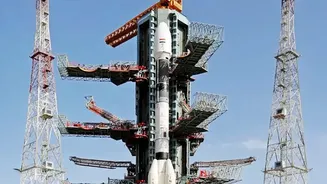
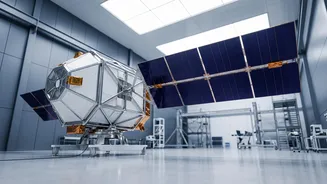
be a phased process, starting with the launch of the first module, BAS-01, aboard an LVM3 rocket in 2028. Over the following years, four more modules will be launched and assembled in orbit, creating a 52-tonne orbital outpost approximately 400-450 kilometres above Earth. This station will be designed to host three to four astronauts for long-duration stays of three to six months, placing India in a select group of nations with the ability to maintain a continuous human presence in space.
A Laboratory in the Sky
The primary purpose of the Bharatiya Antariksh Station is to serve as a cutting-edge laboratory for scientific research. The microgravity environment of space offers a unique setting for experiments that are impossible to conduct on Earth. Scientists will be able to study the long-term effects of spaceflight on the human body, which is crucial for future deep-space missions, including a planned crewed lunar landing by 2040. Research will span fields like medicine, biotechnology, materials science, and physics. For example, understanding how muscles and bones react in space can fast-track studies on conditions like osteoporosis on Earth. The station will be a national platform for innovation, allowing researchers and even startups to test new technologies in space.
Inspiring Future Innovators
Beyond the scientific and strategic goals, the space station holds immense inspirational value. Much like the Apollo programme in the United States, the sight of Indian astronauts living and working in a state-of-the-art Indian facility in space is expected to ignite a passion for science, technology, engineering, and mathematics (STEM) among the youth. This project serves as a powerful symbol of what the nation can achieve, creating new role models and encouraging the next generation to pursue careers in high-technology sectors. The development, construction, and operation of the station will require a highly skilled workforce, driving demand for engineers, scientists, and technicians for decades to come and fostering a robust ecosystem of innovation.
Powering the New Space Economy
The Bharatiya Antariksh Station is also a significant economic wager. The project is expected to create a huge demand for private sector participation in the Indian space industry. Companies will have opportunities to build components, develop software, manage logistics, and provide launch services. The government has already been opening up the sector, with recent policies encouraging private companies and startups. This project will accelerate that trend, turning a government-led programme into a thriving national industry. Studies have shown that investments in the space sector have a significant multiplier effect on the wider economy. By creating demand for advanced manufacturing, robotics, and medical technologies, the station will fuel job growth and solidify India's position in the projected $1.8 trillion global space economy.
A Symbol of Self-Reliance
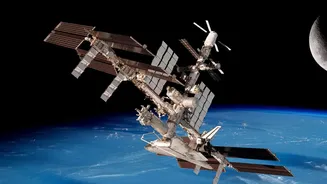
Having its own space station is a powerful statement on the global stage. It demonstrates technological sovereignty and self-reliance ('Aatmanirbhar Bharat') in a critical strategic domain. Currently, only the International Space Station (a multi-national partnership) and China's Tiangong station are operational. By building and operating BAS, India will join this exclusive club, enhancing its diplomatic influence and ability to shape the rules for the next phase of space exploration. It will allow India to collaborate with other space-faring nations on its own terms, offering training for foreign astronauts and carrying international experiments, further elevating its stature as a major global power.