






The End of a Glorious Era
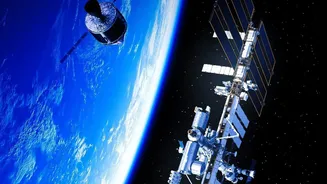
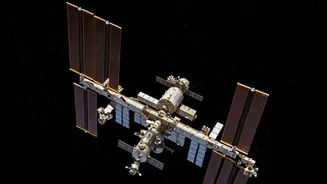
The International Space Station (ISS) is arguably the most complex and ambitious engineering project ever undertaken. Since continuous human occupation began in November 2000, it has served as a unique laboratory for science and a symbol of global cooperation,
hosting more than 270 astronauts from 21 countries. But after decades of service, the station is showing its age. Facing rising maintenance costs, structural fatigue, and the simple wear and tear of orbiting Earth at 17,500 miles per hour, NASA and its partners plan to deorbit the ISS around 2030 or 2031. The plan involves a controlled, targeted re-entry over a remote area of the Pacific Ocean known as Point Nemo, ensuring the massive structure poses no threat to populated areas.
NASA's New Strategy: From Owner to Customer
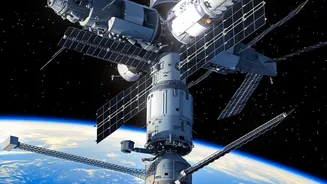
Instead of building a multi-billion-dollar 'ISS 2.0', NASA is fundamentally changing its role in low-Earth orbit (LEO). Through its Commercial LEO Destinations (CLD) program, the agency is seeding the private sector with funding to develop and operate their own commercial space stations. The strategy is to transition from being the owner and operator of an orbital outpost to becoming just one of many customers. By purchasing services like research time and astronaut accommodation from these new commercial providers, NASA aims to save taxpayer money, foster a robust LEO economy, and free up its own resources to focus on more ambitious deep-space exploration goals under the Artemis program, such as returning to the Moon and sending humans to Mars.
The Front-Runner: Axiom Space
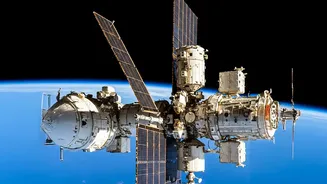
Among the key players, Axiom Space has a unique and incremental plan. The company is already a major force in human spaceflight, having flown multiple private astronaut missions to the ISS. Their strategy involves first attaching their own commercial modules to the existing International Space Station, with the first module planned for launch around 2027. These modules will be tested and proven while connected to the ISS. Then, before the ISS is retired, the Axiom modules will detach and become a fully independent, free-flying commercial space station. This approach allows Axiom to build its business and operational experience while leveraging the ISS infrastructure before going it alone.
The New Contenders: Starlab and Orbital Reef
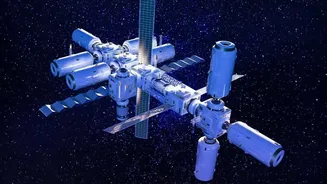
Two other major projects are vying to become premier destinations in orbit. Starlab, a joint venture between Voyager Space and Airbus, aims to launch a complete station in a single flight, potentially on a SpaceX Starship, around 2029. This station is envisioned as a continuous crewed science and research park. Northrop Grumman has also joined the Starlab team, consolidating the field of competitors. Meanwhile, Blue Origin and Sierra Space are developing Orbital Reef, which they have dubbed a "mixed-use business park in space." The vision for Orbital Reef is a large, modular platform catering to diverse clients, including researchers, manufacturers, and space tourists. However, its development has faced some reported hurdles and a less certain timeline.
An Emerging Market in the Stars
The success of these commercial ventures depends on a simple question: who are the customers? NASA will be the anchor tenant for the foreseeable future, but for a true commercial market to thrive, demand must come from other sources. This is where the business case gets interesting. These stations plan to serve a wide array of clients: sovereign space programs from countries without their own stations, private companies looking to conduct research in microgravity, manufacturers developing new materials like fiber optics or pharmaceuticals, and the burgeoning space tourism market. Companies like Vast are also entering the race, with its Haven-1 station aiming to be the first purely commercial, free-flying outpost, targeting a 2027 launch. The goal is not to build one replacement for the ISS, but to create a vibrant ecosystem of multiple destinations in orbit.